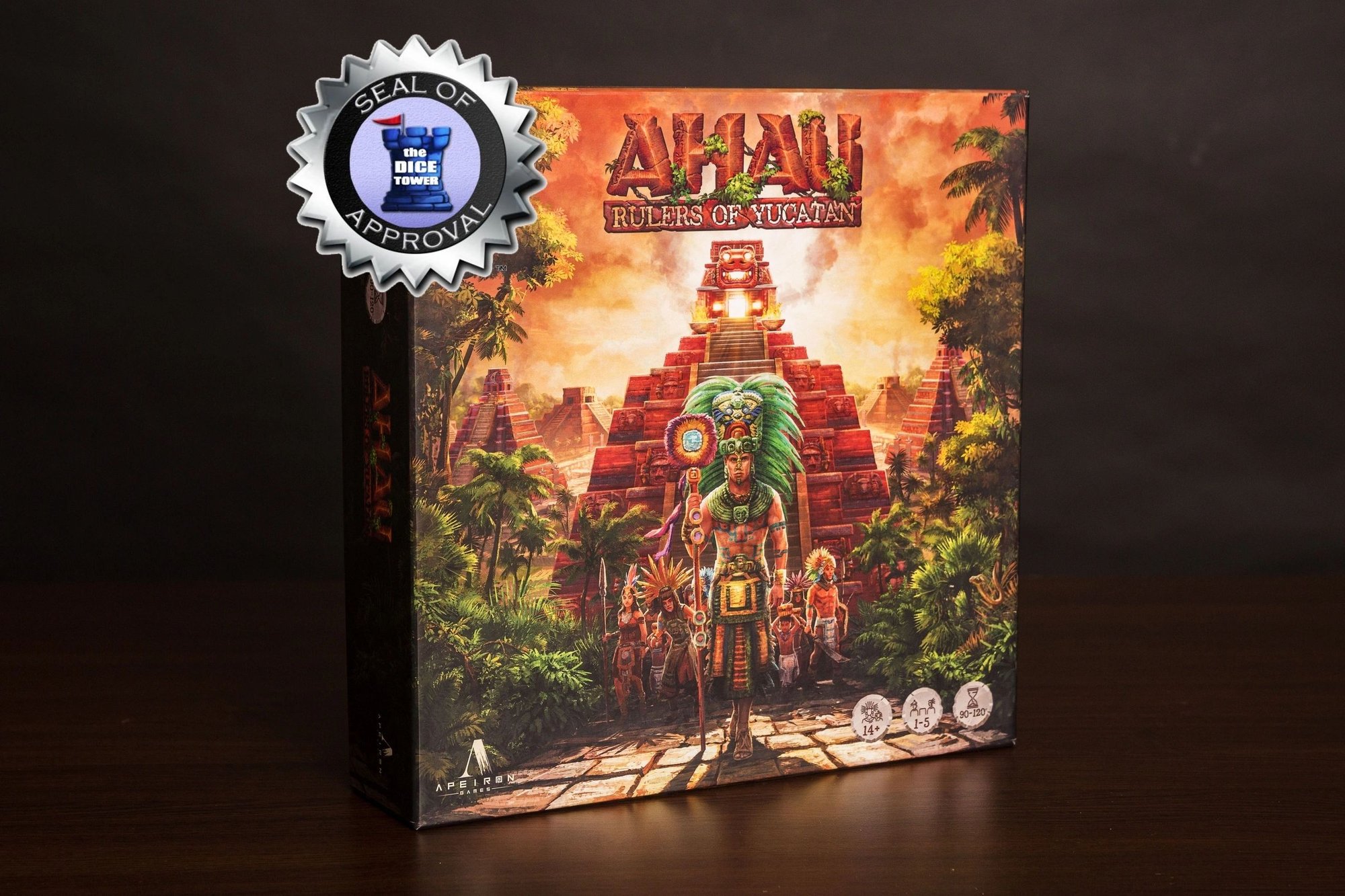
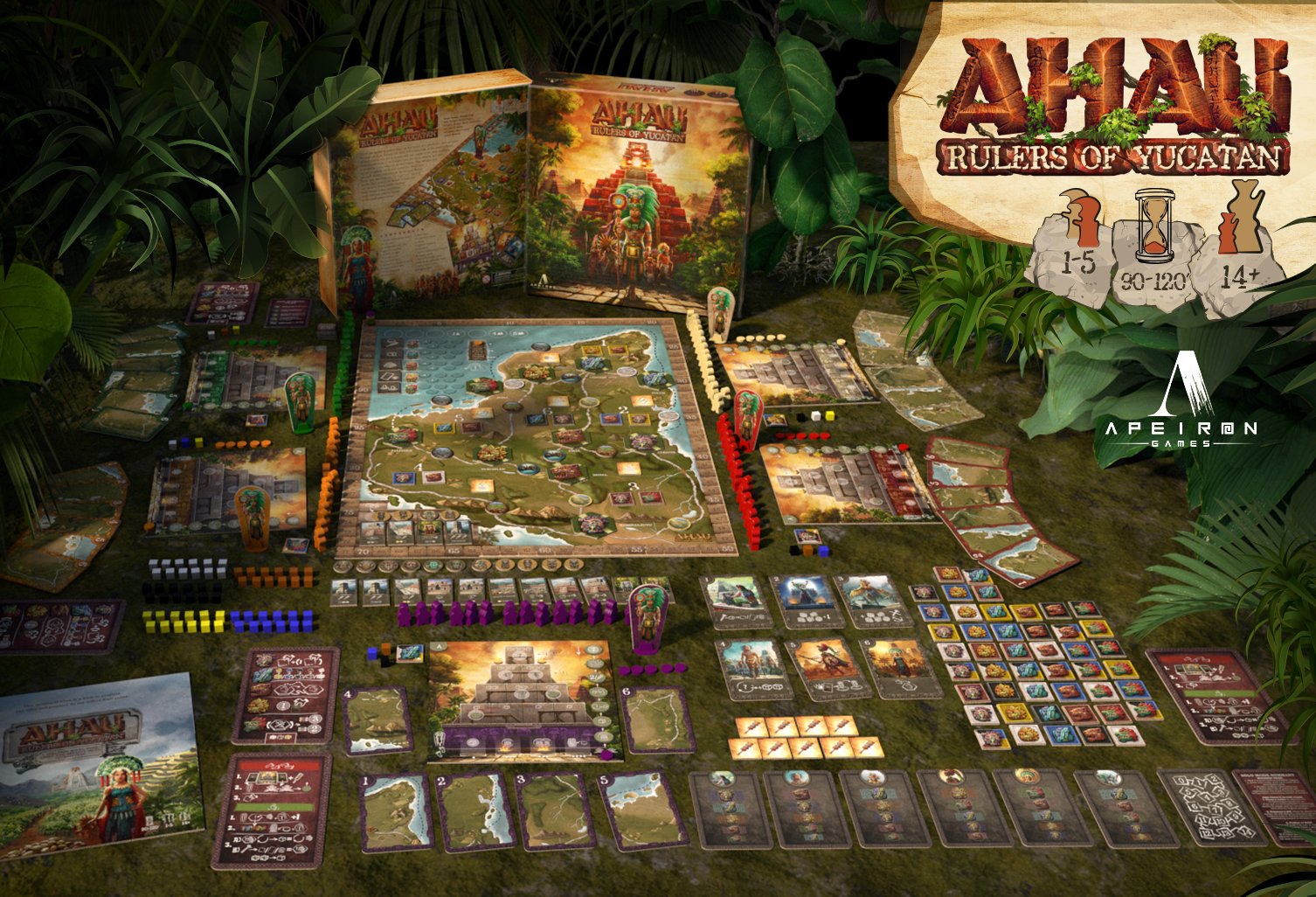
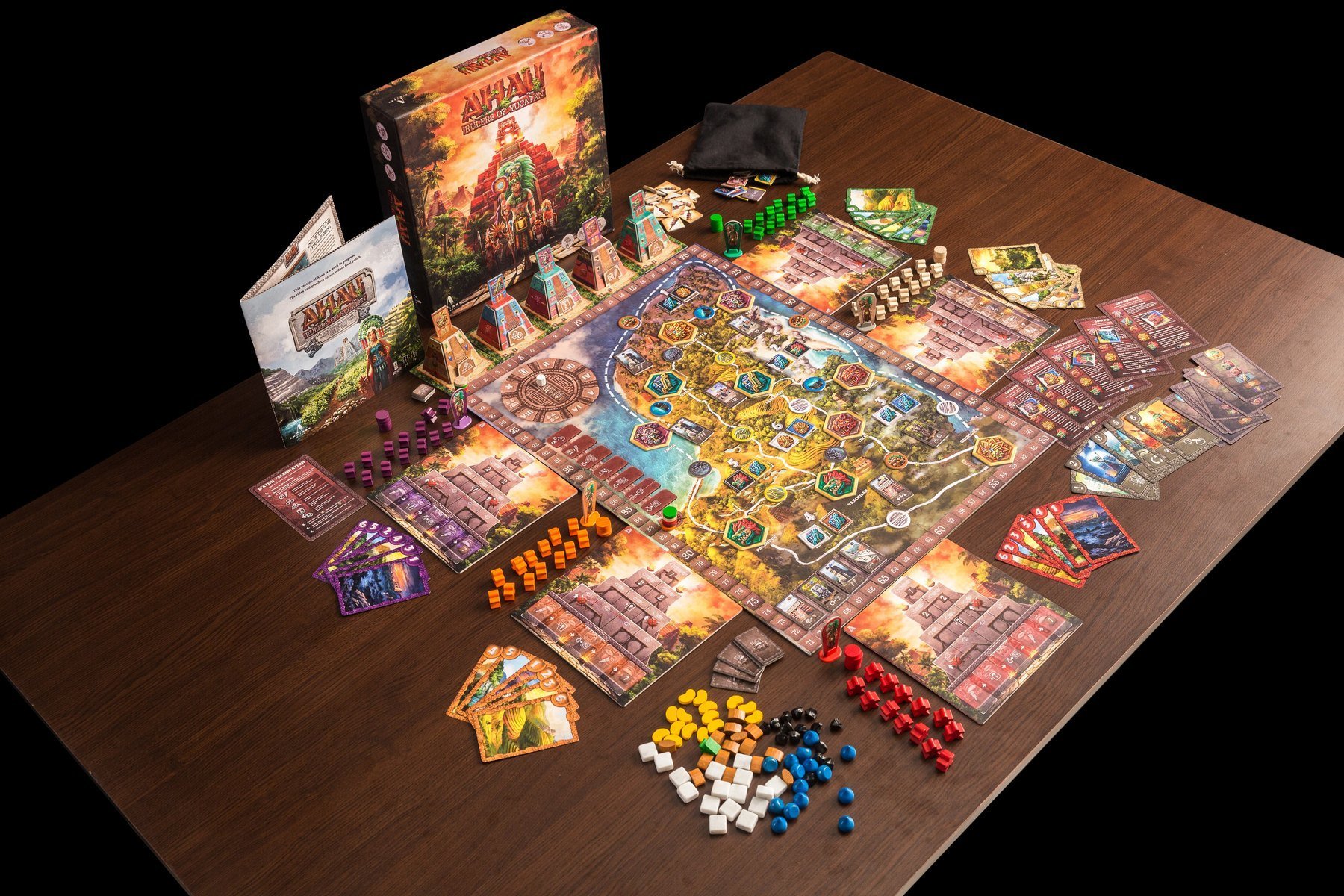
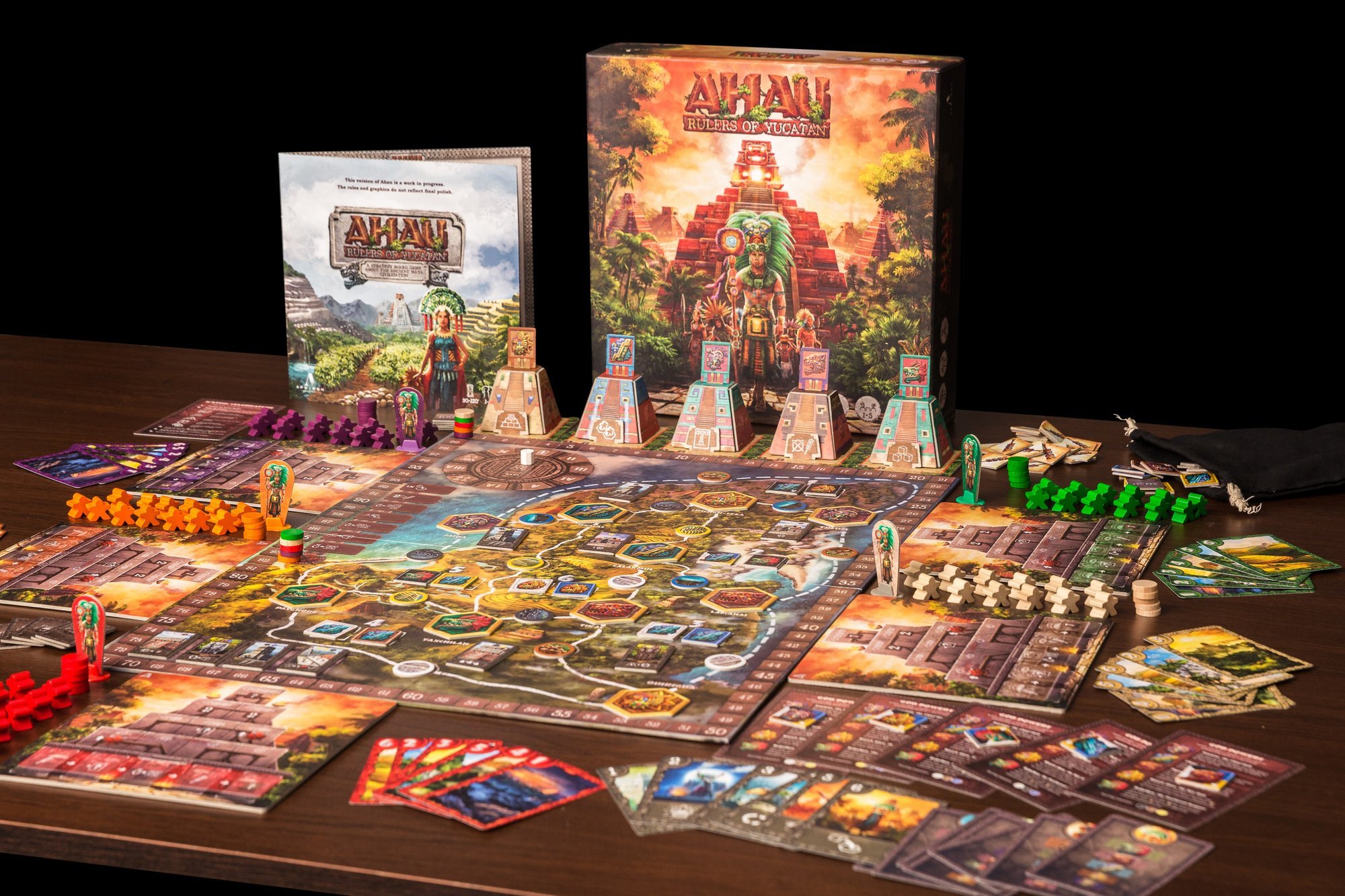
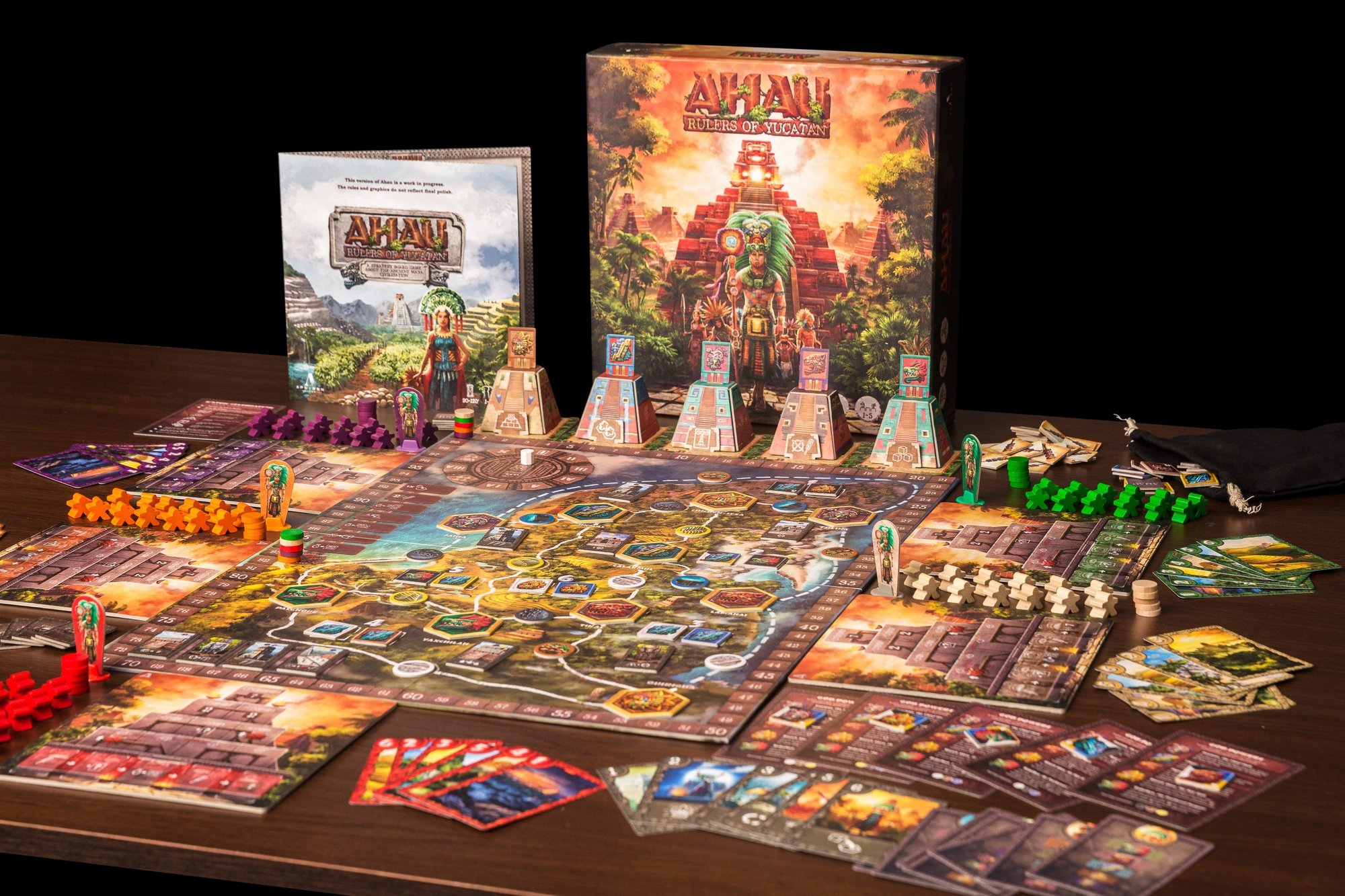
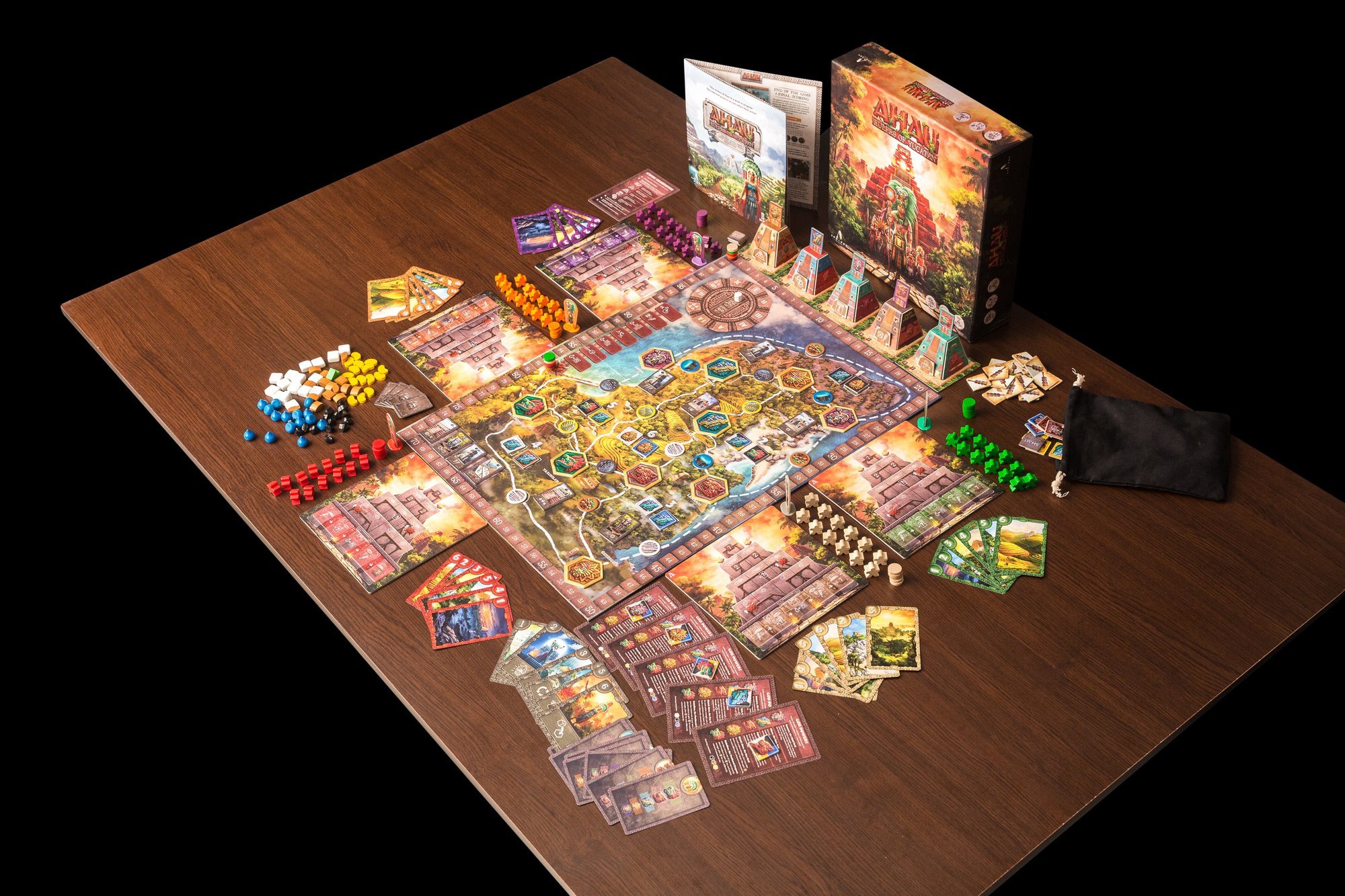
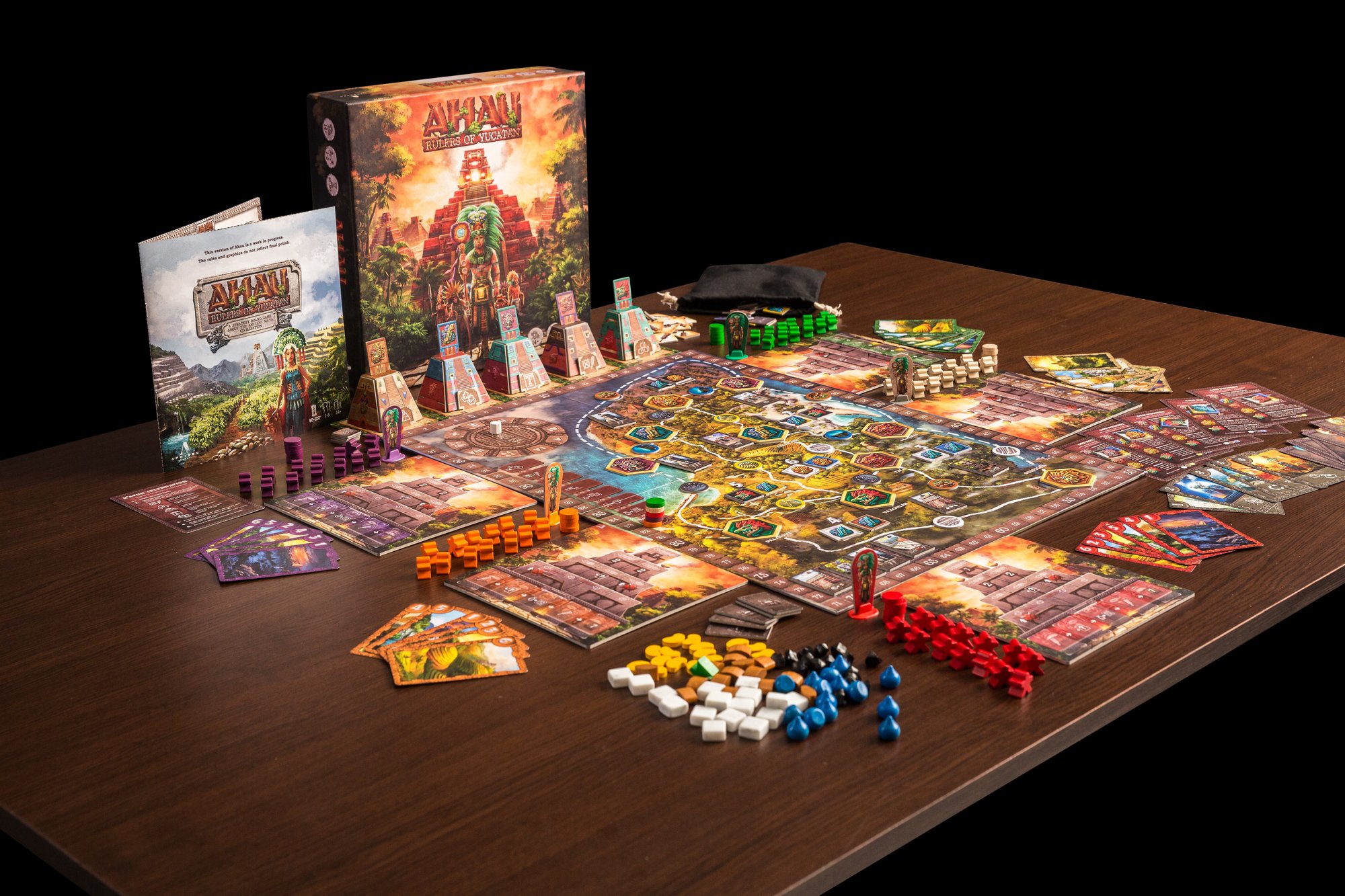
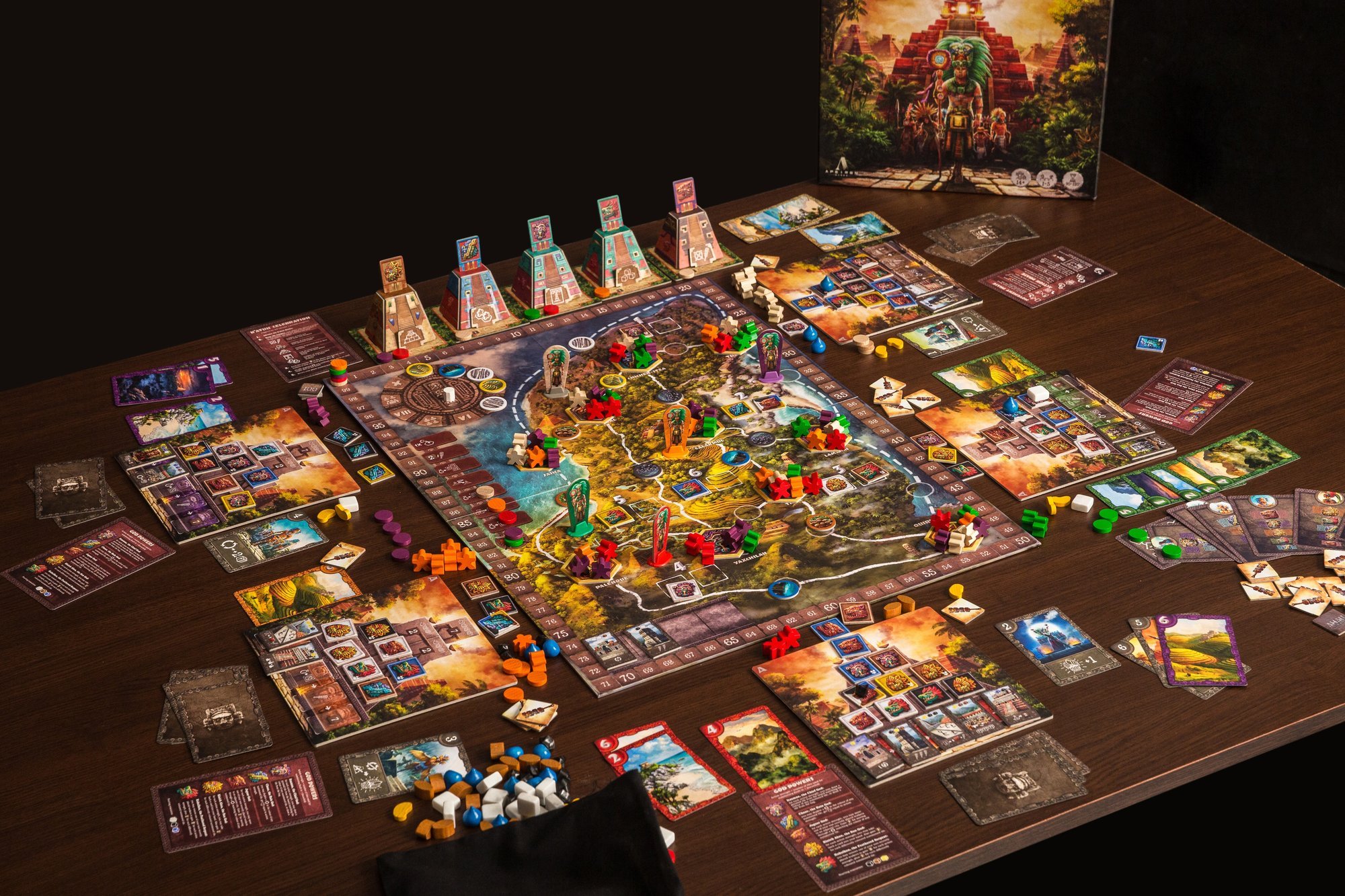
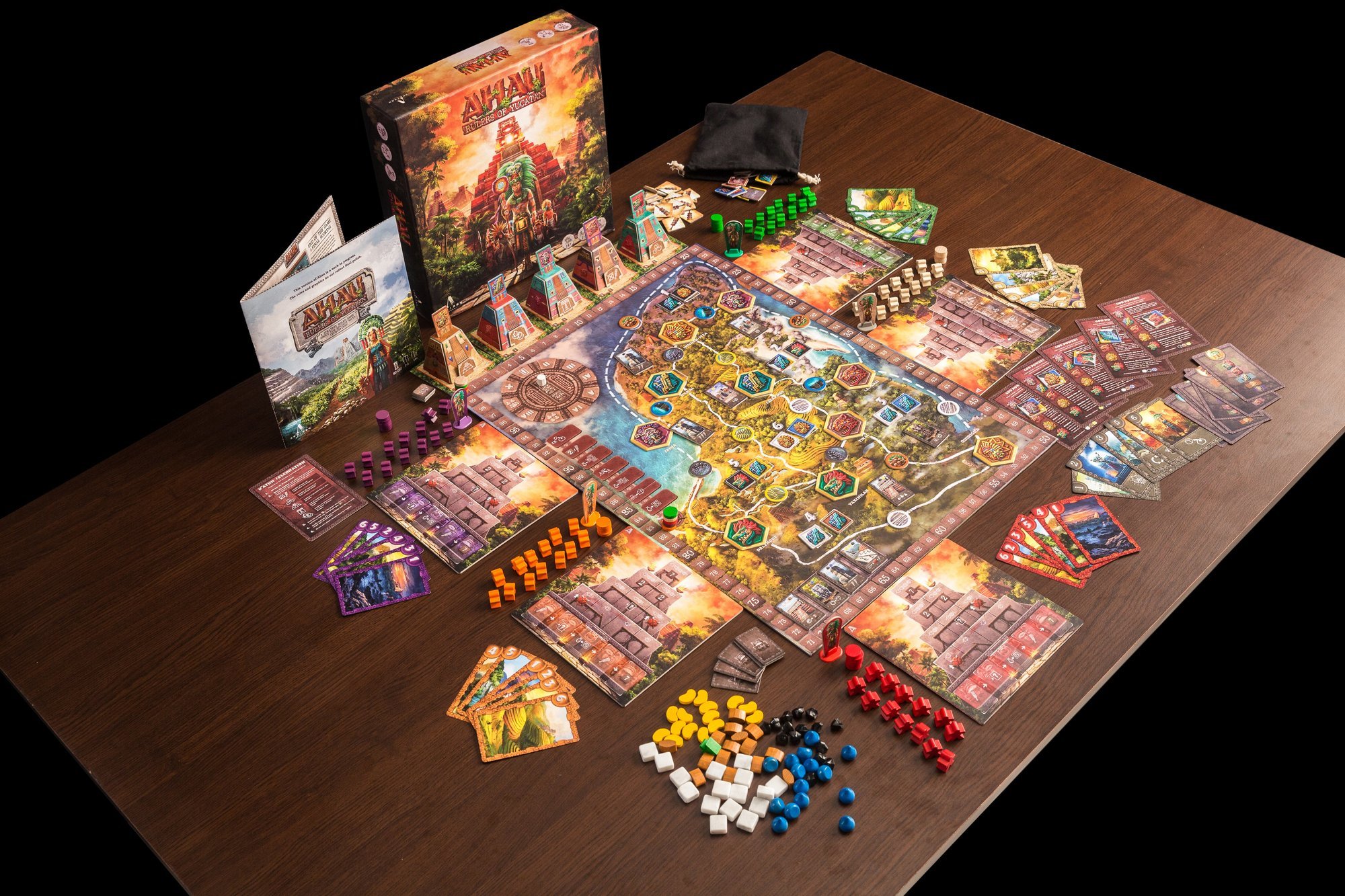
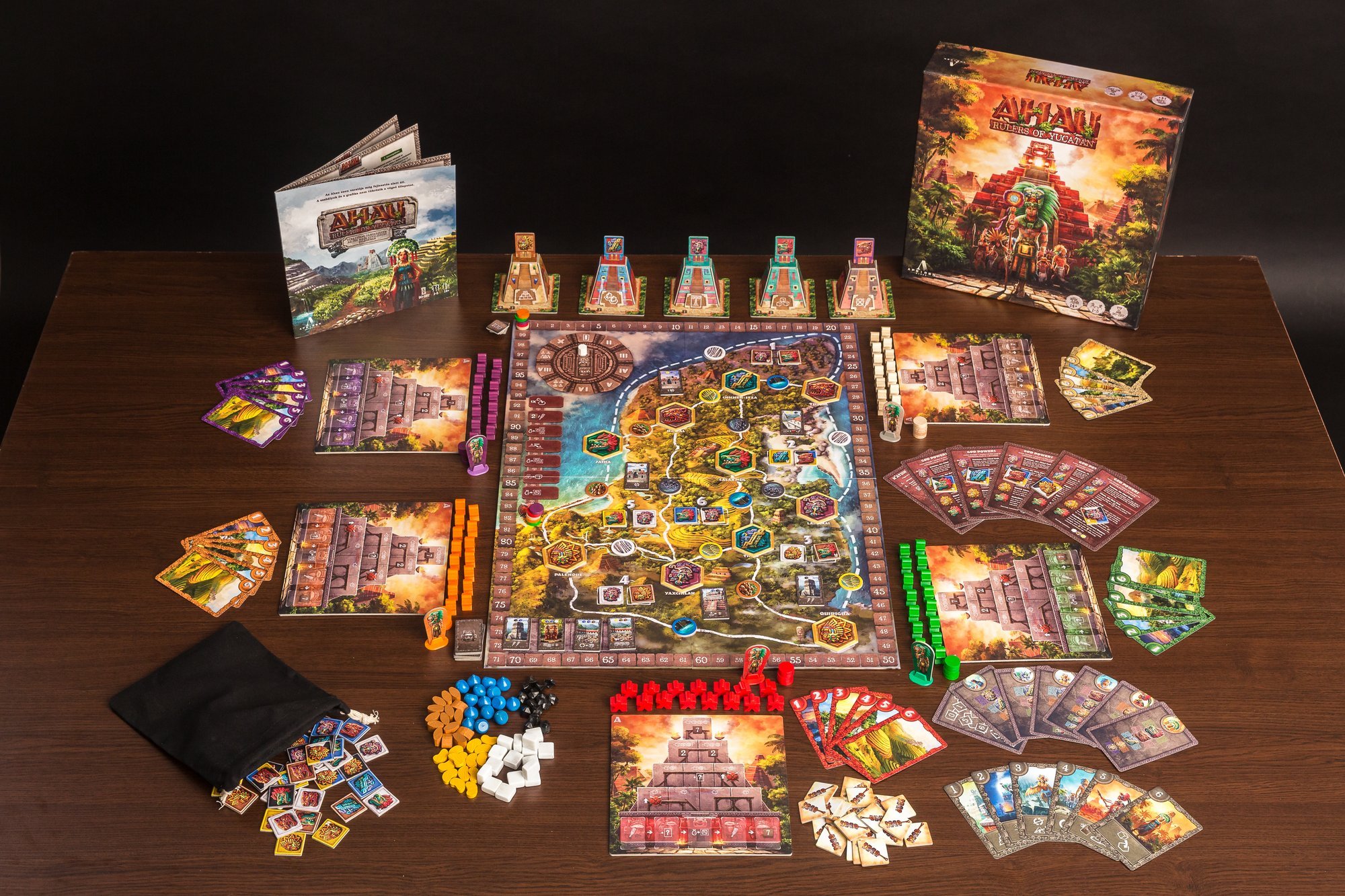
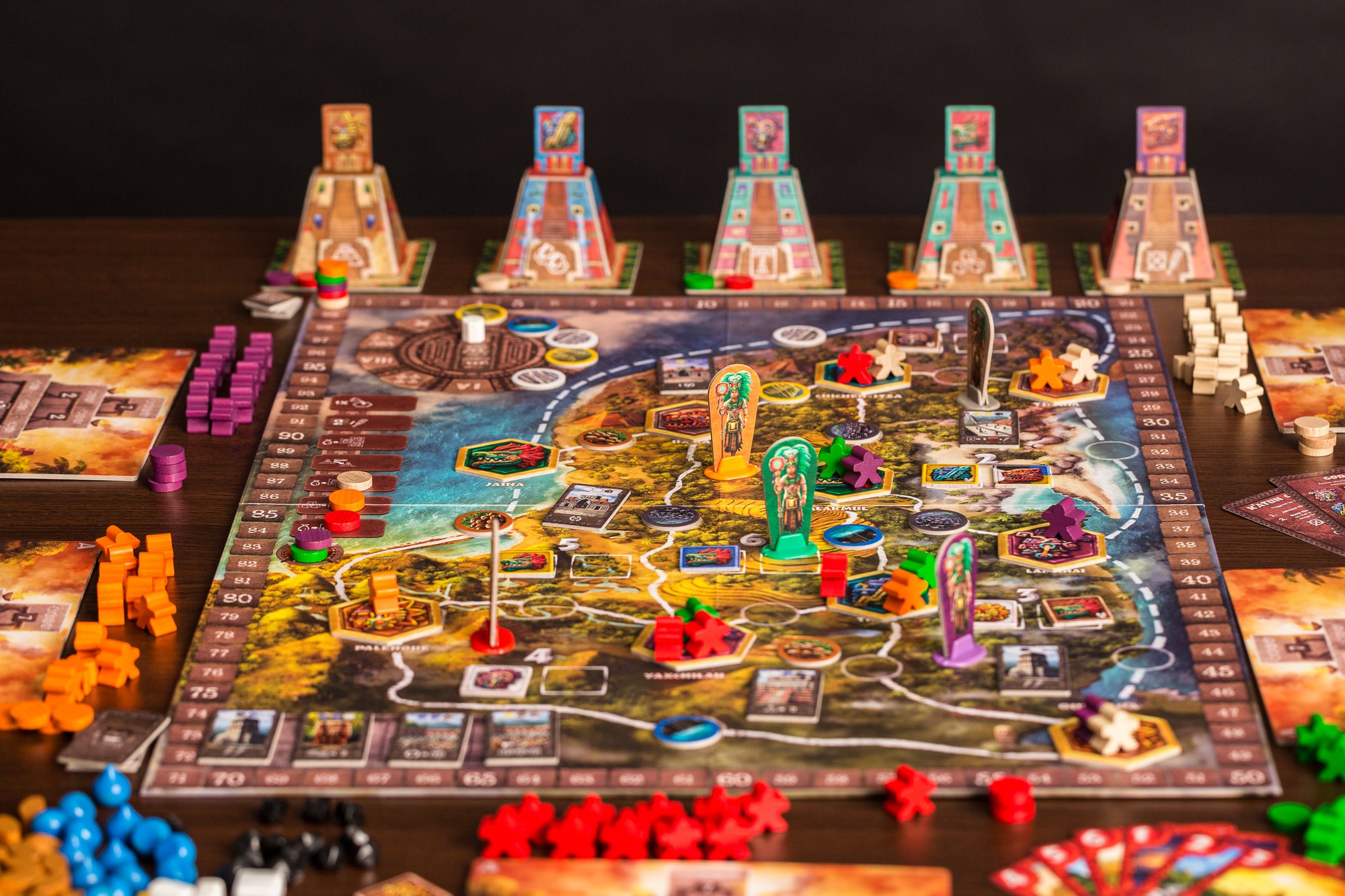
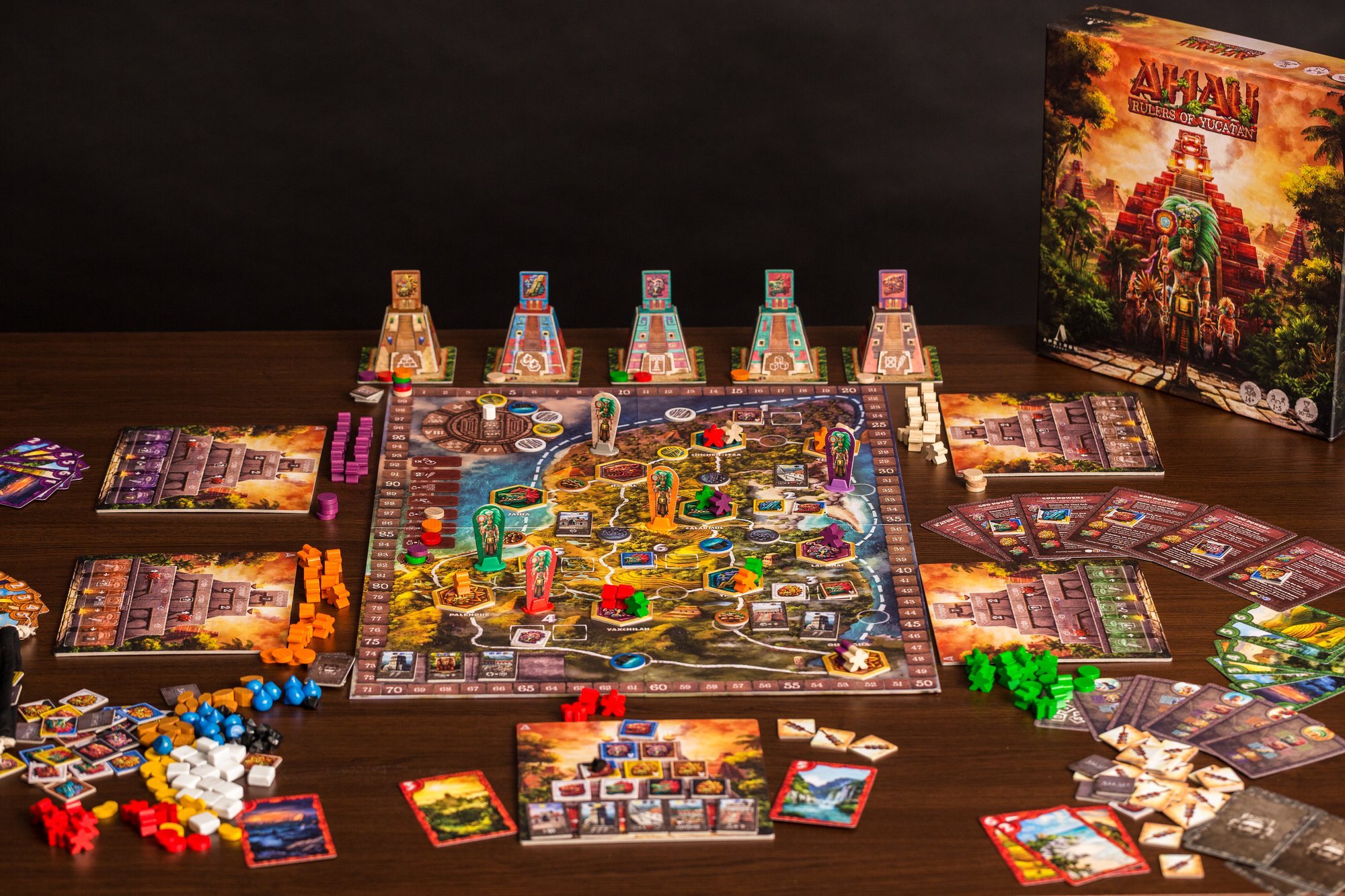
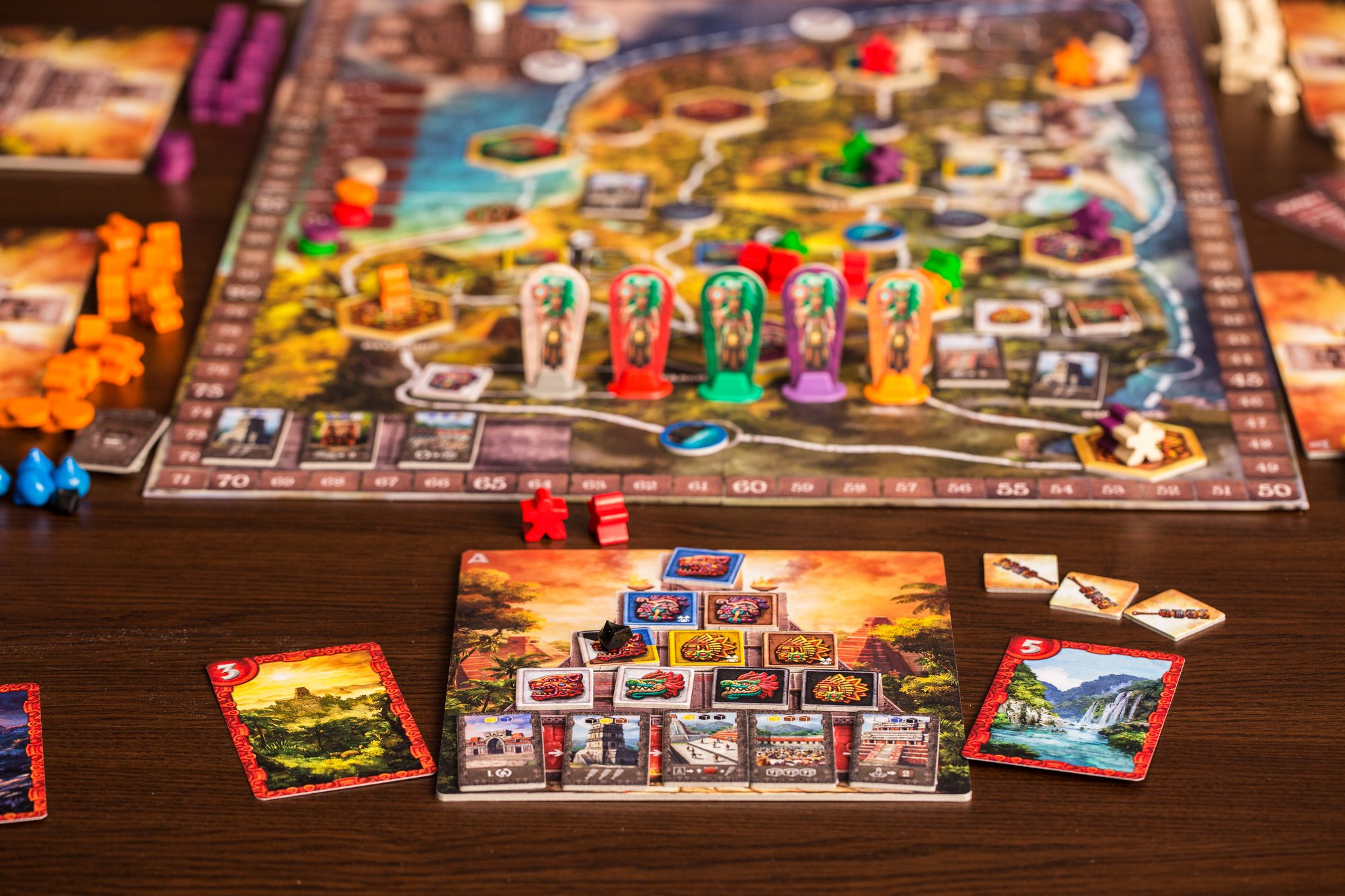
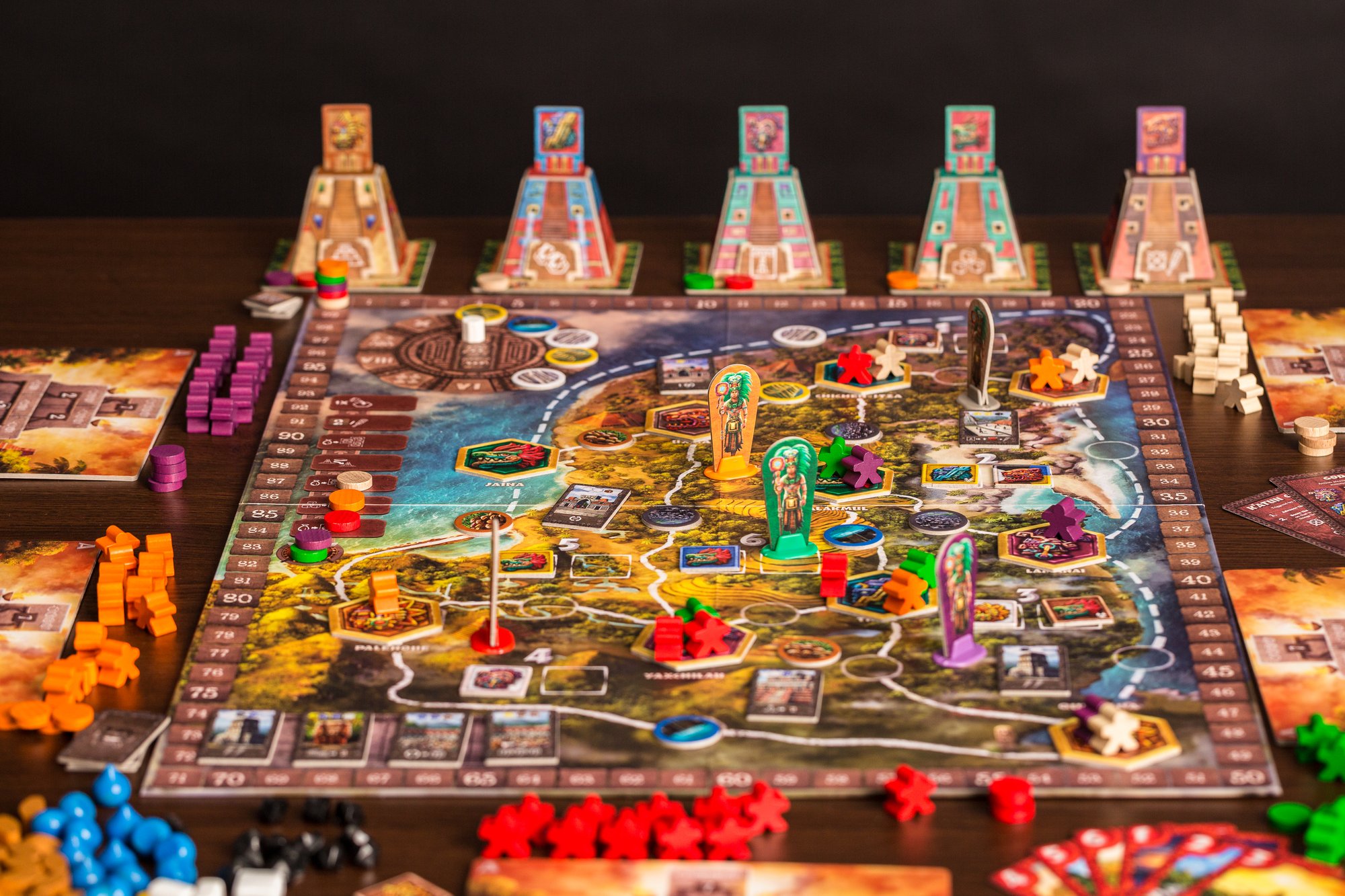
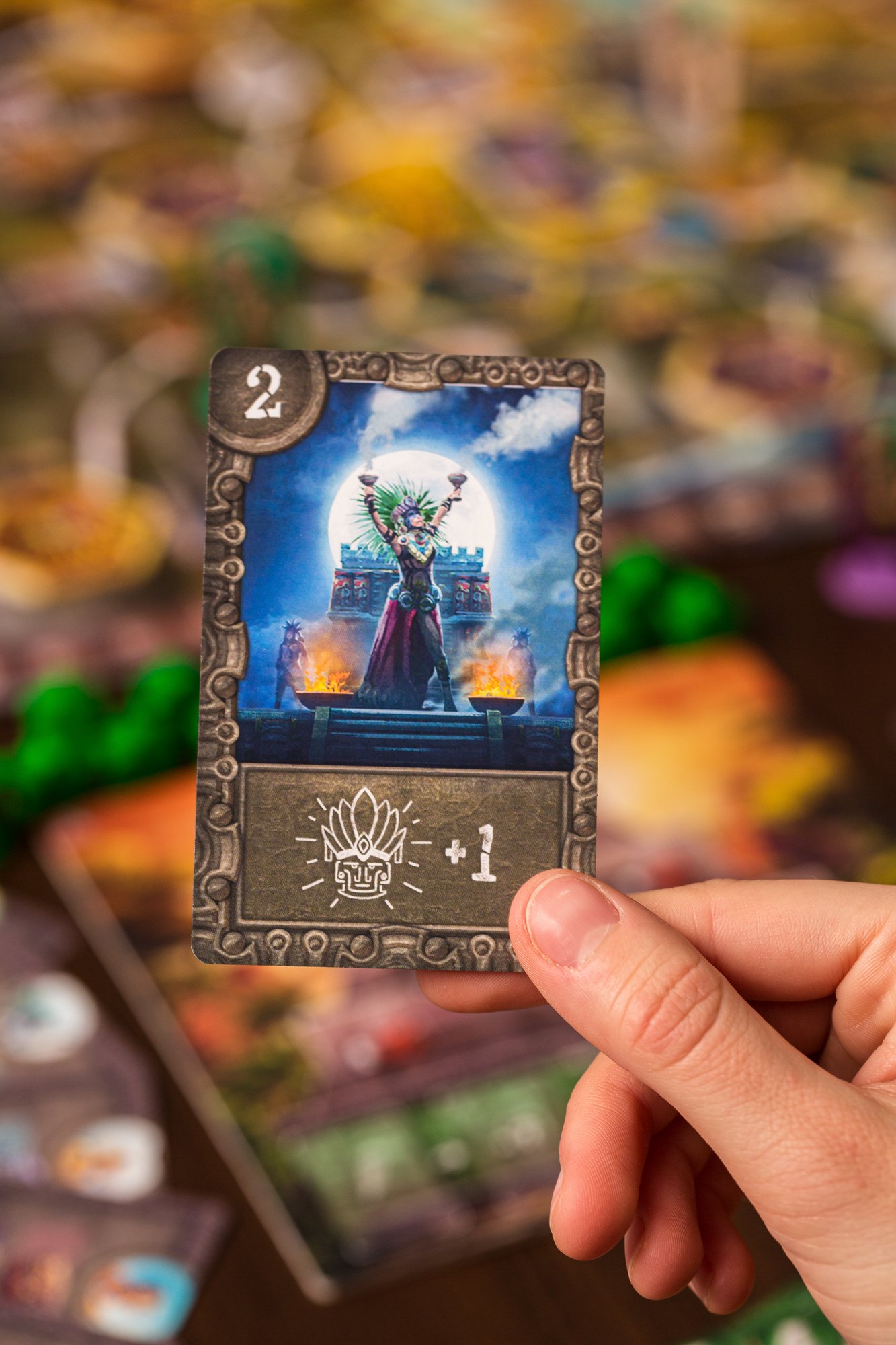
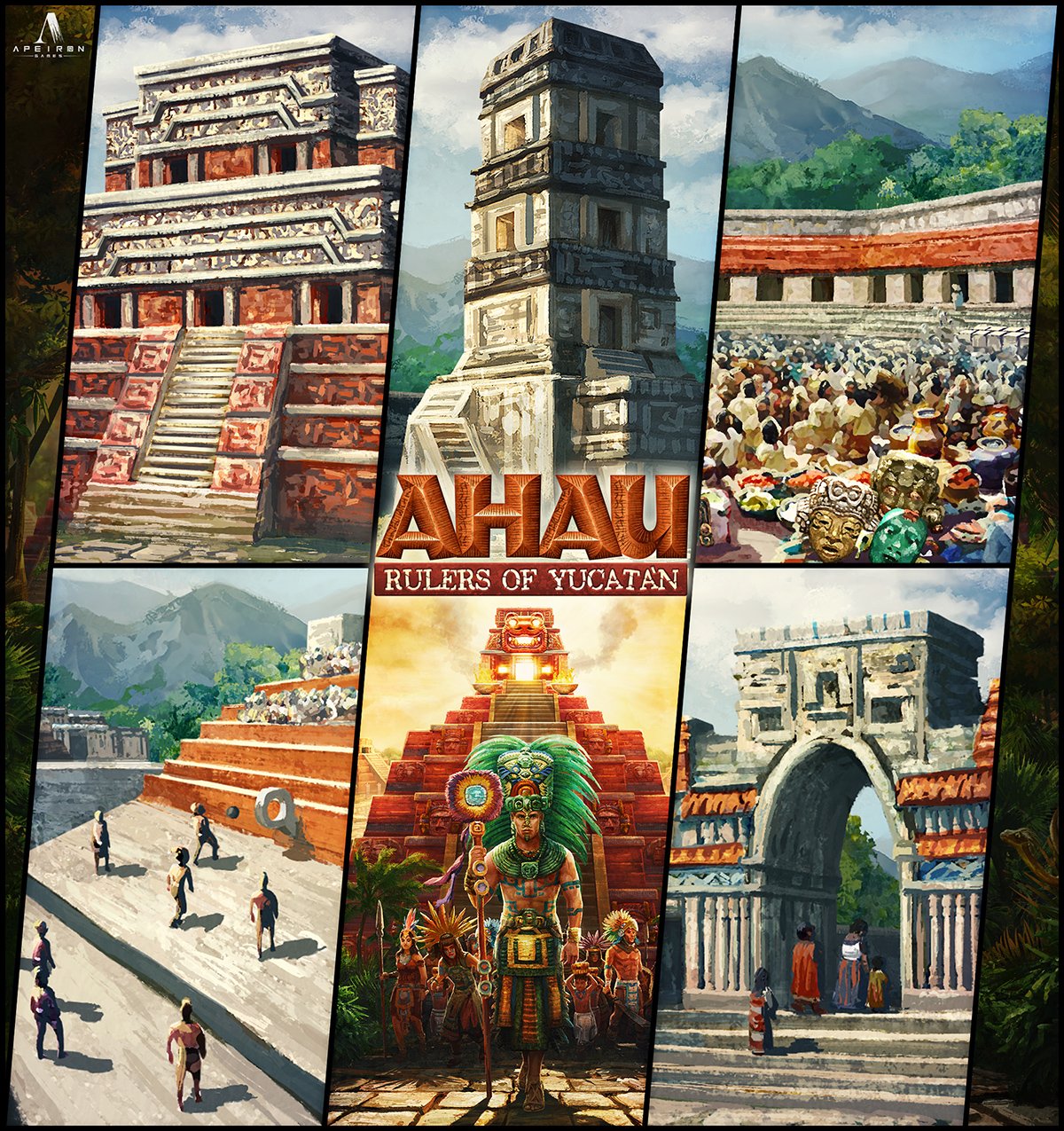
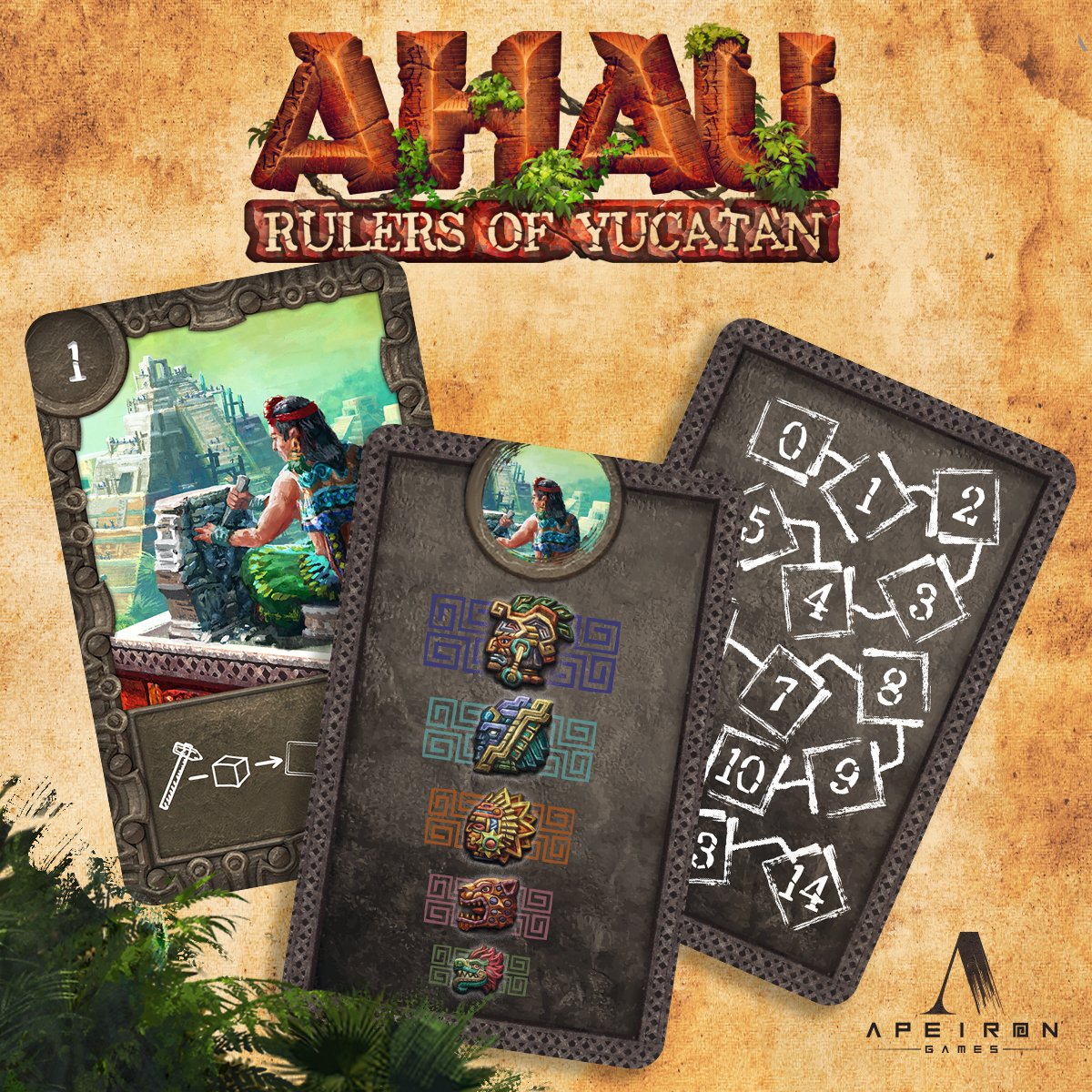
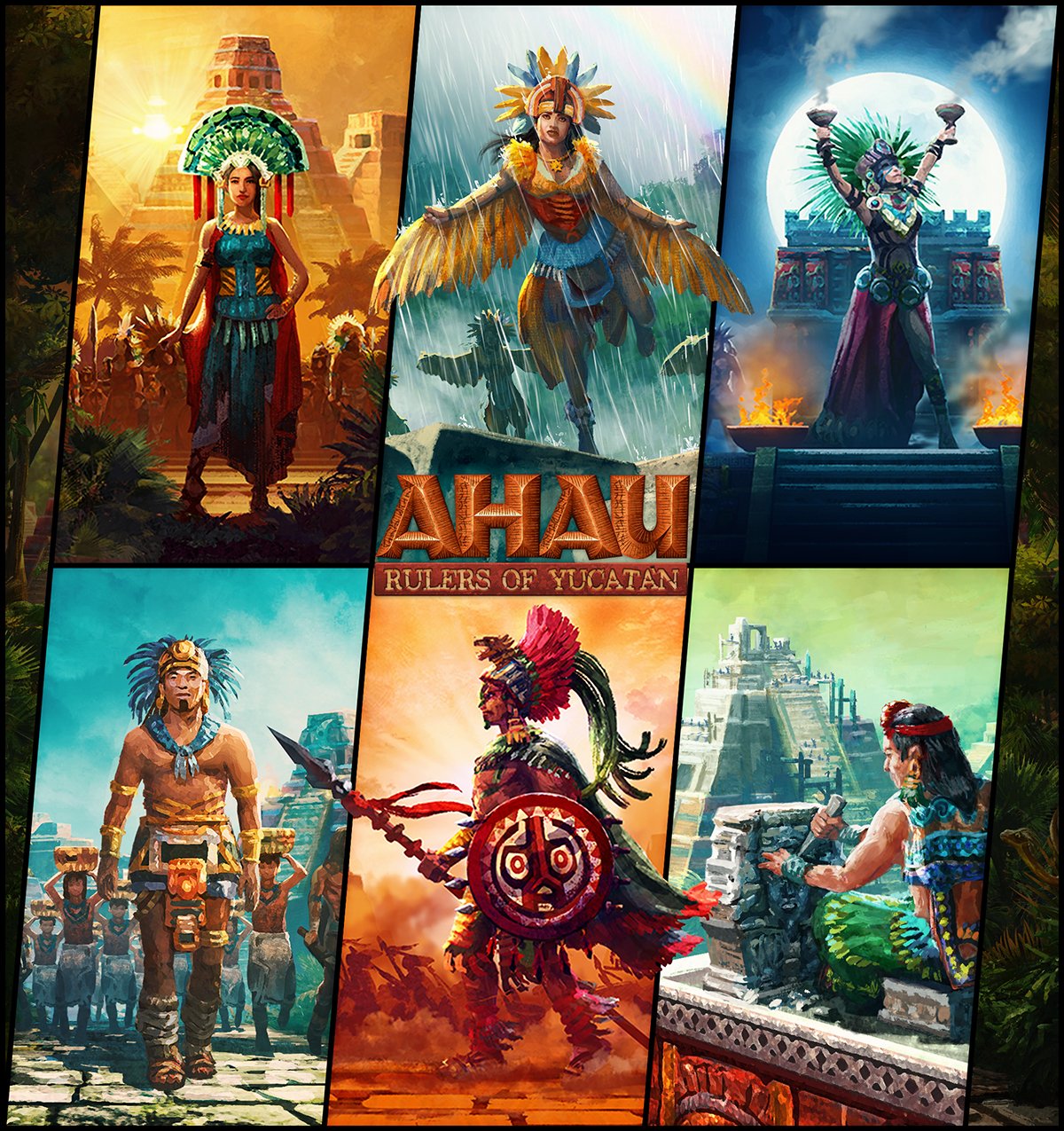
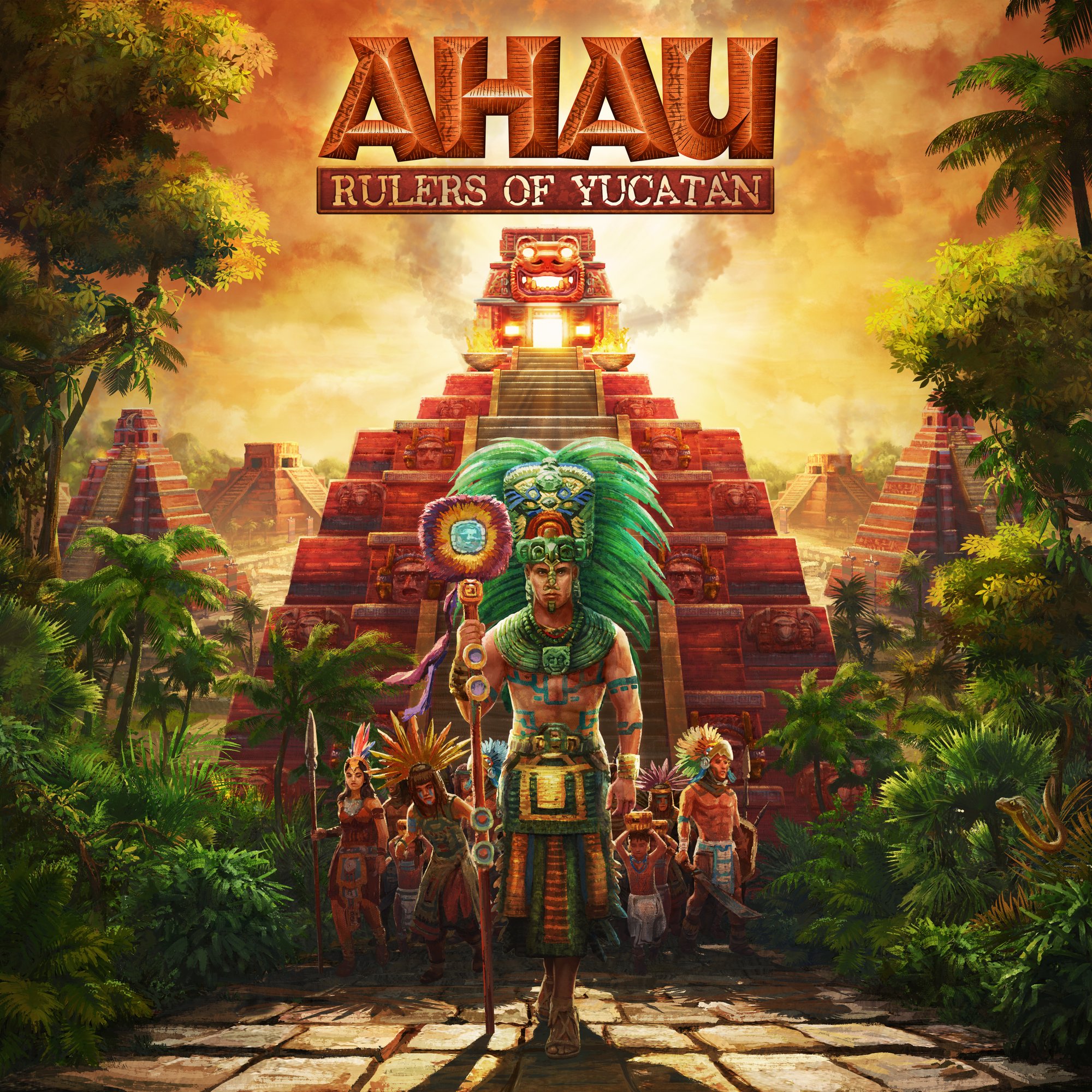
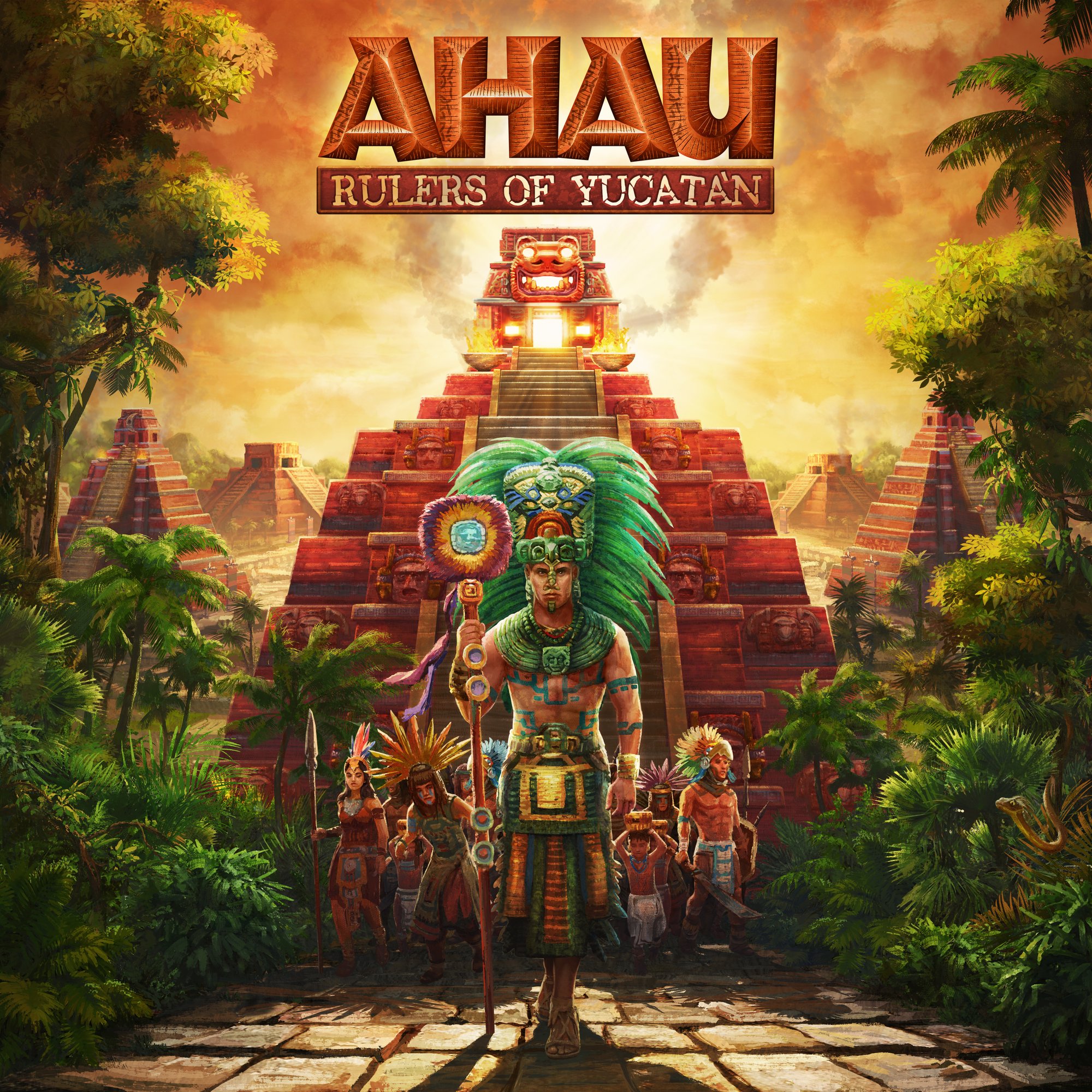
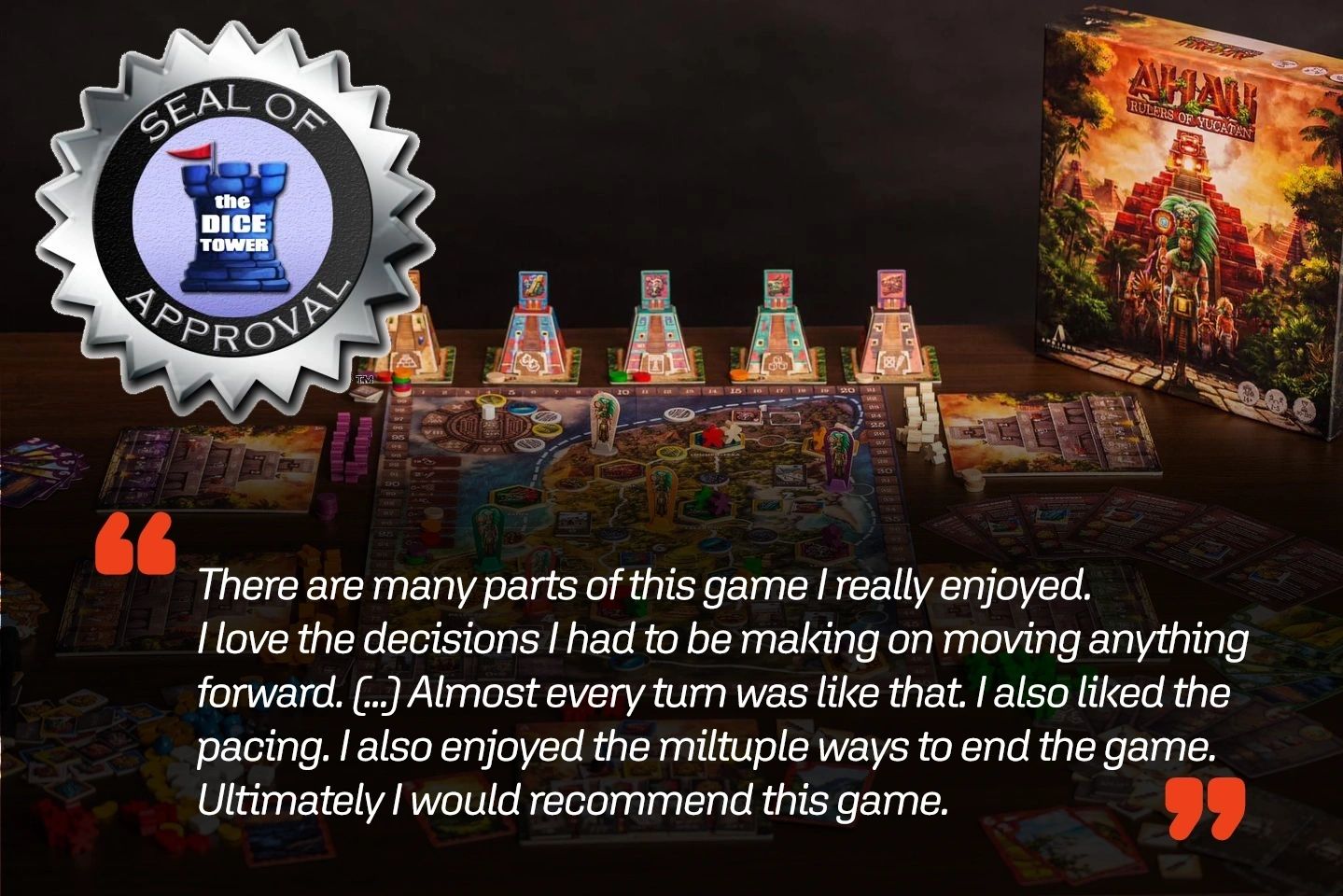
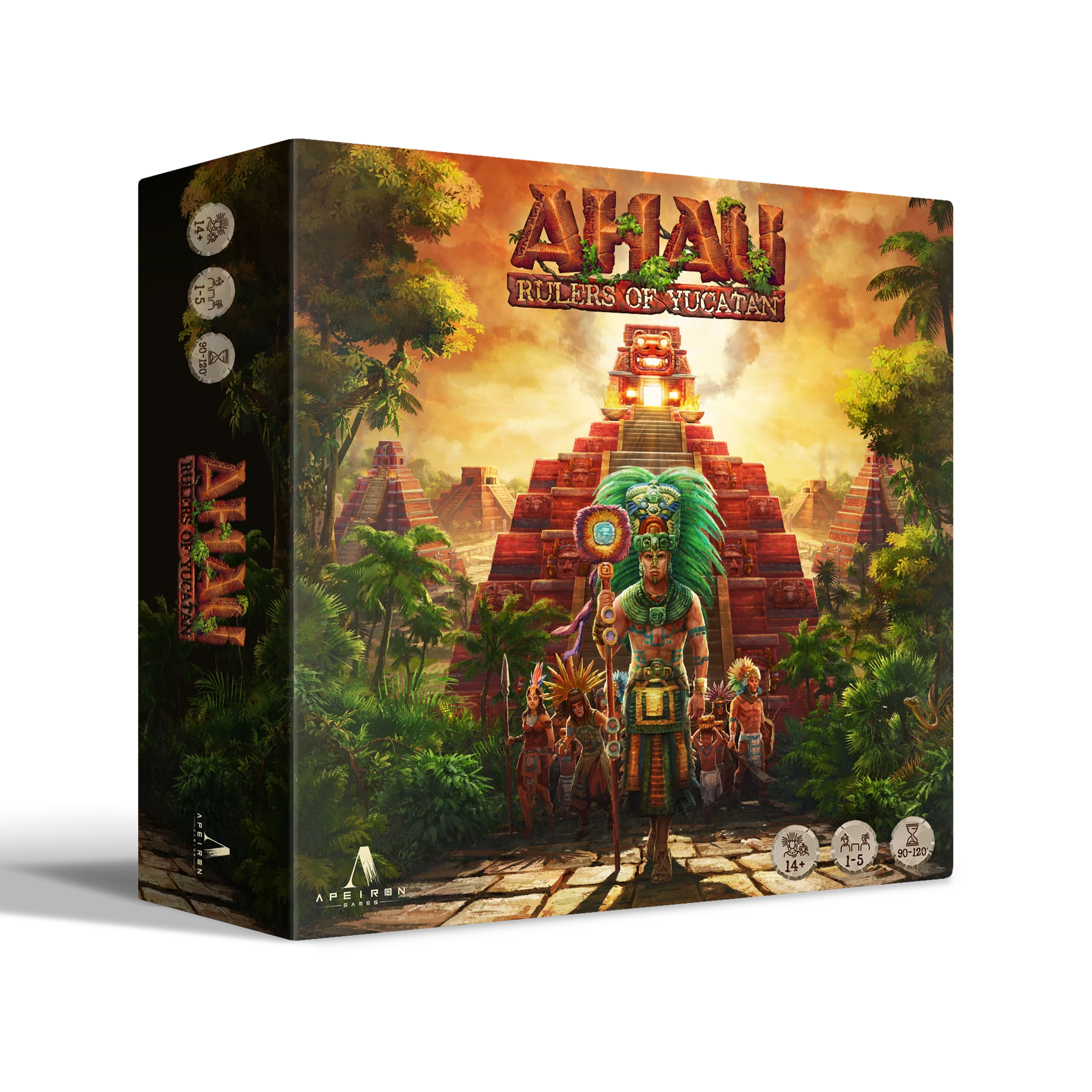
Pure strategy in the Classical Maya world. Two interlocking engines — political court and sacred calendar — with zero dice and zero luck. Winner of the Dice Tower Seal of Approval.
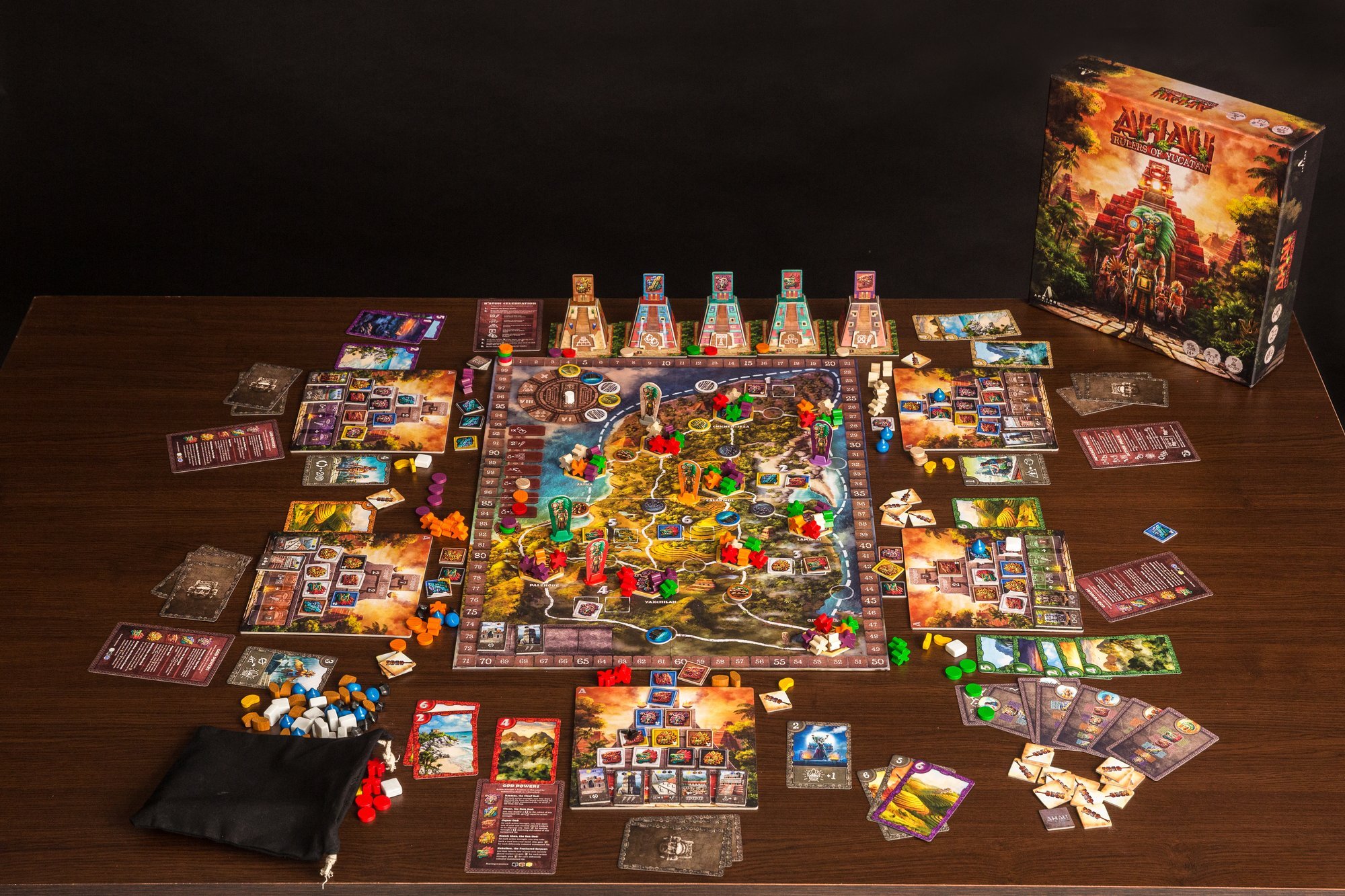
Every turn, every player runs two interlocking systems simultaneously. One feeds the other. Together, they create the richest engine-building puzzle in the Euro-strategy genre.
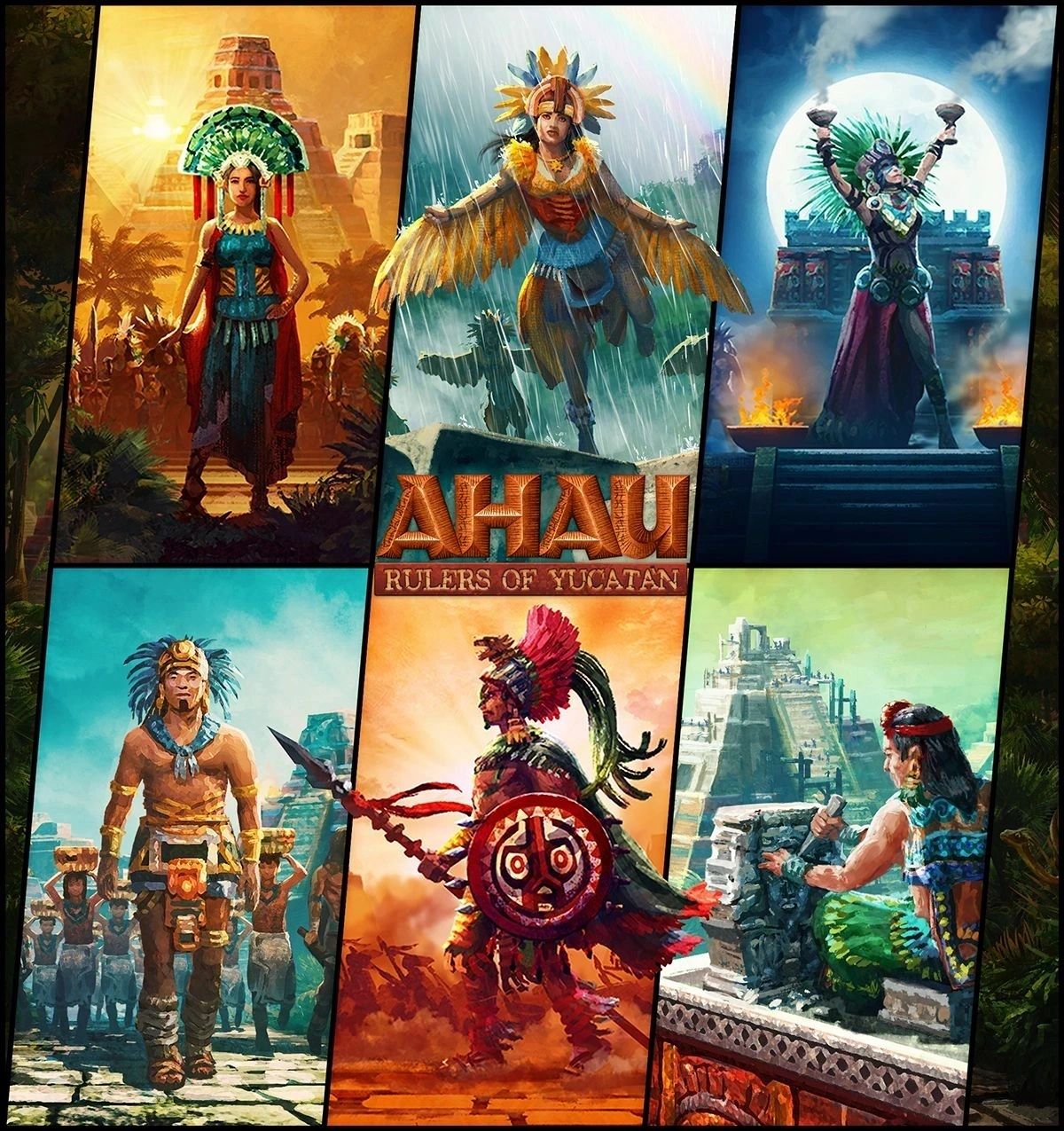
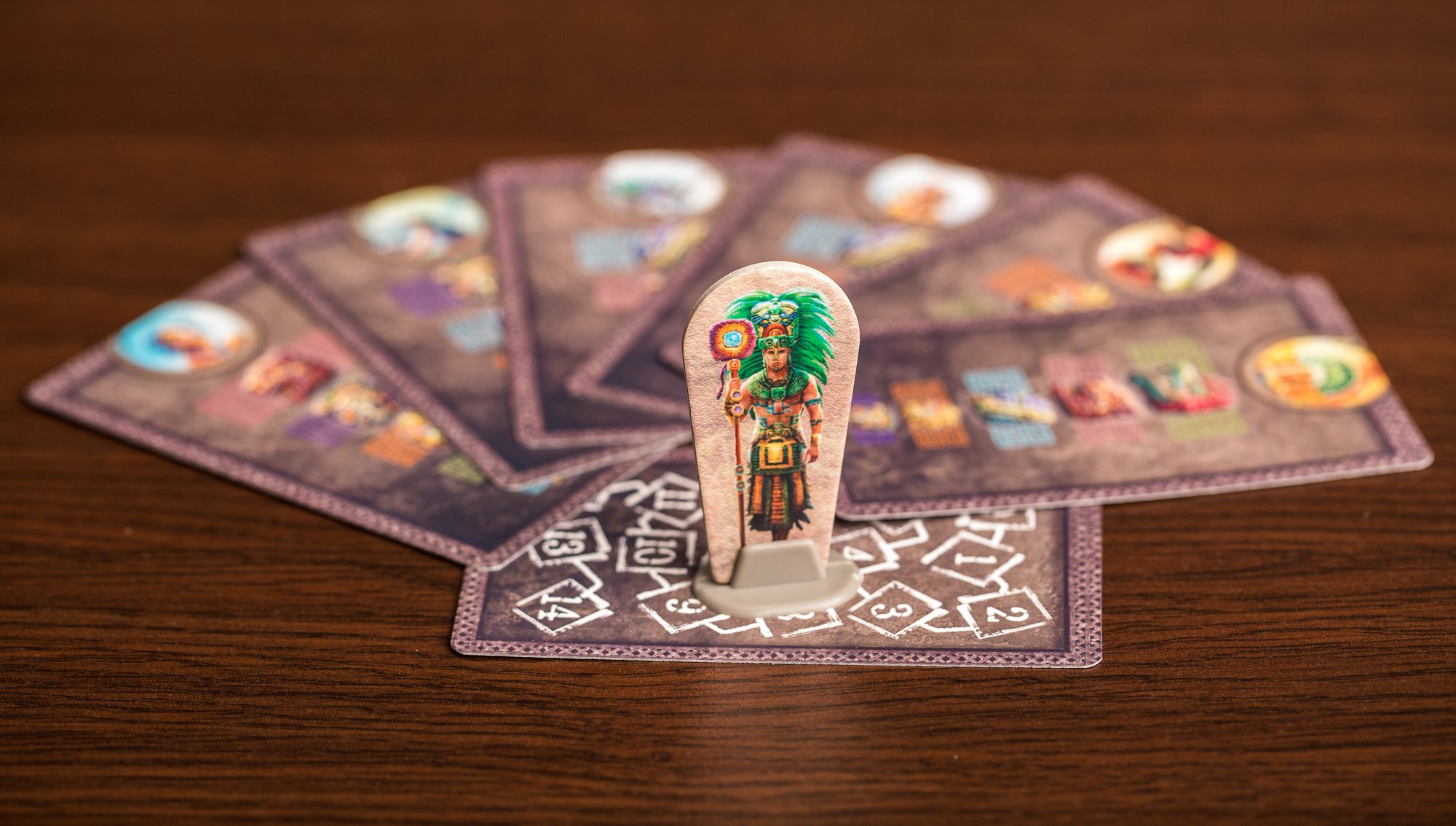
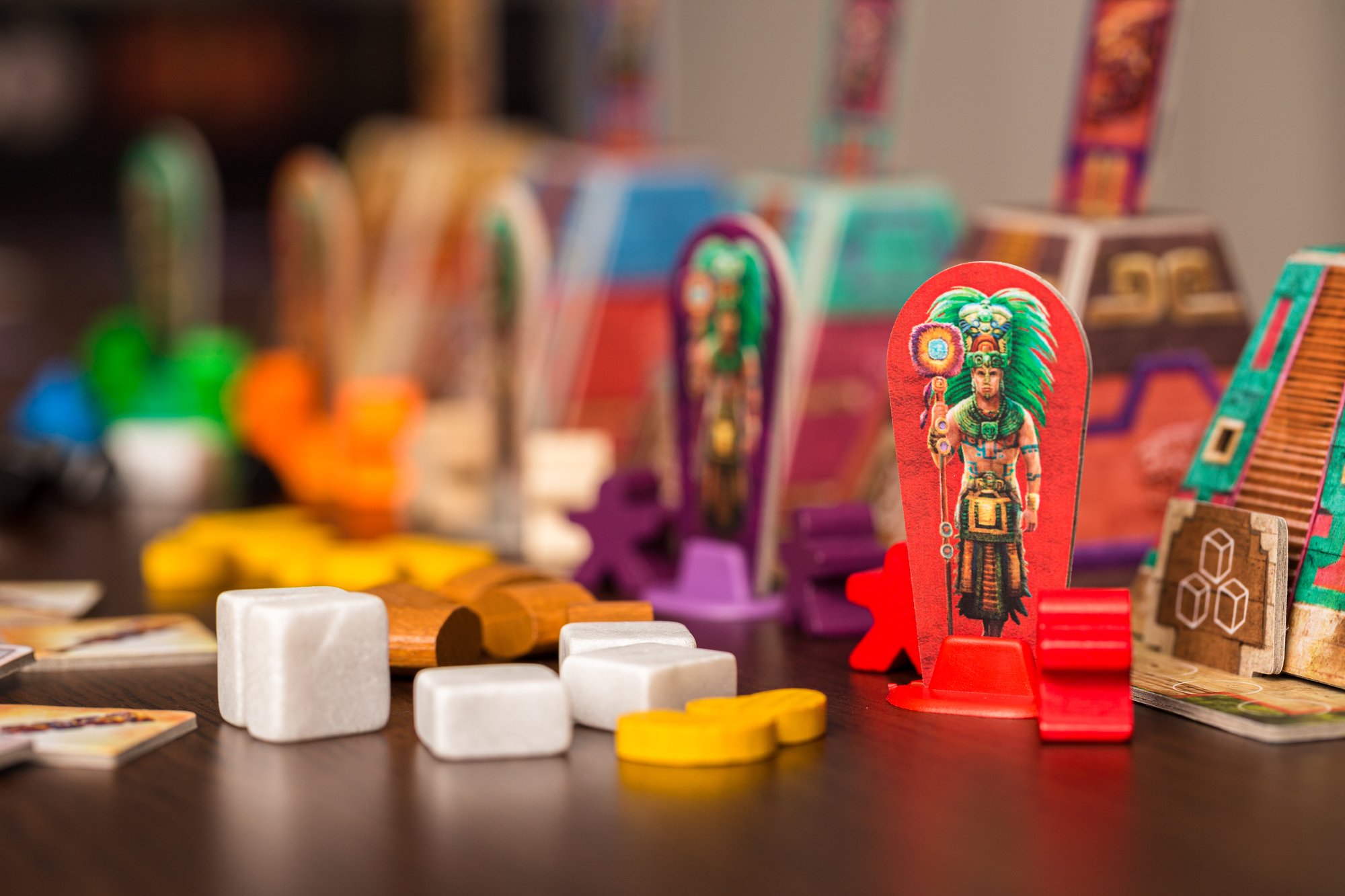
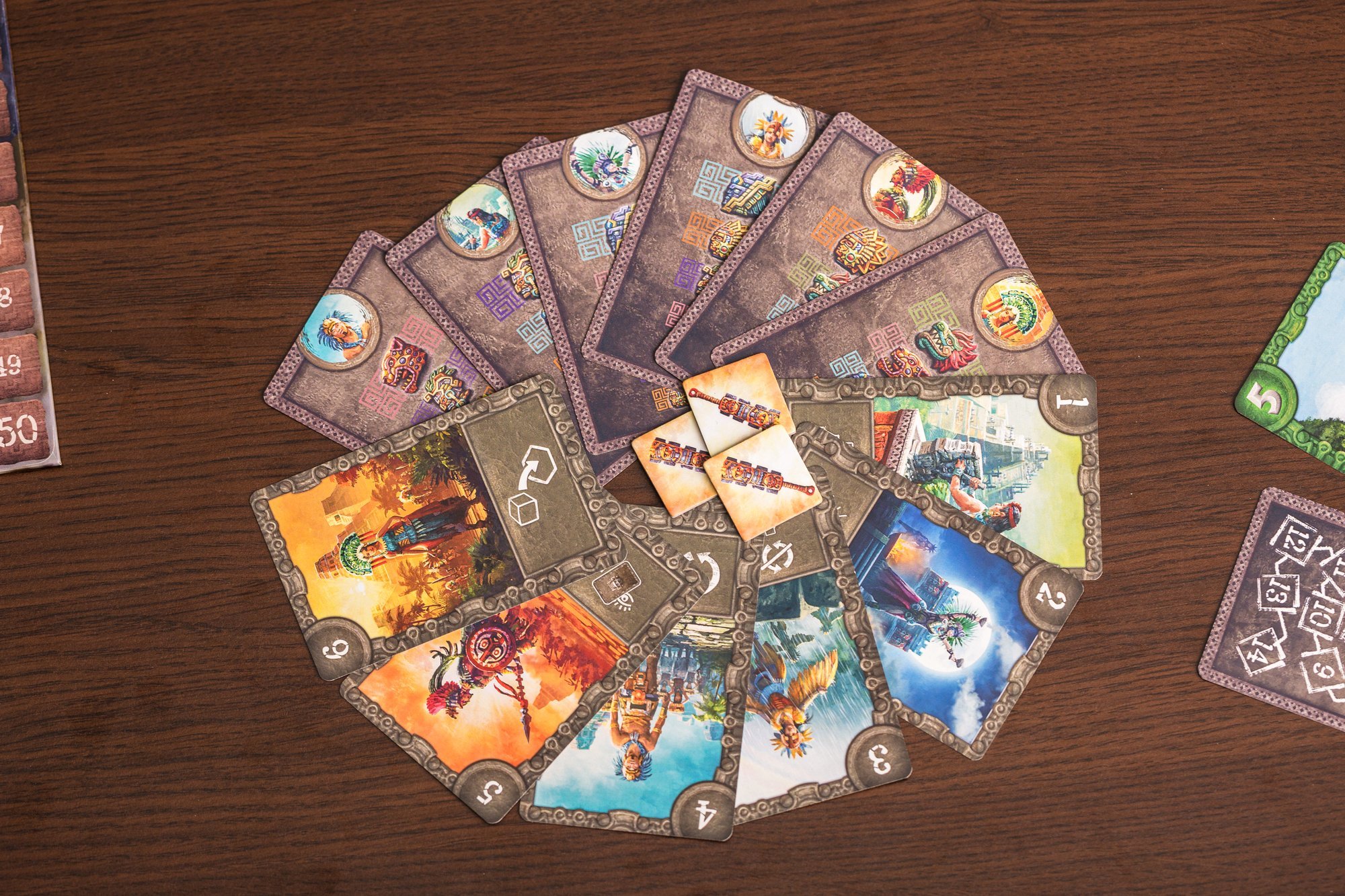
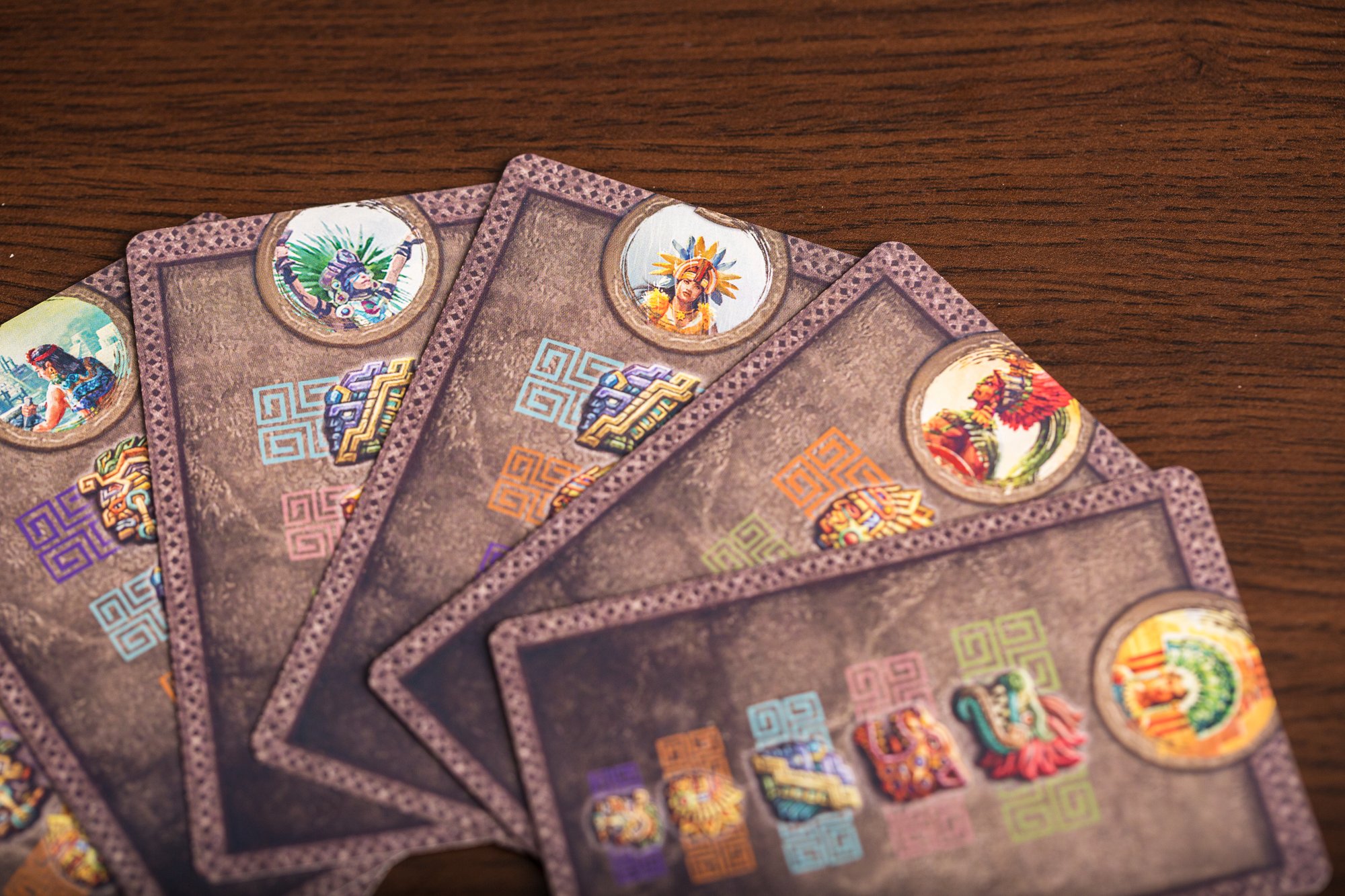
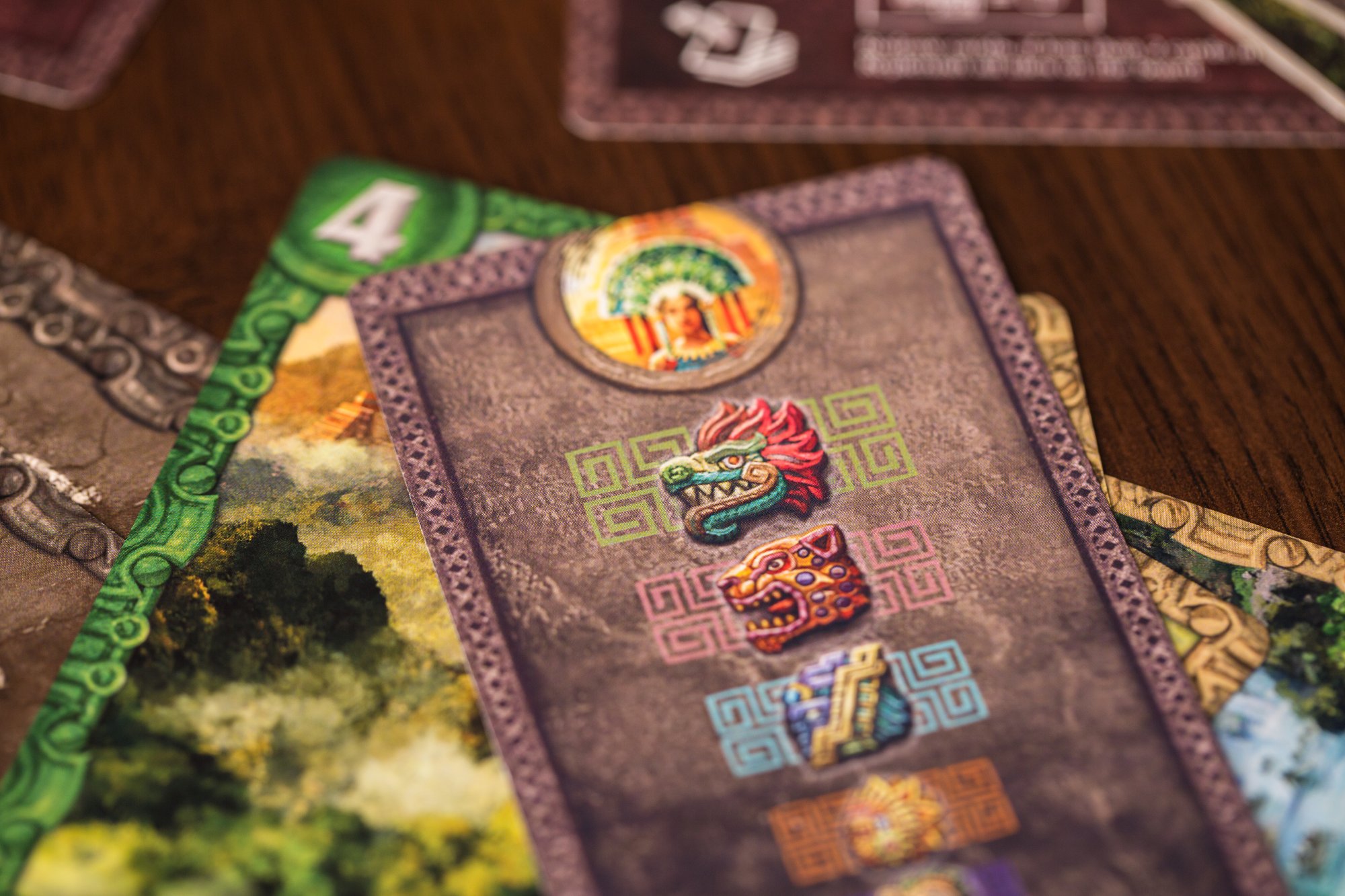
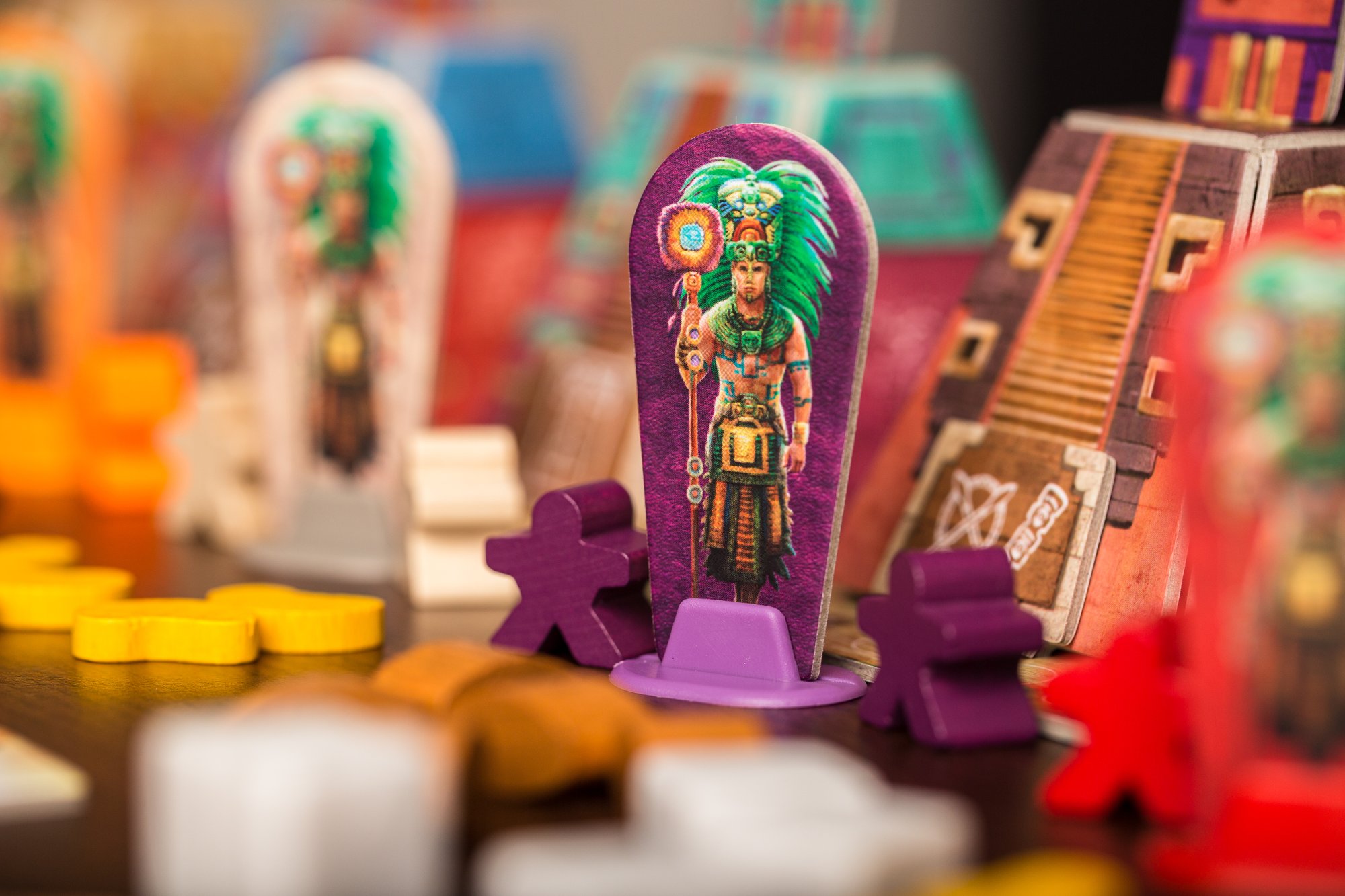
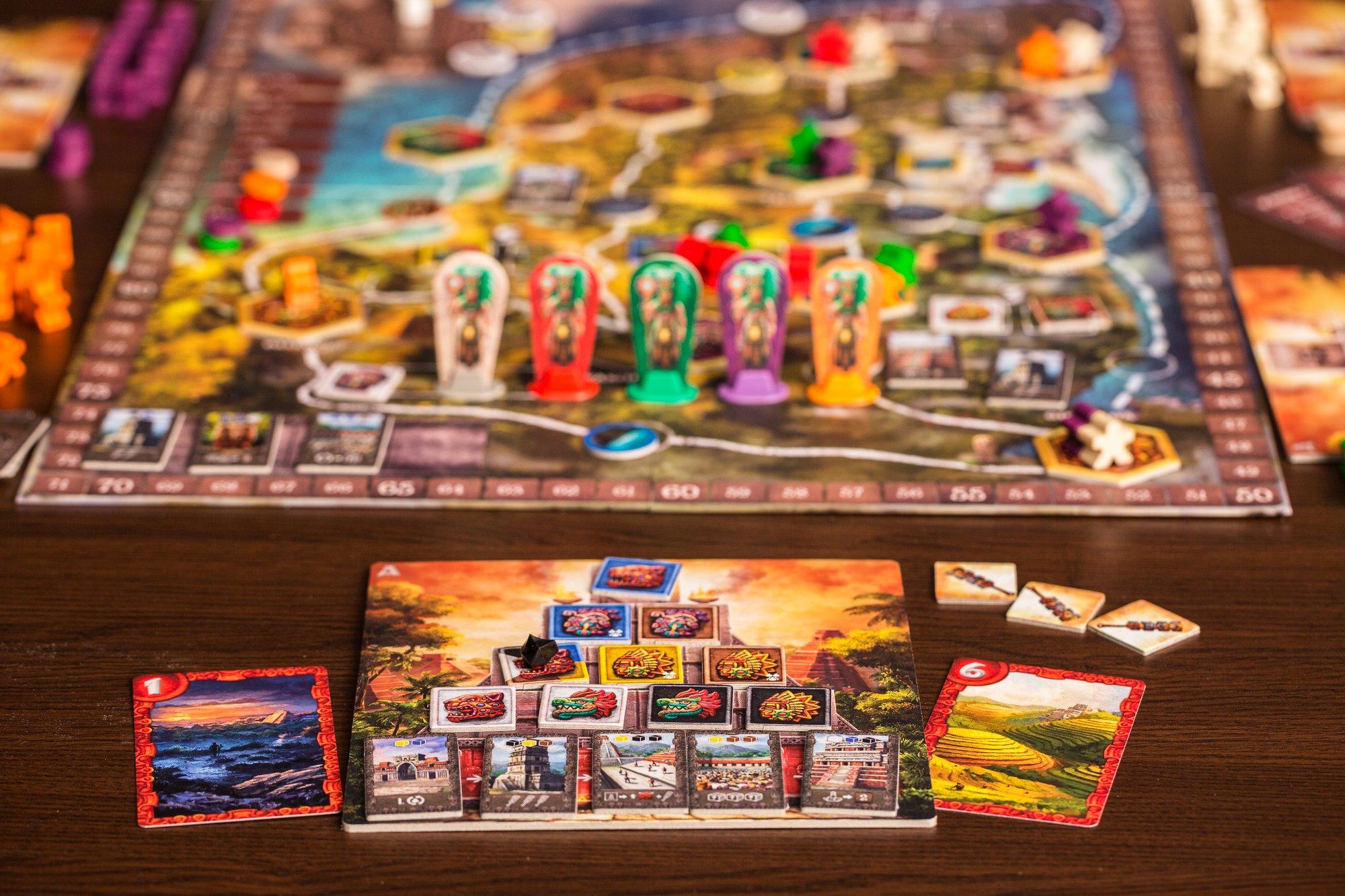
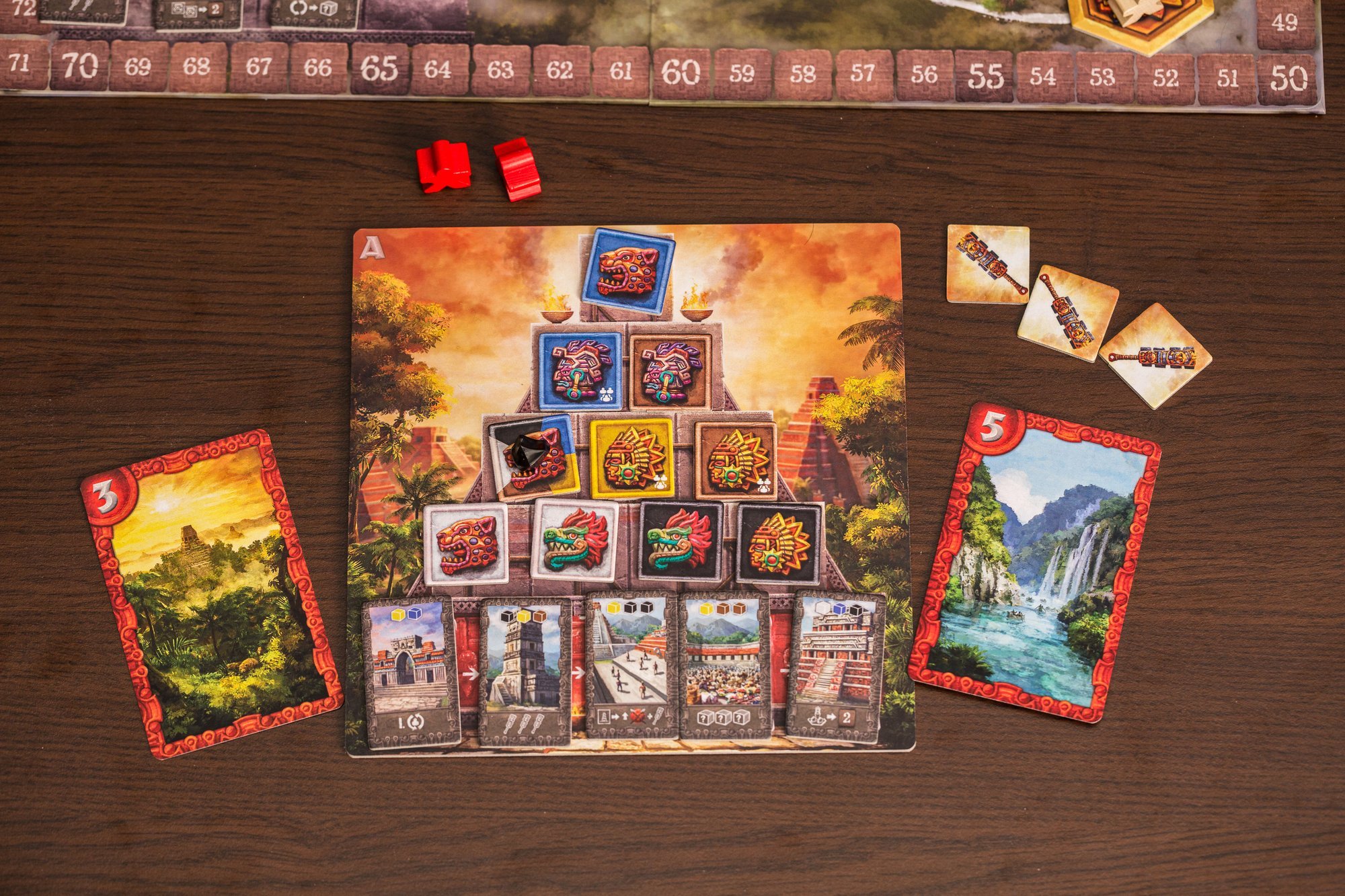
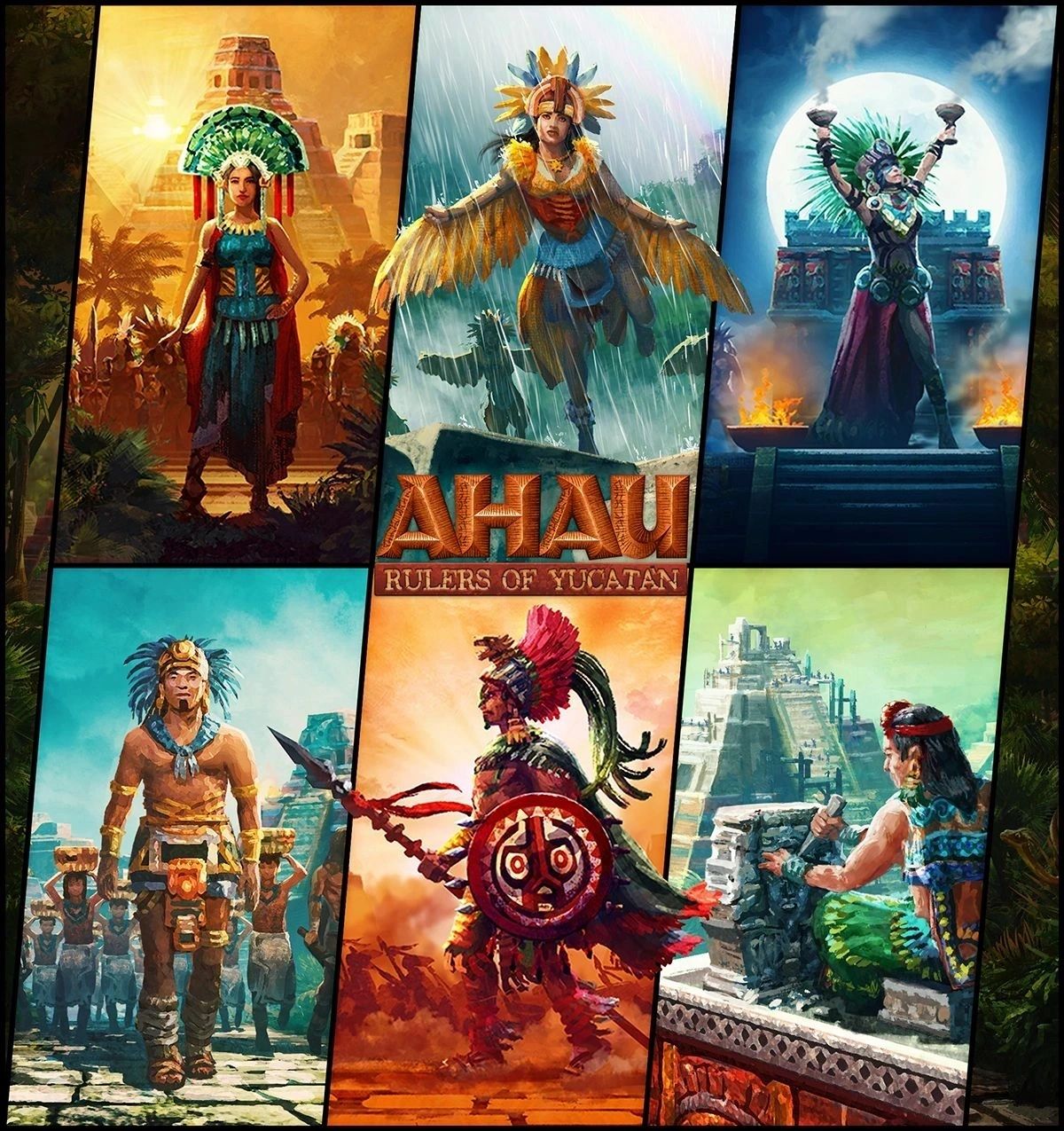
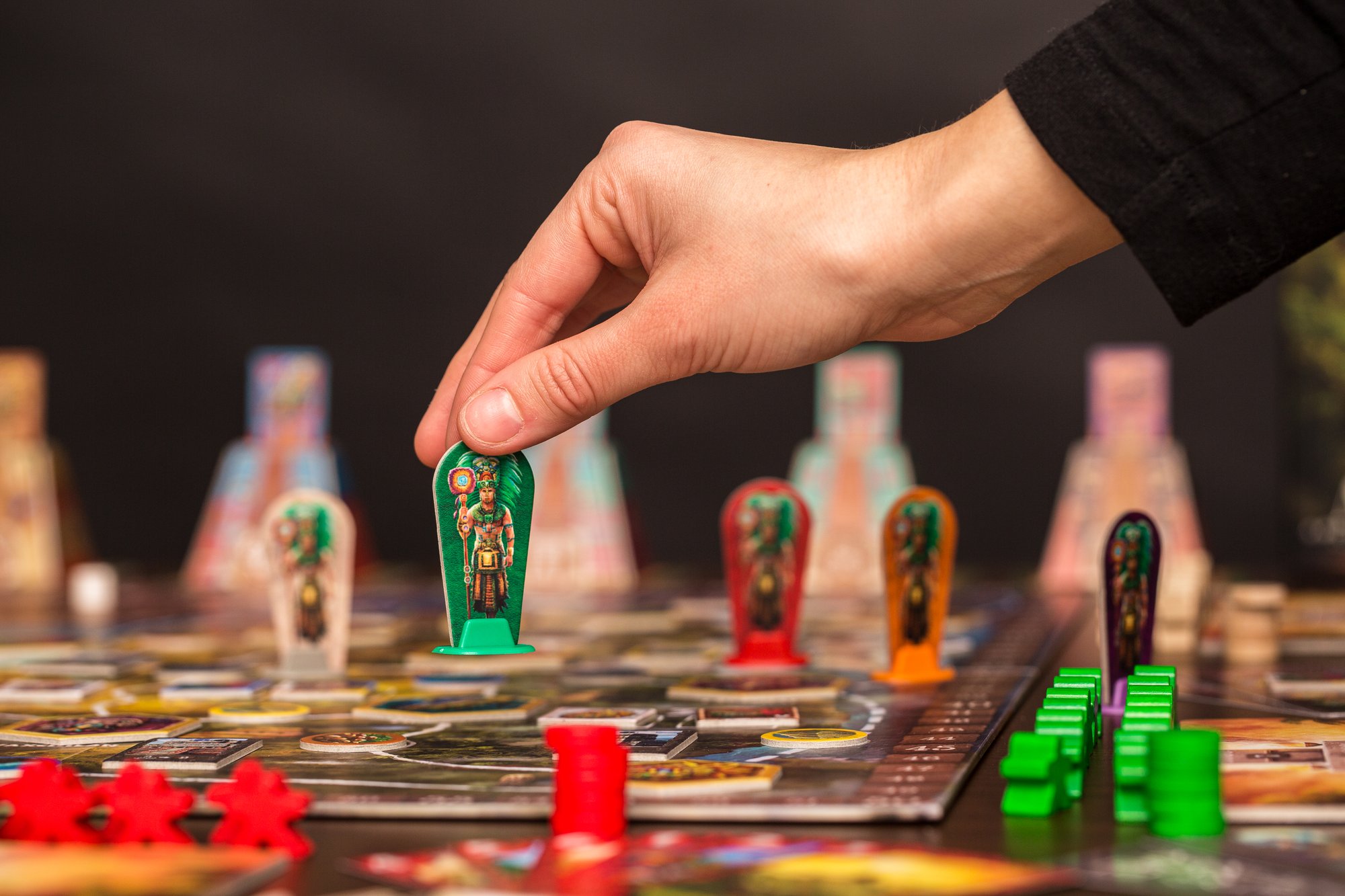
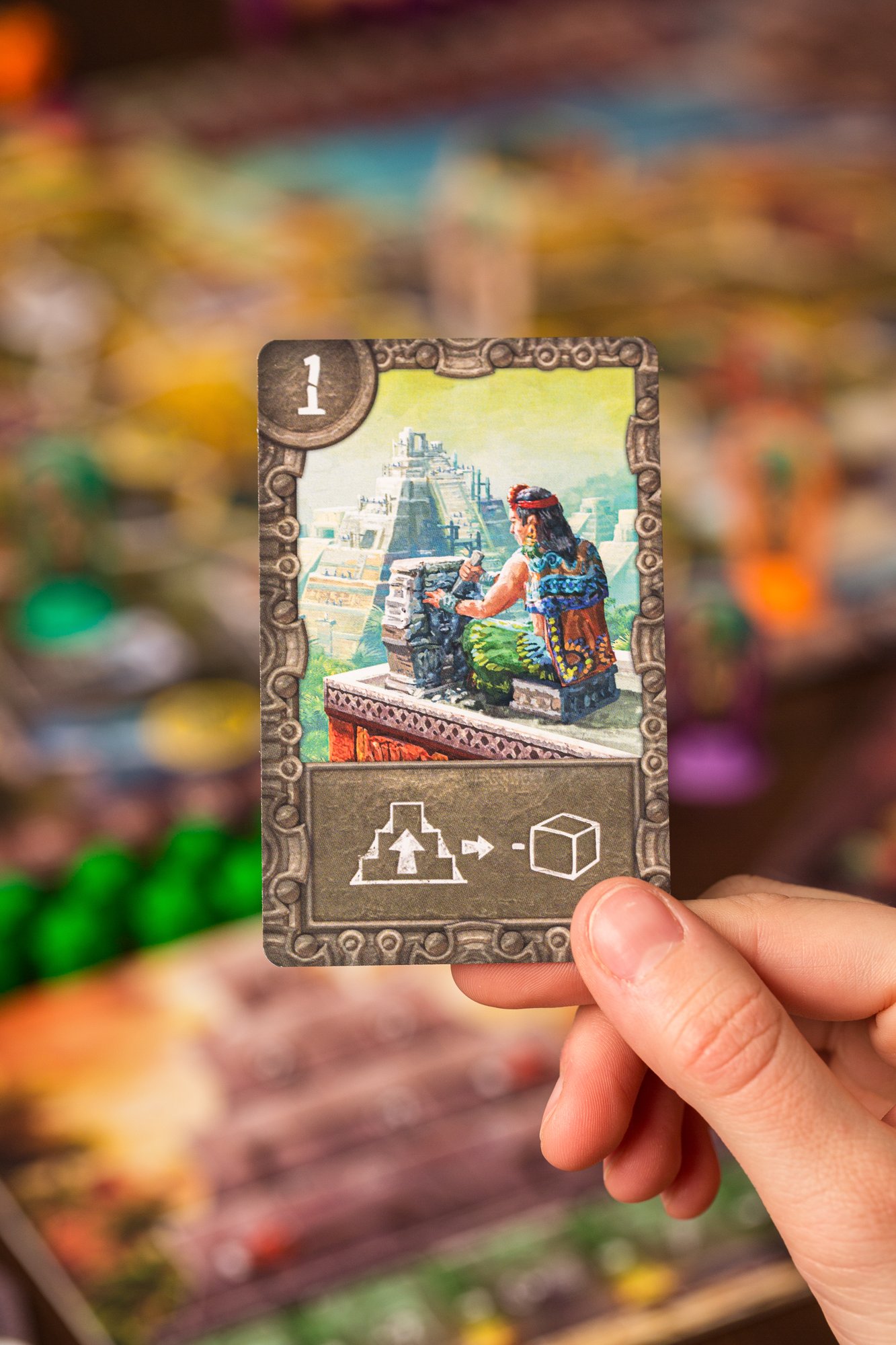
Recruit Maya courtiers — warriors, priests, merchants, architects — each granting powerful abilities that compound over the game. Manage their placement on your court board, chain their actions, and position yourself for the ka’tun scoring rounds that arrive like clockwork.
The Tzolk’in (260-day) and Haab’ (365-day) calendars govern your farming network, festival obligations, and the great pyramid construction. Miss a sacred date and your engine stalls. Align perfectly and your resources cascade in the exact moments you need them most.
No dice. No shuffled draws. Every outcome is the consequence of choices you and your opponents made. Ahau rewards deep thinking and long-term planning — position yourself well and you control the board. There are no lucky breaks and no excuses.
Every player runs two interlocking engines simultaneously — a political court and a farming network anchored to the sacred Maya calendar. One feeds the other. Neglect either and you stall. Master both and the Ka’tun rounds become a crescendo of perfectly timed power plays.
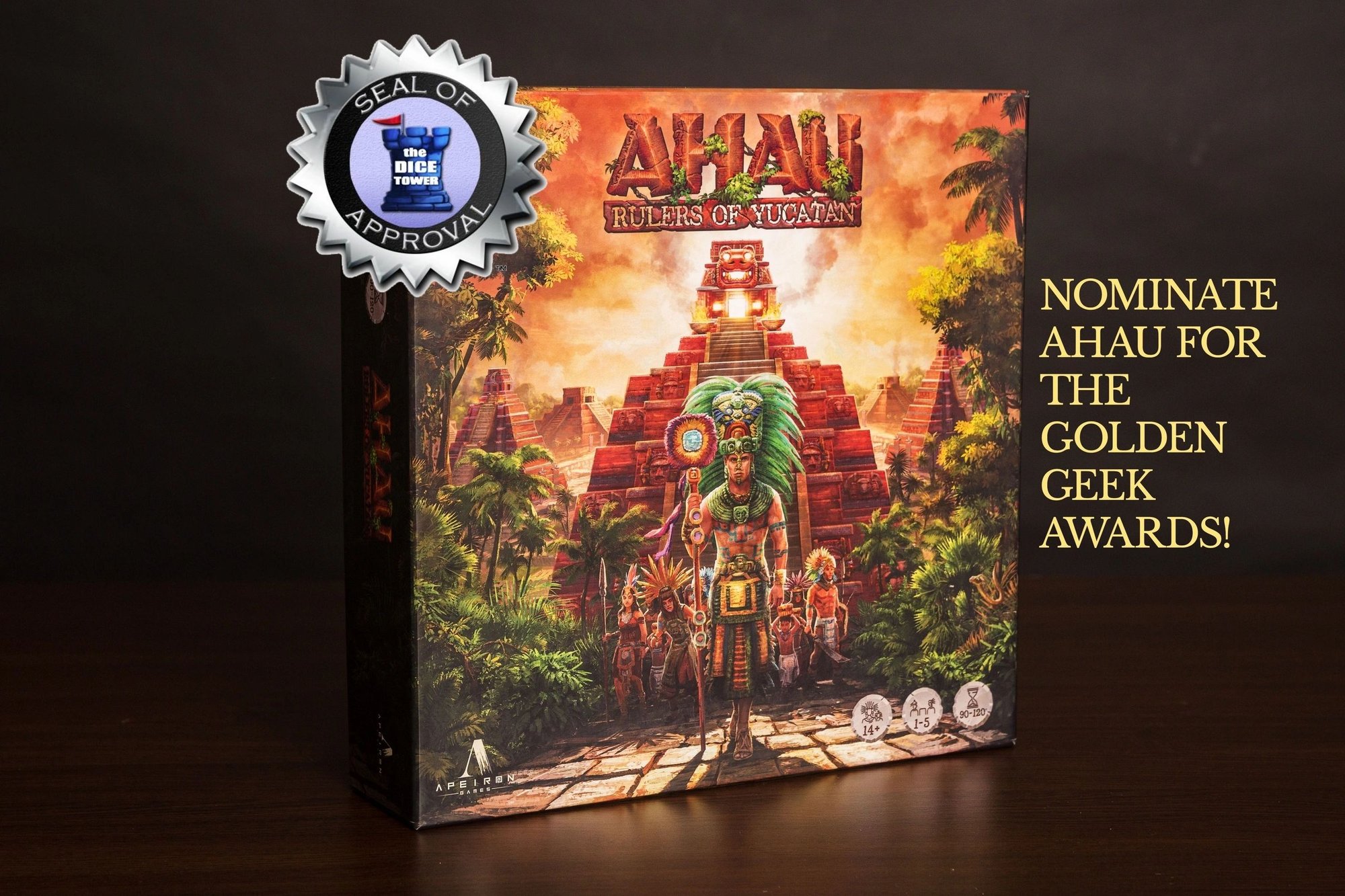
Awarded the Dice Tower Seal of Approval — a mark of exceptional quality given by one of the world’s most respected board game review organisations. Ahau has also received a BoardGameGeek Golden Geek nomination, cementing its status as a standout in the Euro-strategy genre.
The Classical Maya world, c. 250–900 CE — city-state rivalries, the dual calendar system, hieroglyphic writing, the sacred ballgame, and the four directional trees of creation. Every mechanic encodes a historical relationship. The game teaches as it plays, built on serious research into one of history’s most extraordinary civilisations.
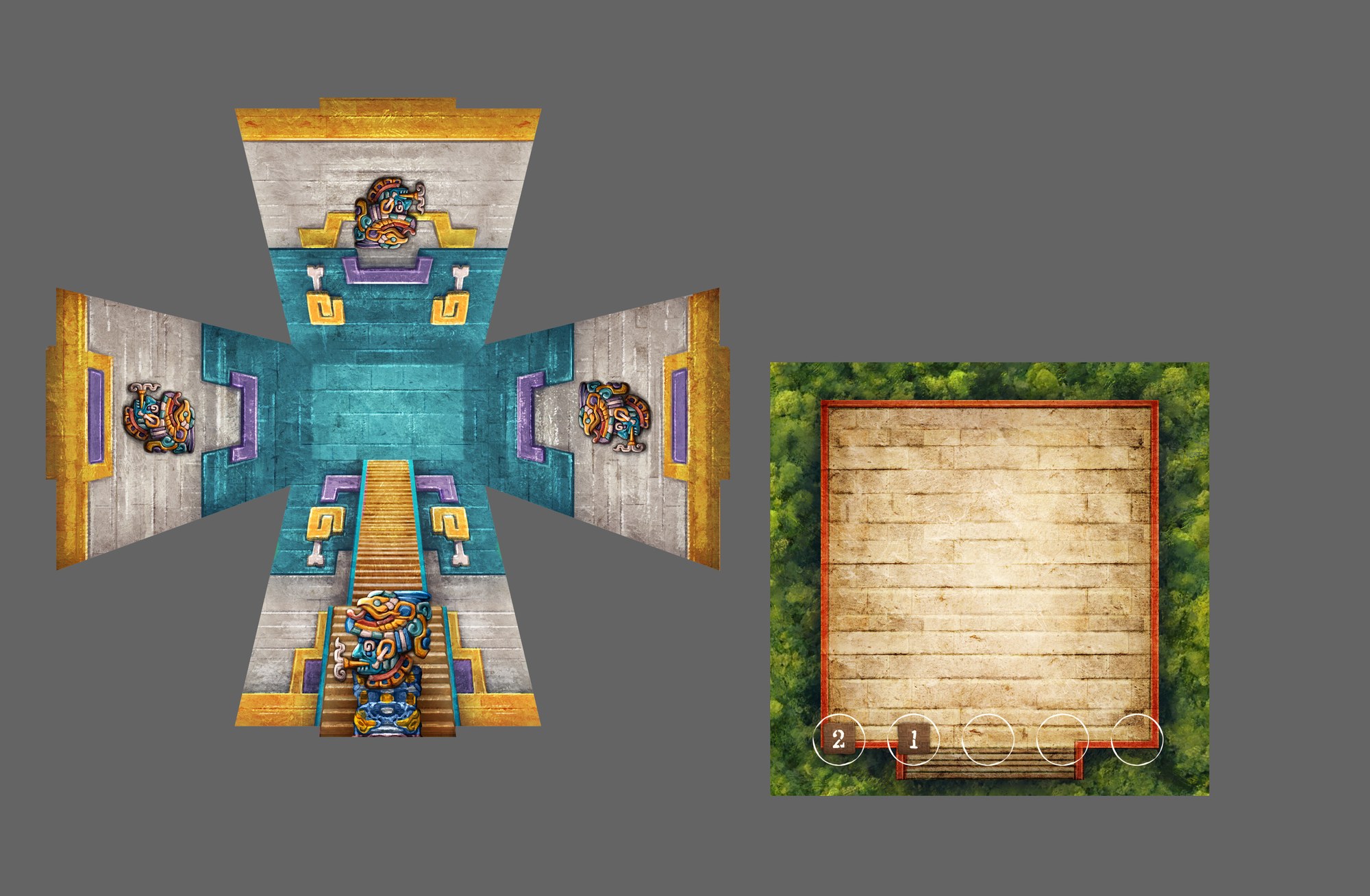
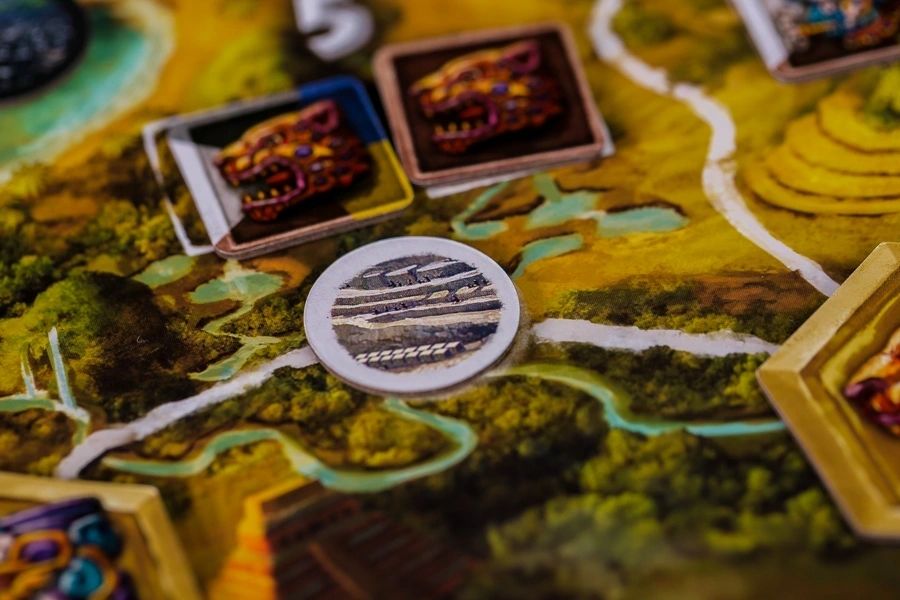
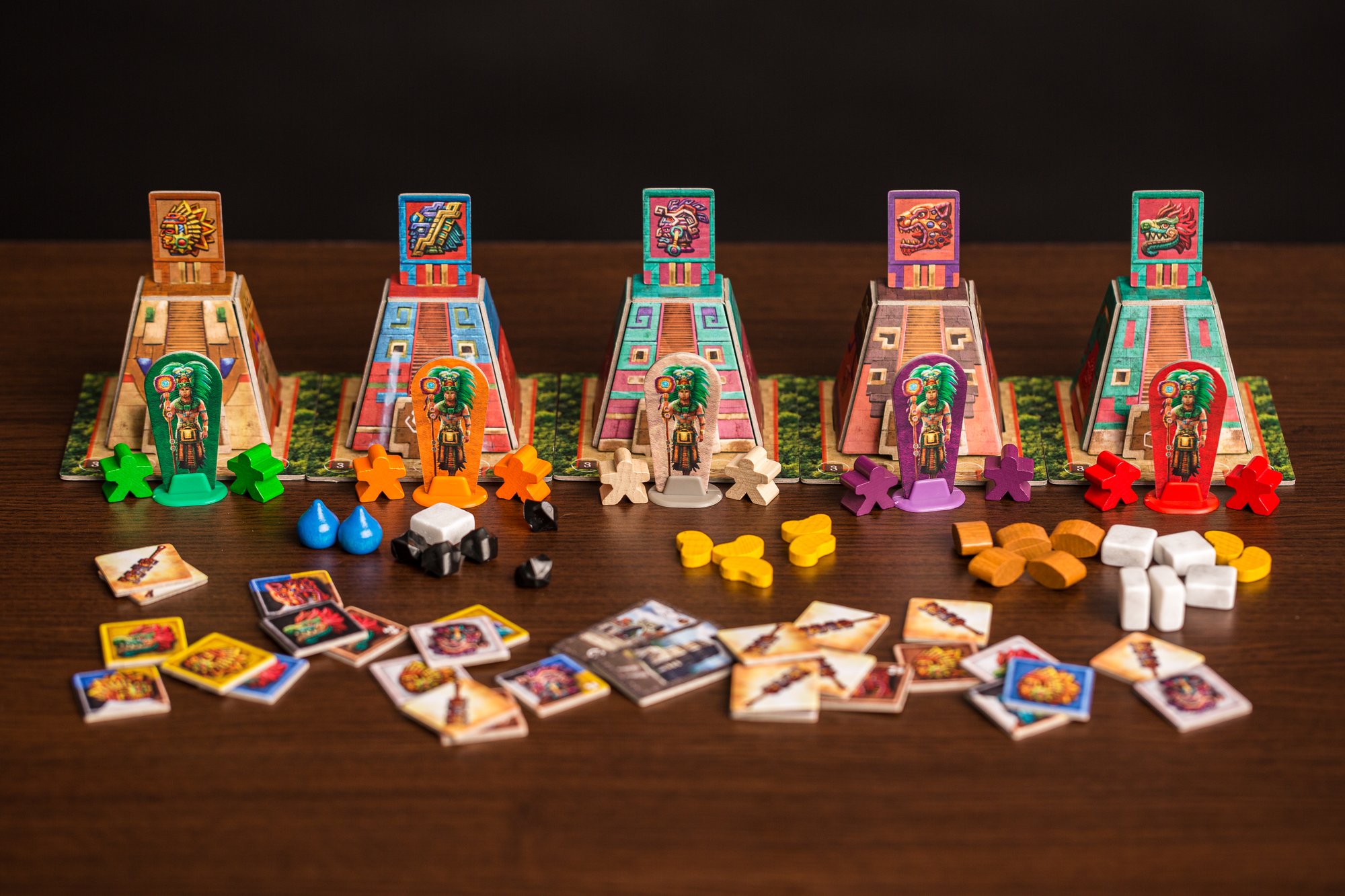
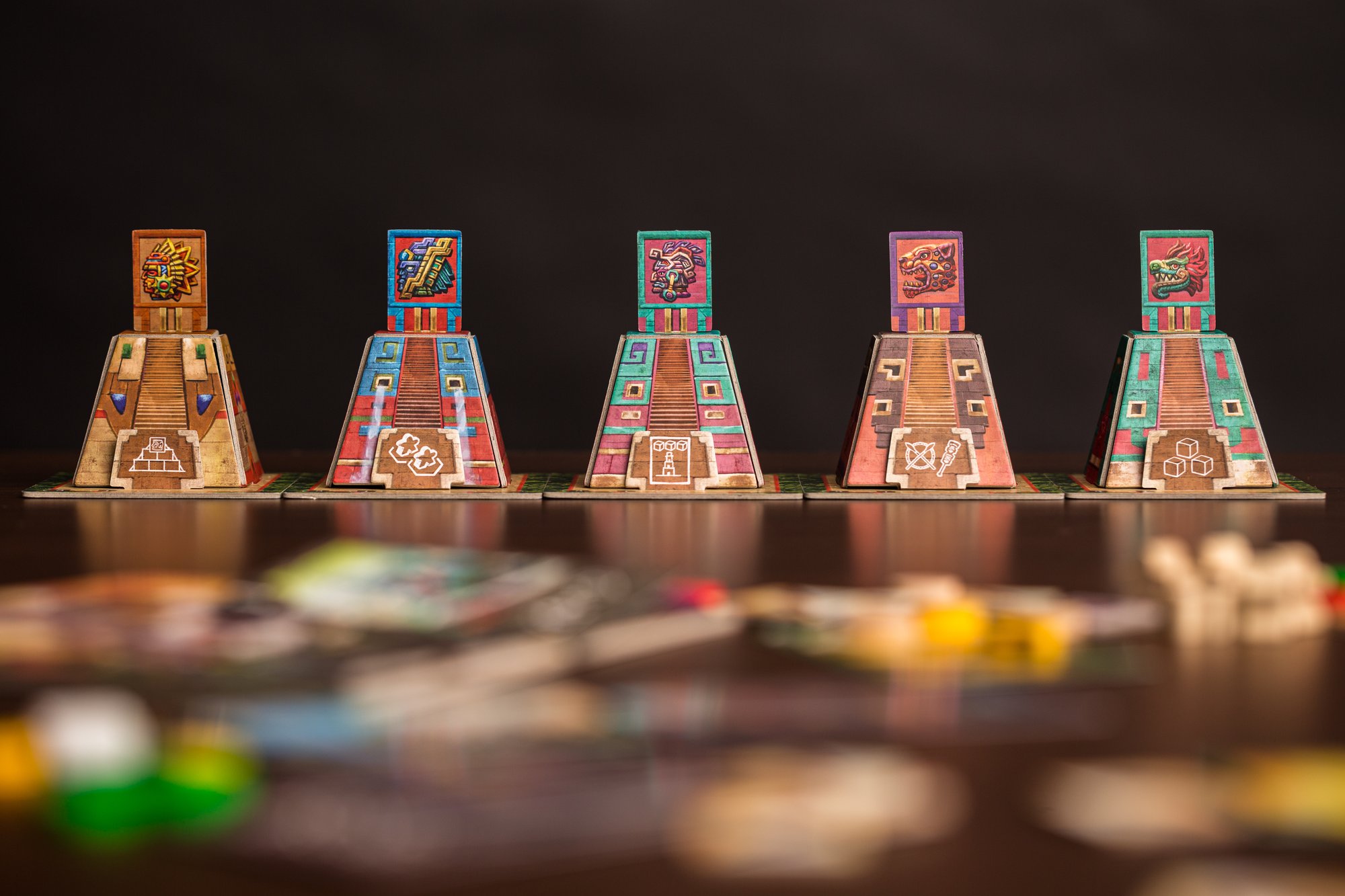
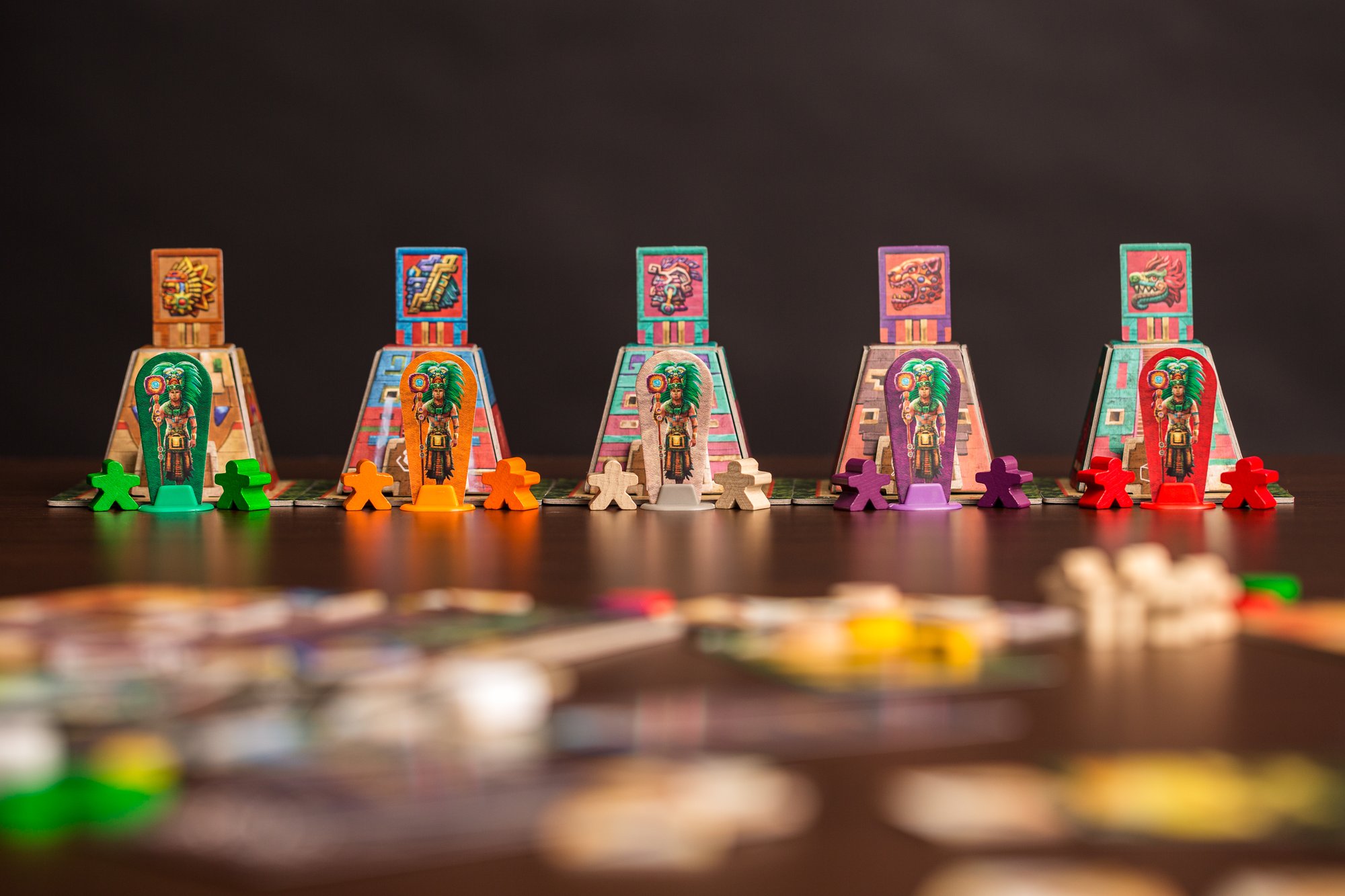
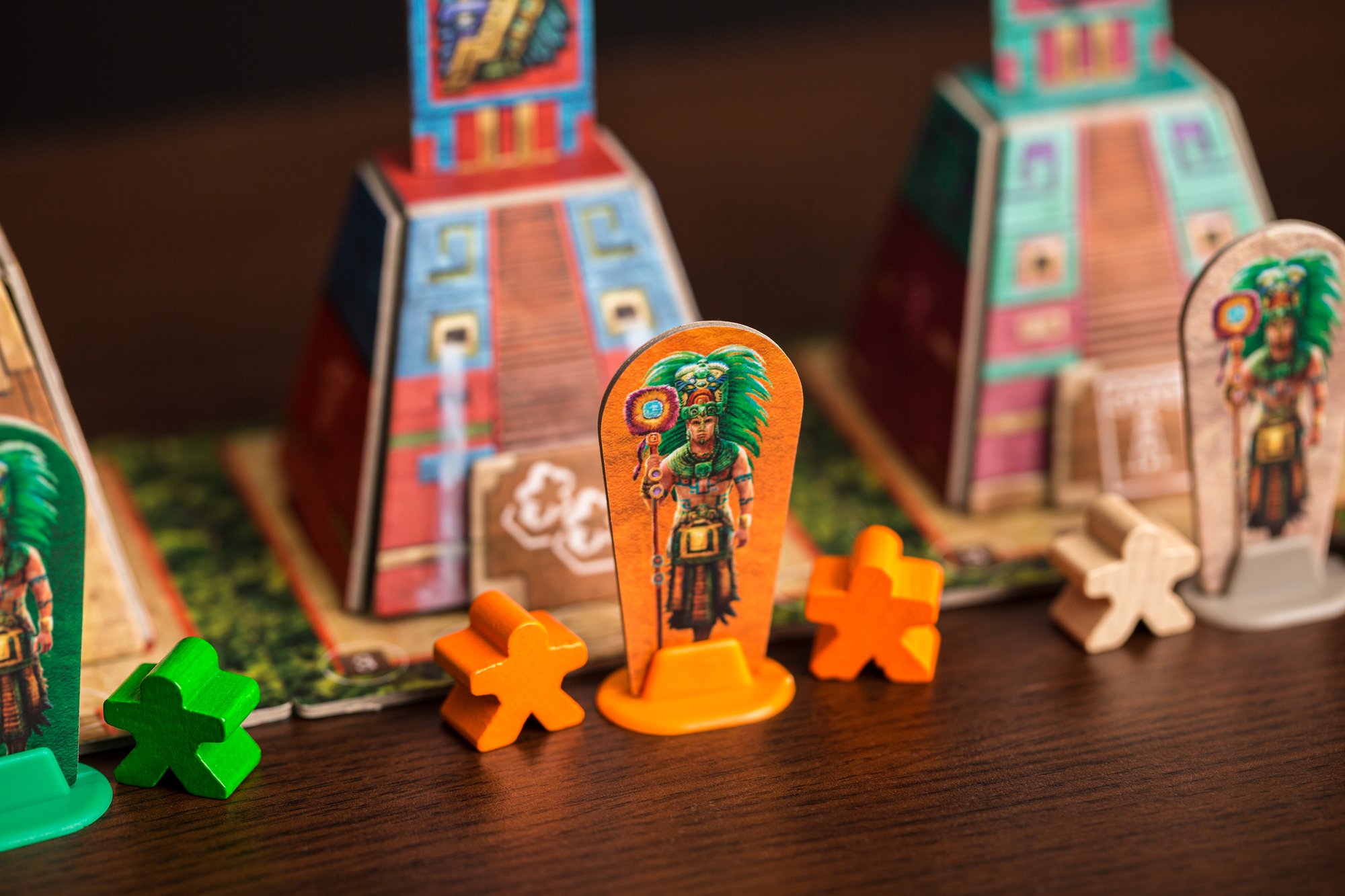
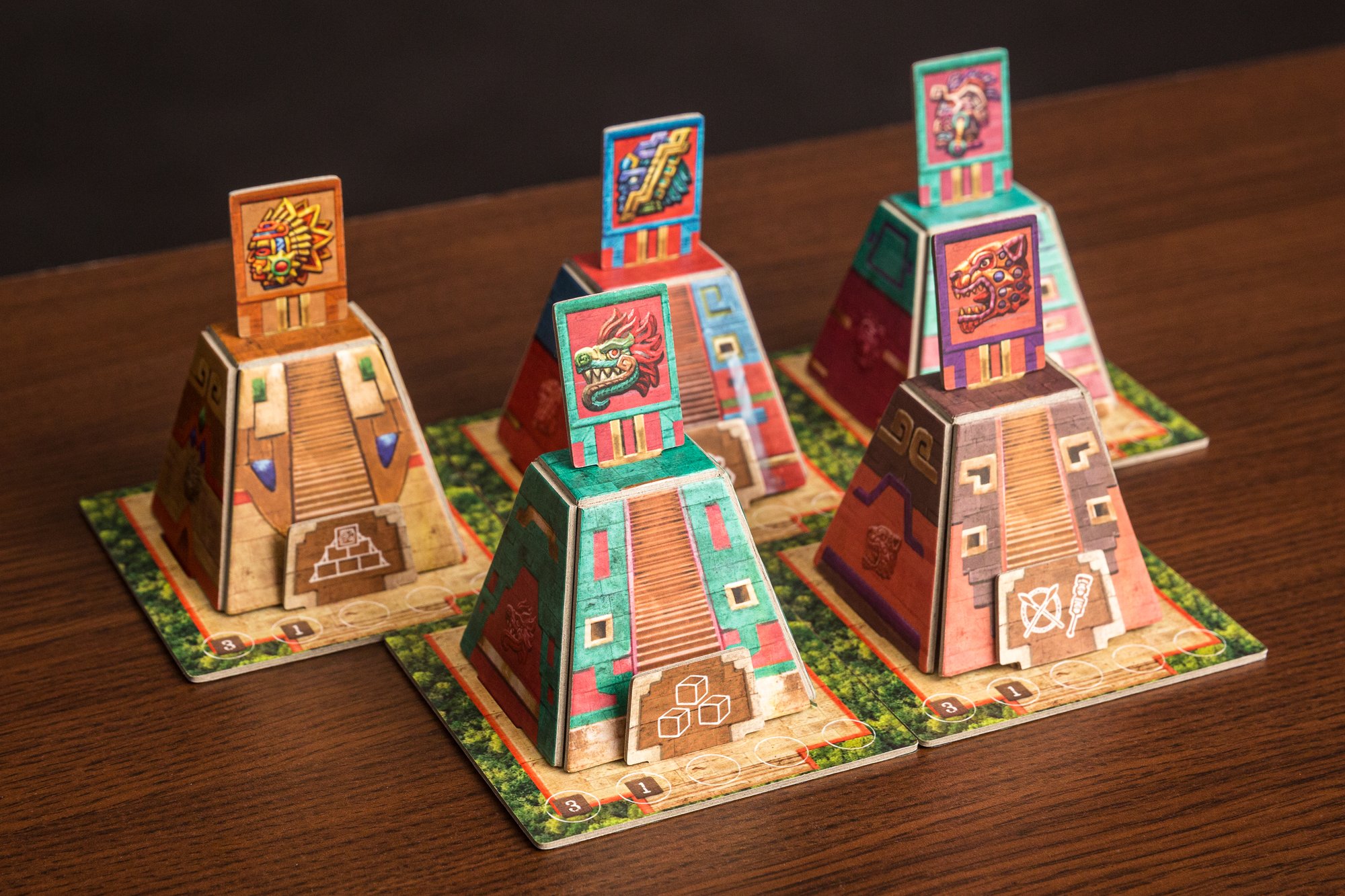
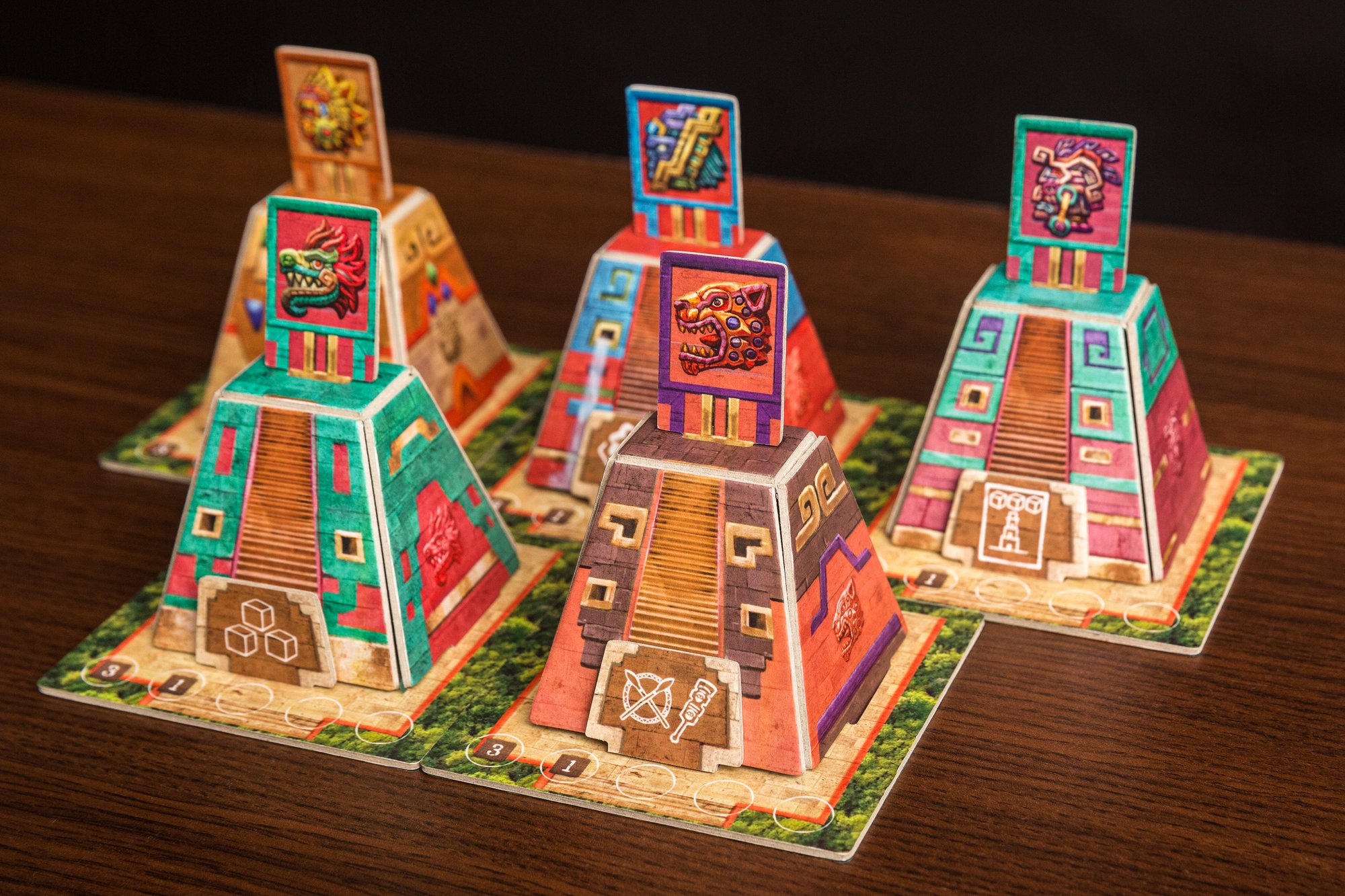
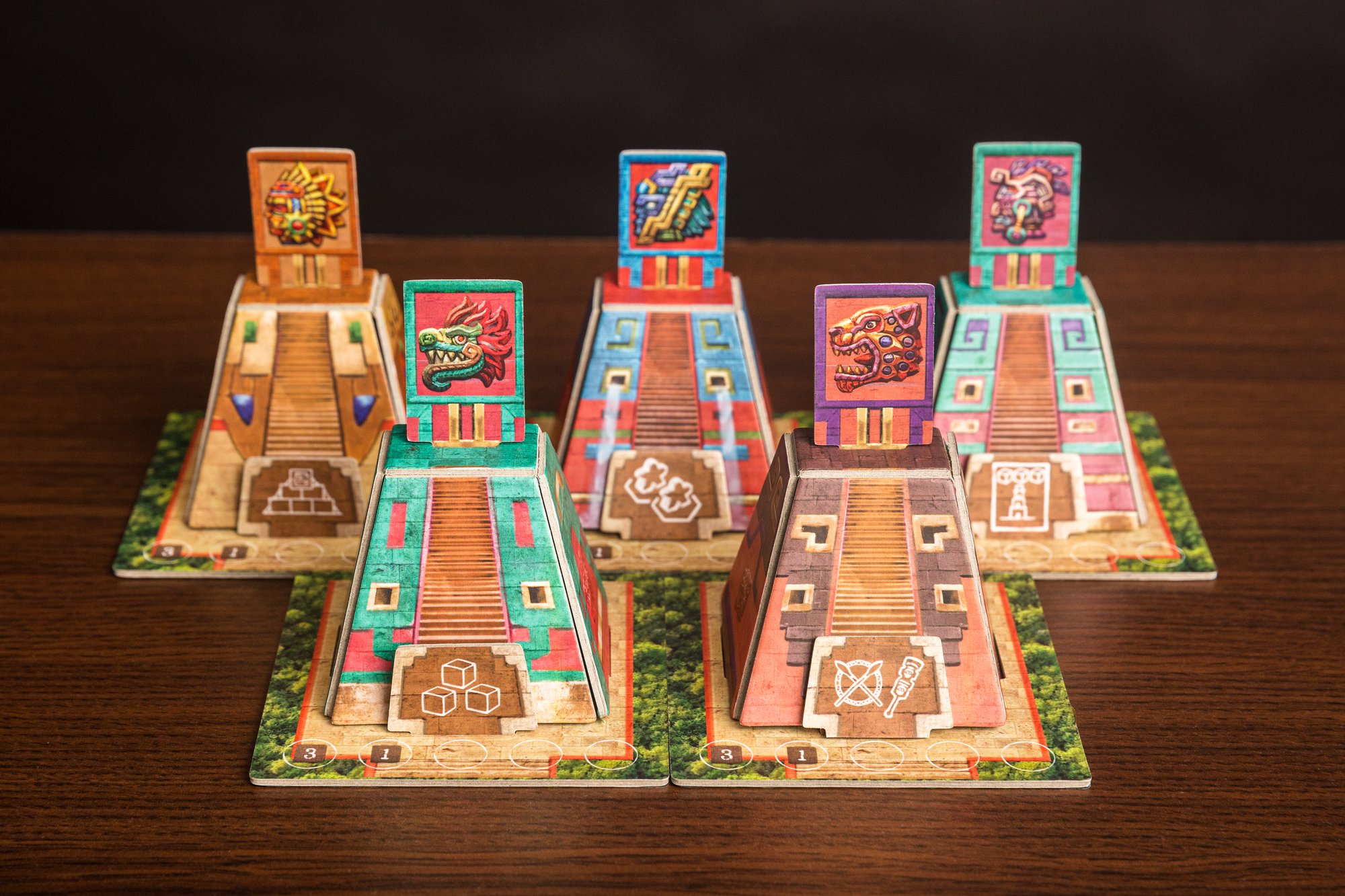
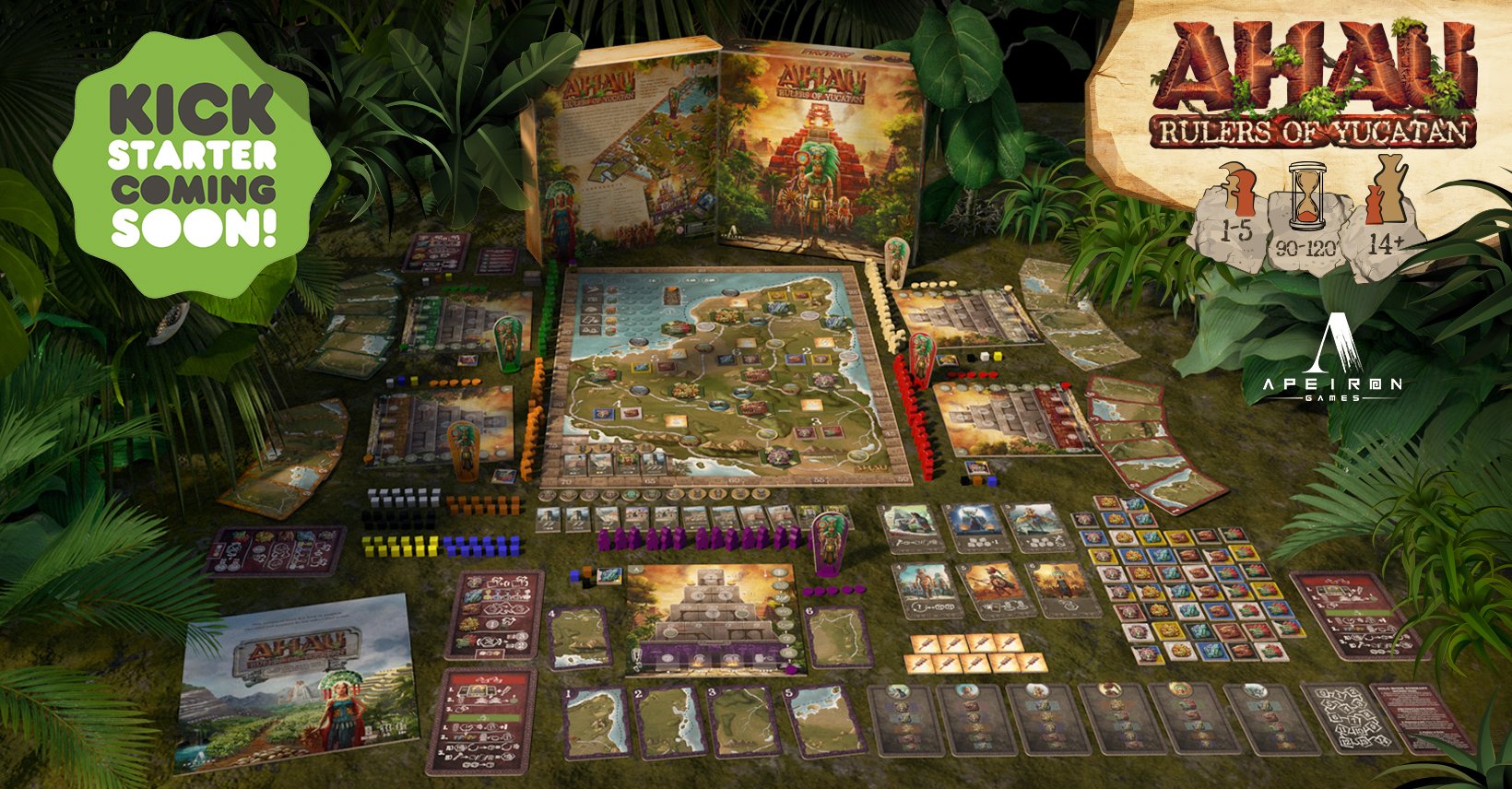
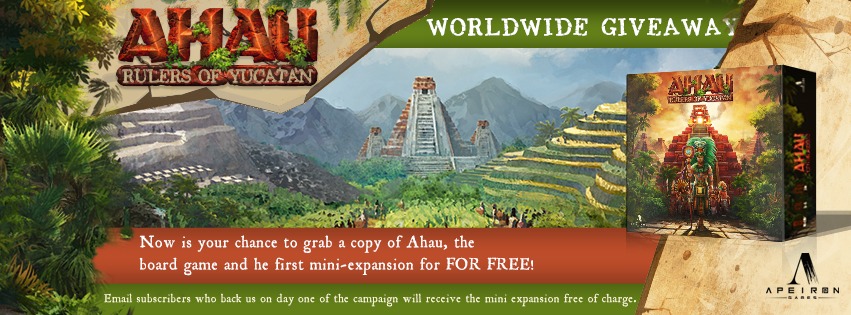
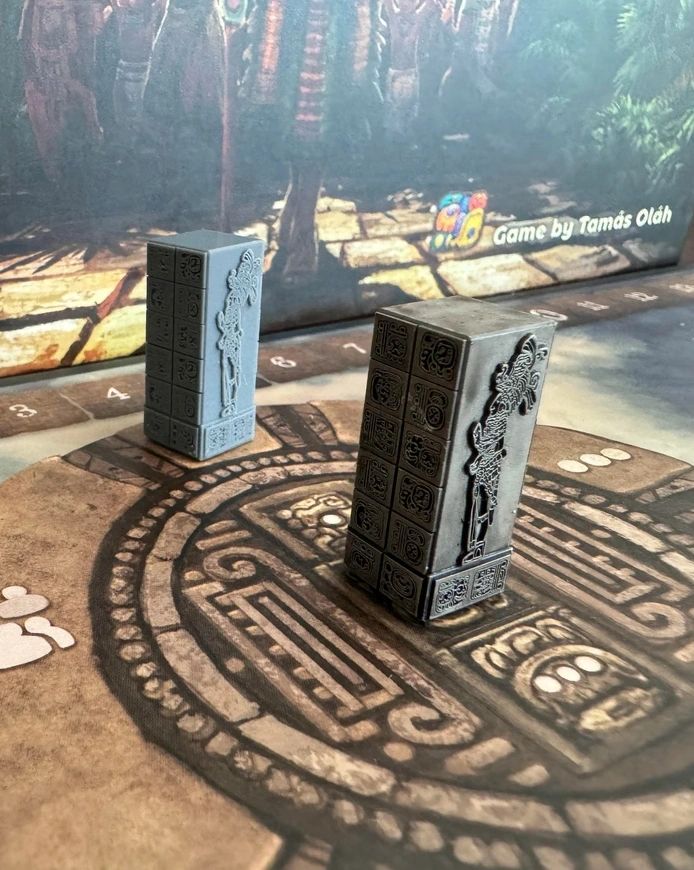
At the heart of every Ahau game stands a modular 3D pyramid, assembled and contested across five escalating tiers. Building it demands precise calendar alignment — rush it without resources and you fall behind; let others claim higher tiers and you cede the endgame scoring.
Each tier unlocks more powerful deity blessings and victory-point multipliers. The pyramid is both a shared monument and a battlefield — every tile placement is a statement of intent.
A beautifully designed engine-builder. The dual system is elegant and demanding in exactly the right proportions. One of the best euros I have played.
Ahau rewards deep strategic thinking and punishes short-sightedness mercilessly. No luck, no excuses — just pure, brilliant puzzle-solving around a gorgeous pyramid.
The Maya theme isn’t decoration — it’s load-bearing. The calendar mechanics actually teach you something true about one of history’s most fascinating civilisations.
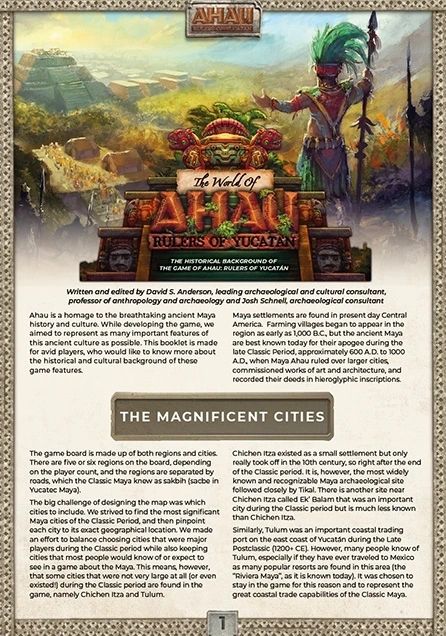
The Classic Maya period was one of the ancient world’s most extraordinary experiments in civilisation. Dozens of rival city-states — Tikal, Palenque, Copán, Calakmul — competed through warfare, diplomacy, monument-building, and calendar ceremony across the Yucatán Peninsula and beyond.
Maya rulers were not merely kings but divine intermediaries between the human and supernatural realms. The Tzolk’in (260-day) and Haab’ (365-day) calendars governed every aspect of life: when to plant, when to fight, when to hold festivals, when the gods demanded sacrifice. Political power and religious authority were inseparable.
The Ahau were the great lord-rulers — literally “the ones who spoke.” To be Ahau was to hold the sky above your city-state. Your court of nobles, priests, and warriors was your instrument of power; your pyramid, your monument to the gods; your calendar mastery, the proof of your divine legitimacy.
Ahau reconstructs this world mechanically. The Ka’tun cycle drives the game’s rhythm. The sacred calendar shapes your actions. Every building you raise, every courtier you recruit, every tribute you collect maps to something the historical Maya actually did — and the rulebook tells you why.
Historical notes throughout the rulebook explain the real sources behind each mechanic. No artistic license is taken without flagging it.
Two interlocking calendars — 260-day Tzolk’in and 365-day Haab’ — created a 52-year Calendar Round that governed every public act. In Ahau, their intersection drives your engine timing.
A ka’tun was roughly 20 years — a unit of historical reckoning. Ka’tun endings were solemn occasions of monument dedication, power transfer, and prophetic calendar recitation. In Ahau, they are your scoring rounds.
Classic Maya politics was a shifting web of alliances, tribute relationships, and proxy wars. No empire unified the Yucatán — dominance was always contested, always temporary. This instability is the game’s competitive core.
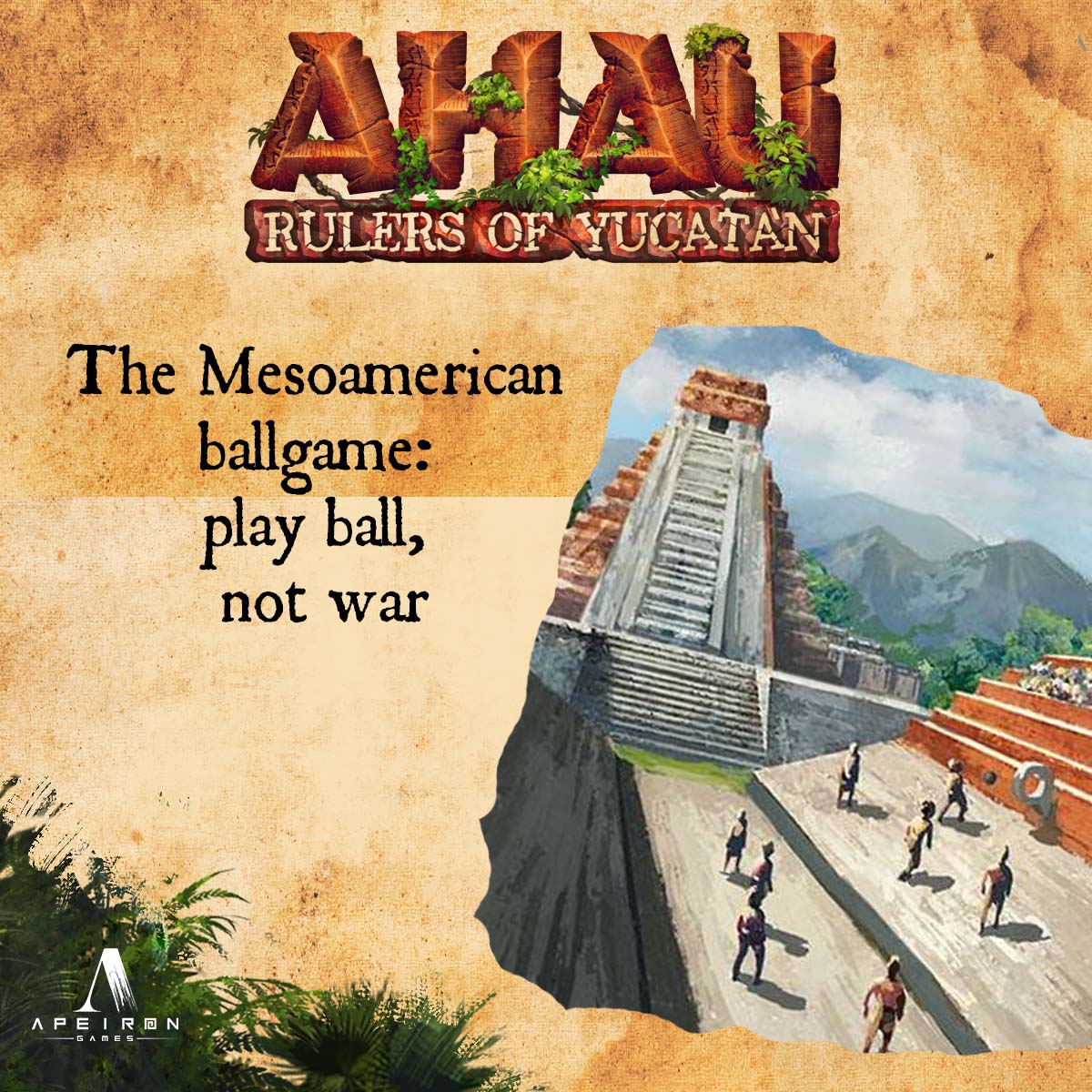
The pitz ballgame was simultaneously sport, cosmological ritual, and political statement. Courts were built at every major site. In Ahau, the ballgame mechanic ties courtier placement to calendar festival obligations.
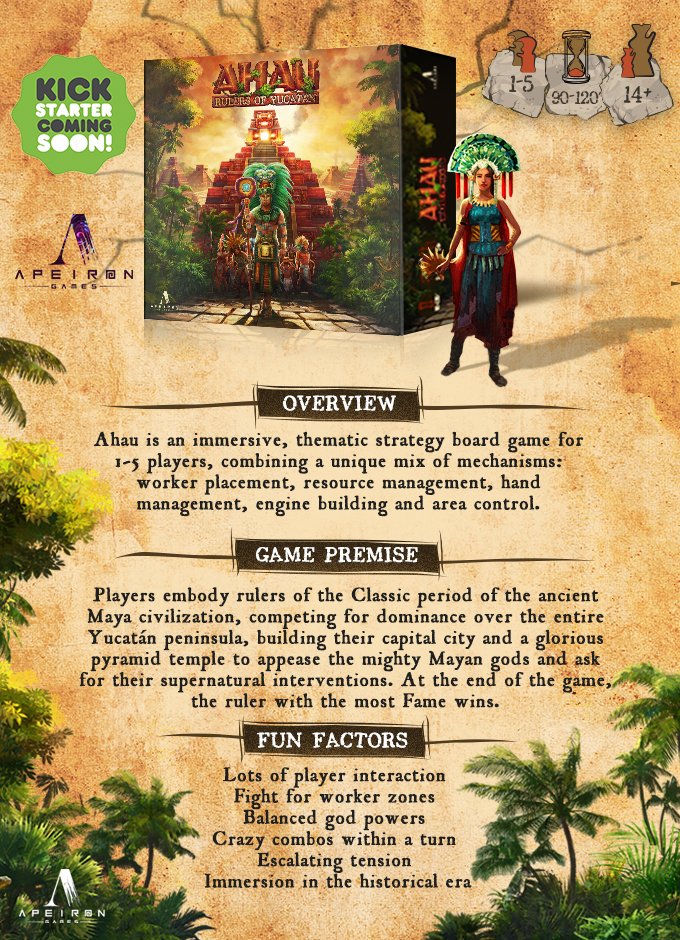
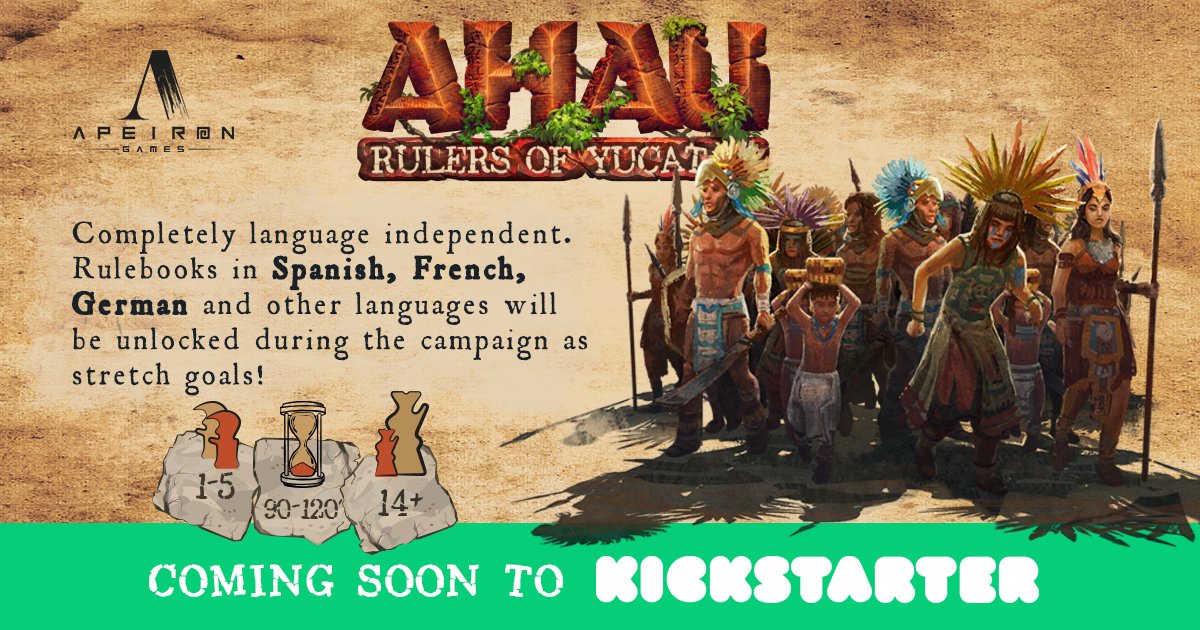
Ahau: Rulers of Yucatán is designed for 1–4 players. It includes a full solo mode — not just a variant, but a dedicated challenge experience.
A typical game runs around 90–120 minutes for two players and up to 150 minutes at four players. Your first game may take a little longer as you discover the calendar mechanics.
The Maya had two interlocking calendars — the 260-day Tzolk’in and the 365-day Haab’. In Ahau, these drive the timing of festivals, scoring, and actions. Every decision you make is shaped by where you are in the cycle, creating a satisfying rhythm unlike most Euro games.
The game is built on serious research into the Classic Maya civilisation — the calendar systems, city-state politics, ritual life, and the Yucatán landscape are all treated with care. Some elements are abstracted for playability, but nothing is invented carelessly. The rulebook includes historical notes explaining the real sources behind each mechanic.
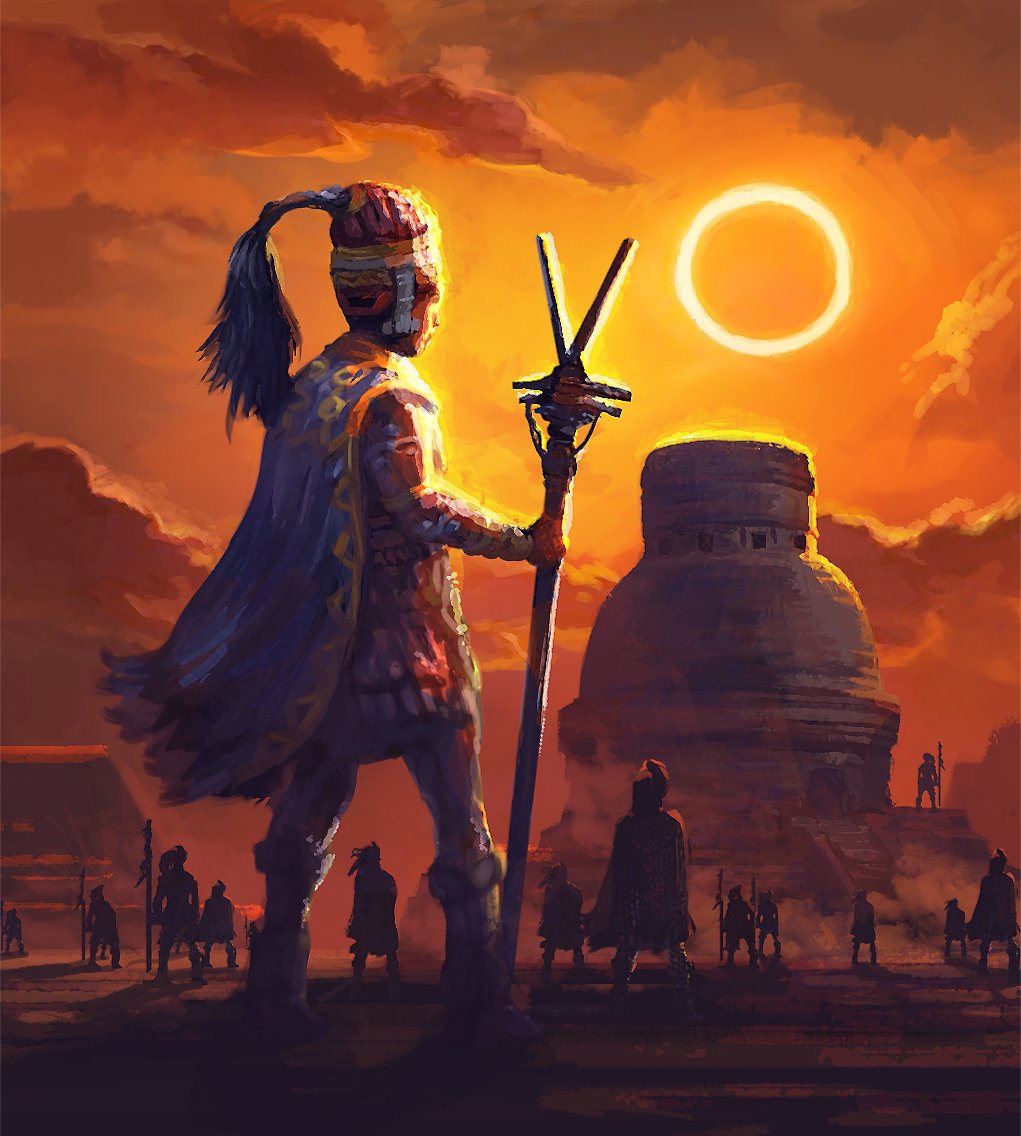
The Eclipse expansion adds new mechanics and content. It was available as part of the original Kickstarter campaign. Availability in any reprint will be confirmed when the reprint is announced — email us above to be first to know.
Ahau is currently out of stock. A reprint is planned — email info@apeiron.games and we will contact you as soon as it is available again. In the meantime, you can try the full game on Tabletop Simulator.
Ahau is available on Tabletop Simulator (Steam), which lets you play the full physical game online with friends. A standalone digital version is part of our longer-term digital roadmap. The free Pyramid of the Gods daily puzzle at ahau-minigame.html is available in your browser right now.
The full rulebook is available free at the link above. You can also find gameplay videos, reviews, and discussion on BoardGameGeek and on our Discord server.