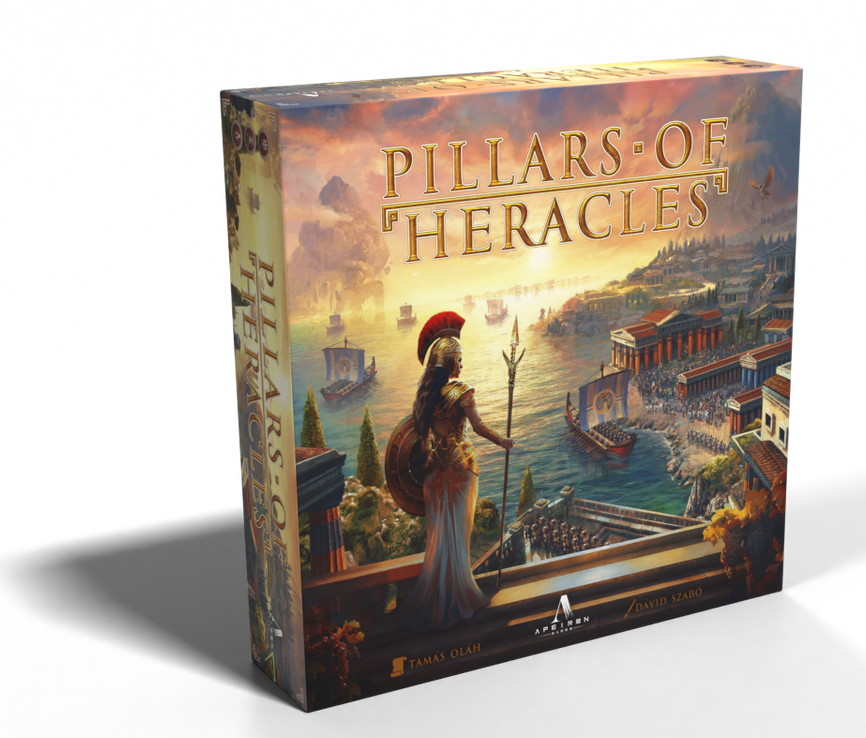
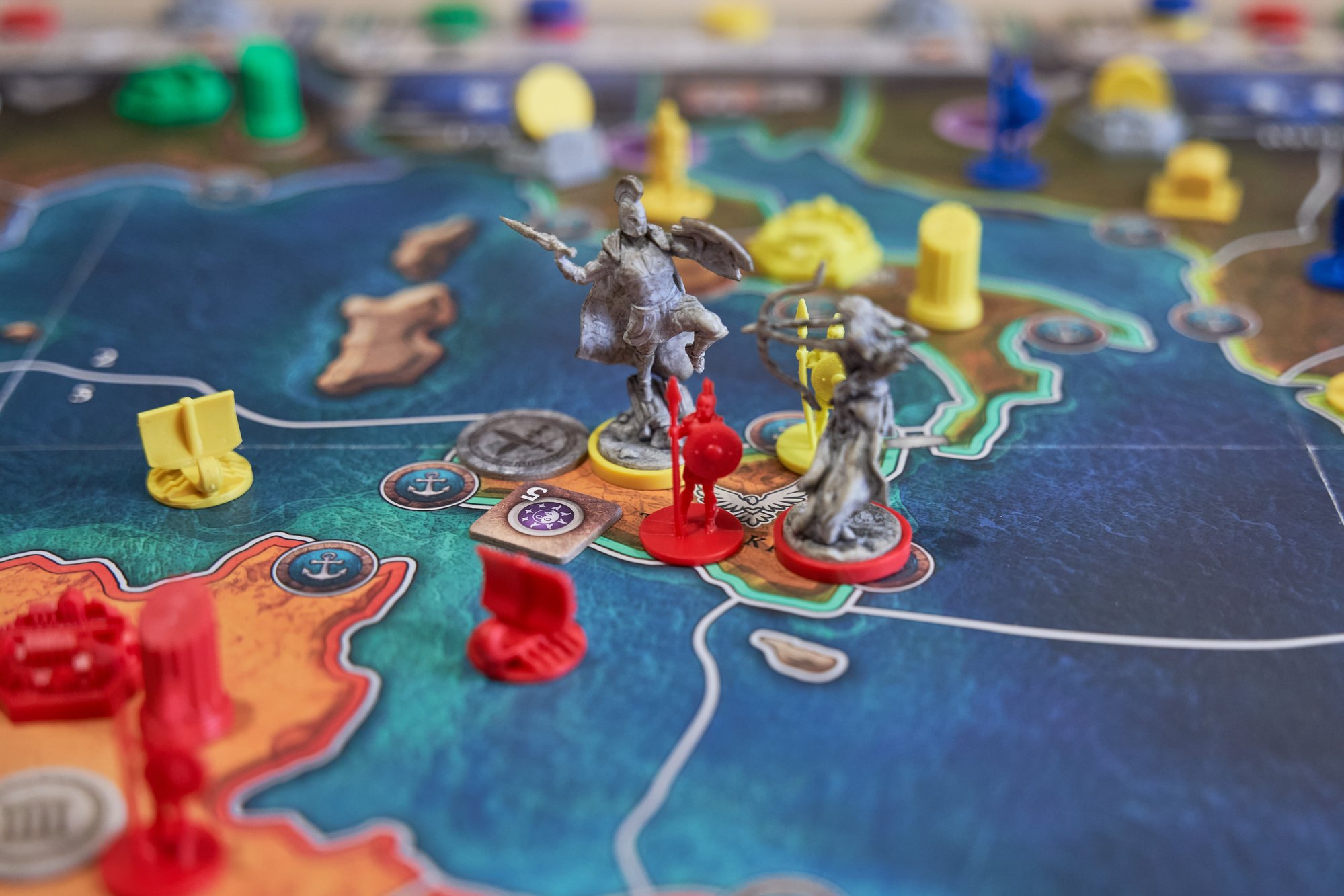
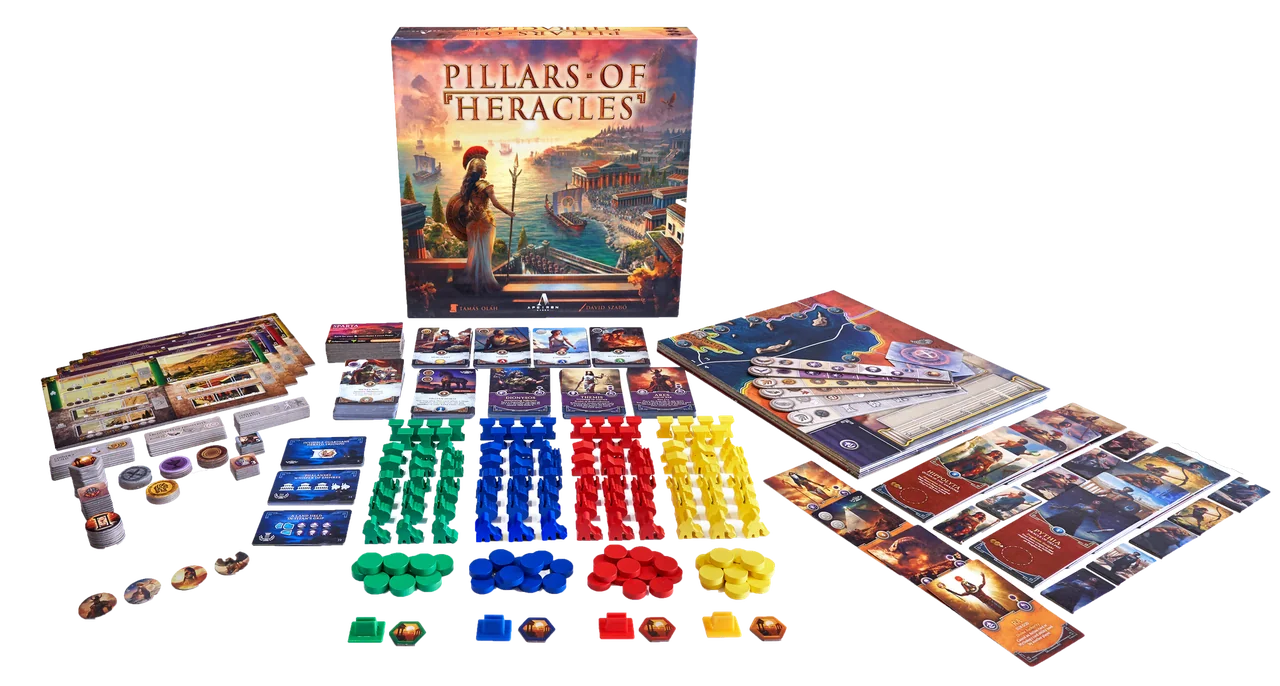
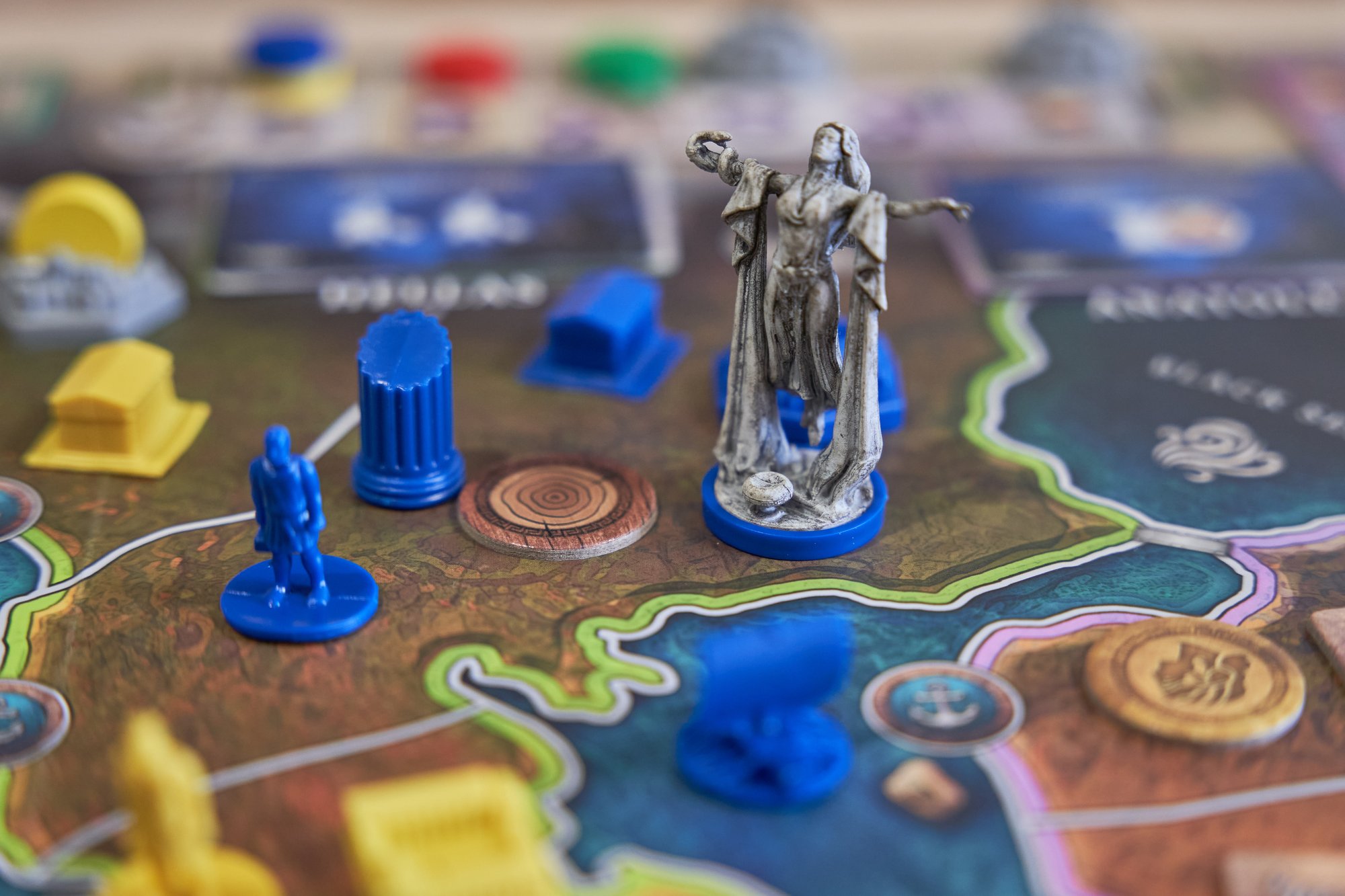
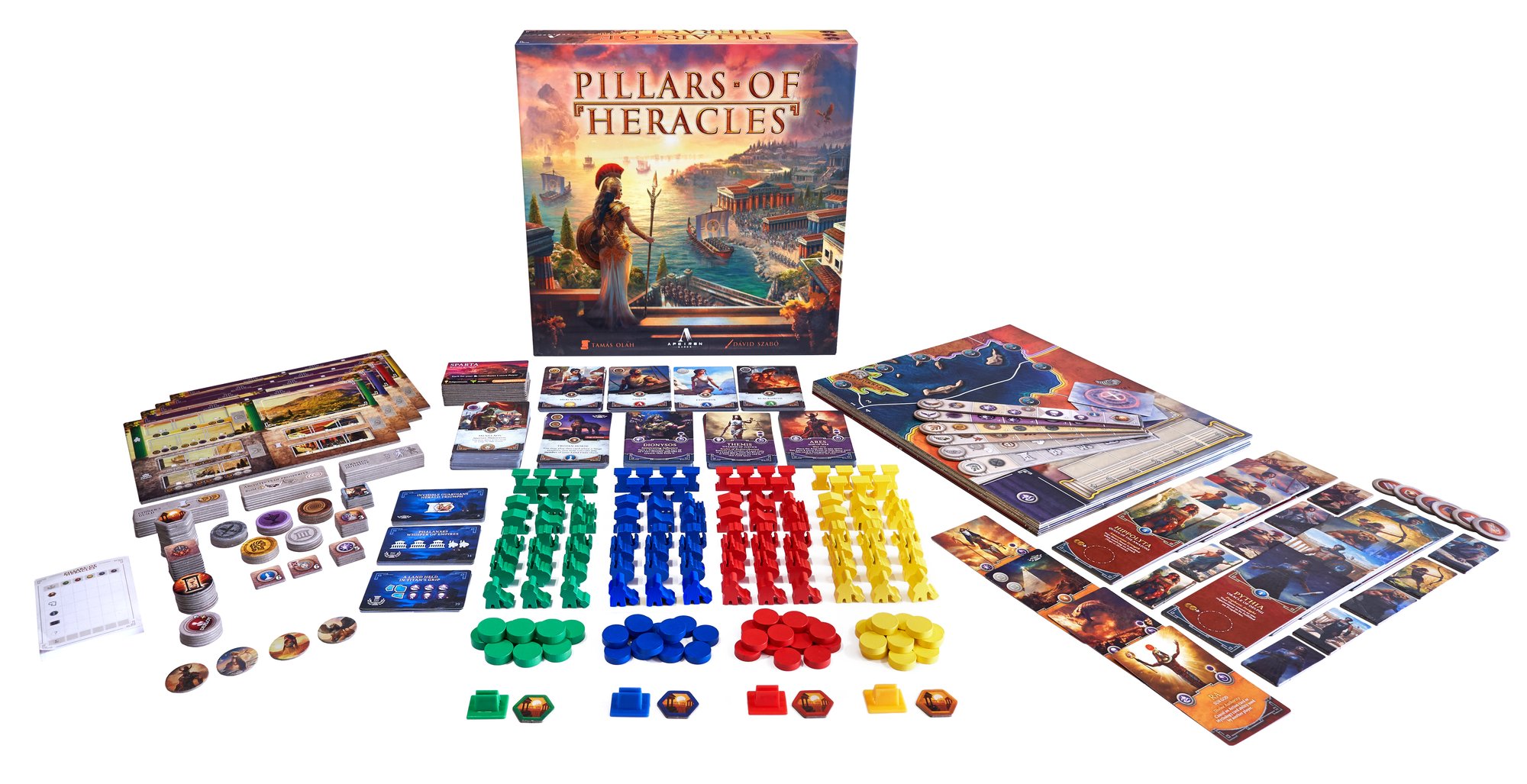
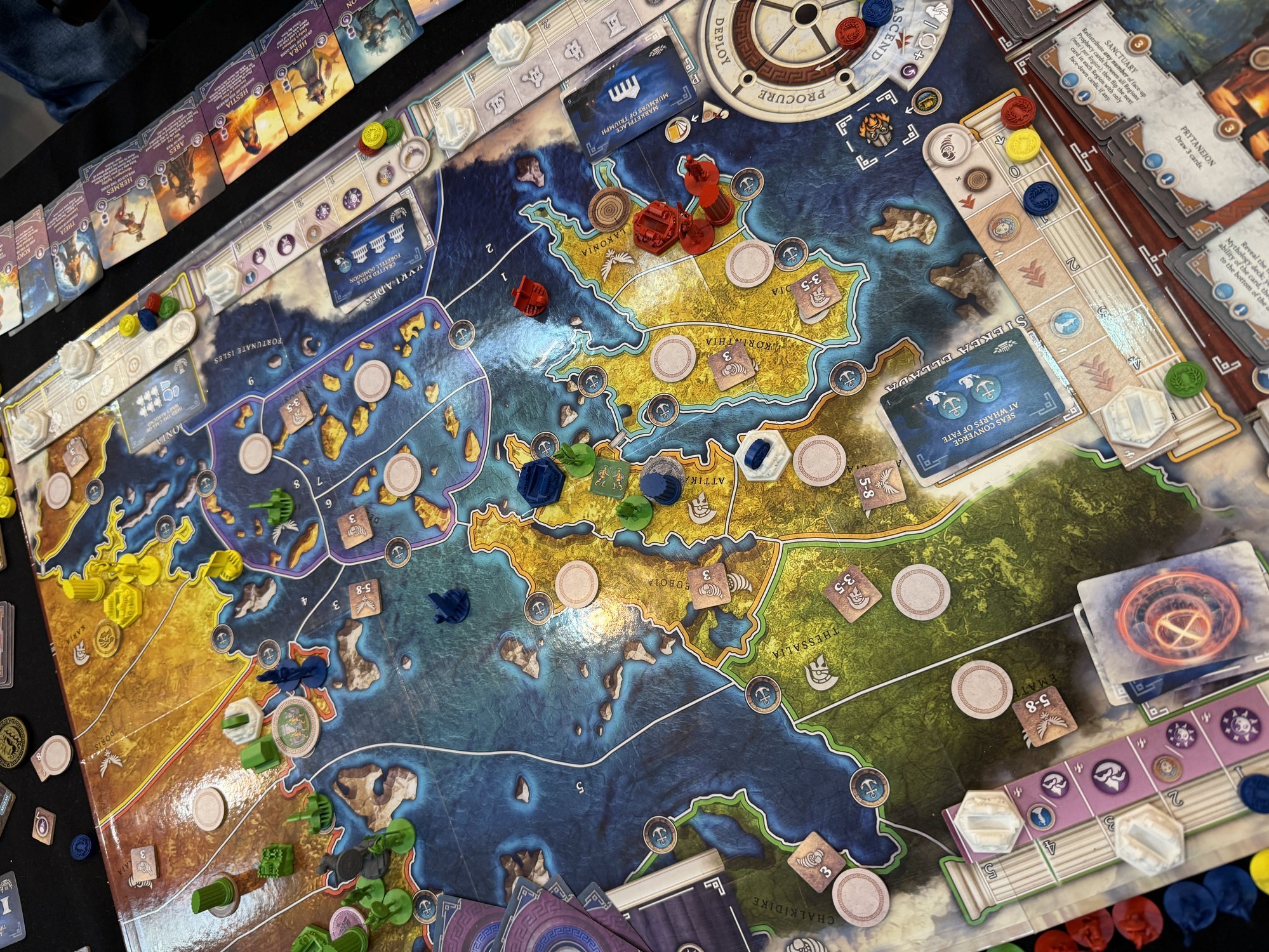
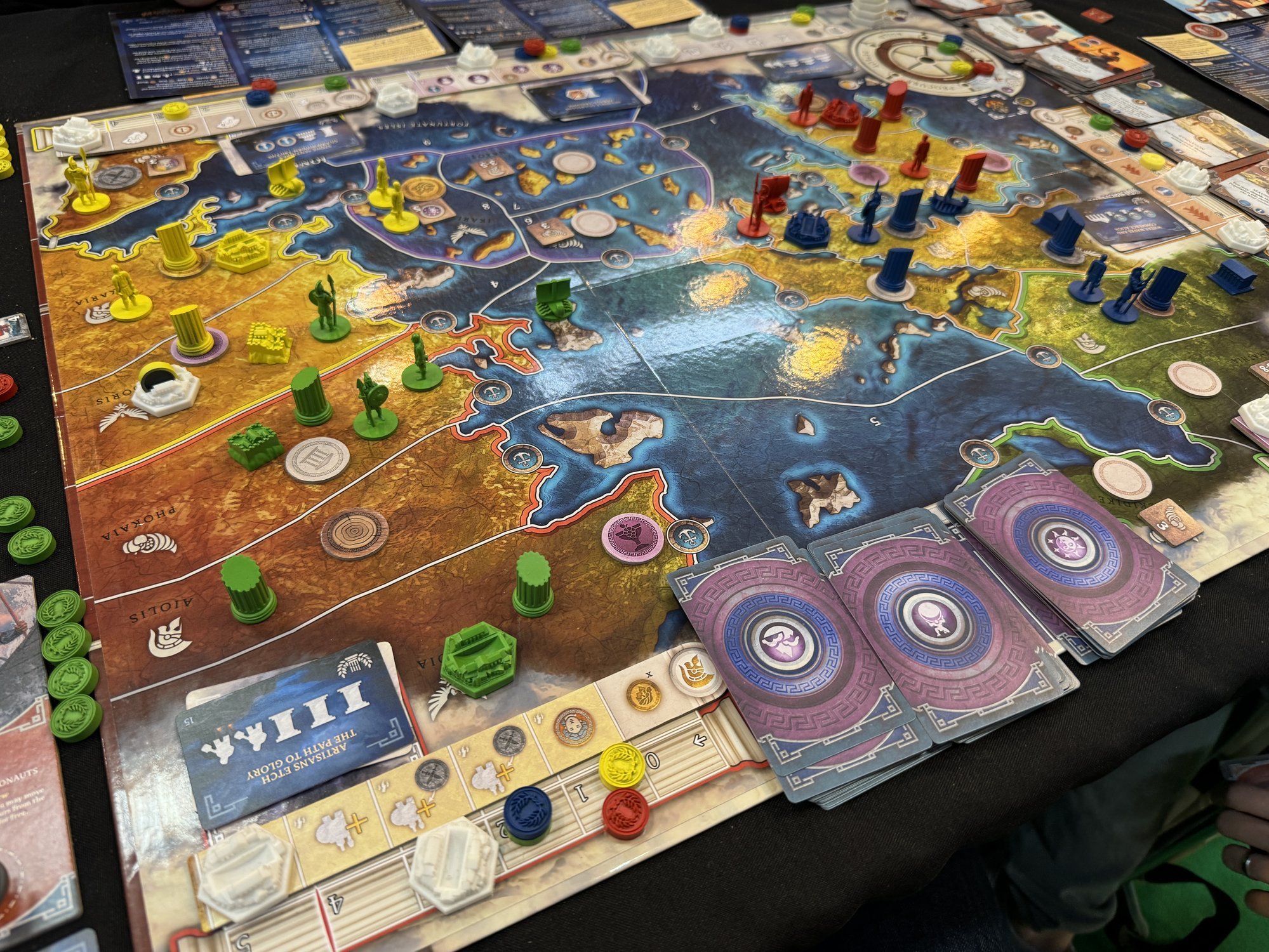
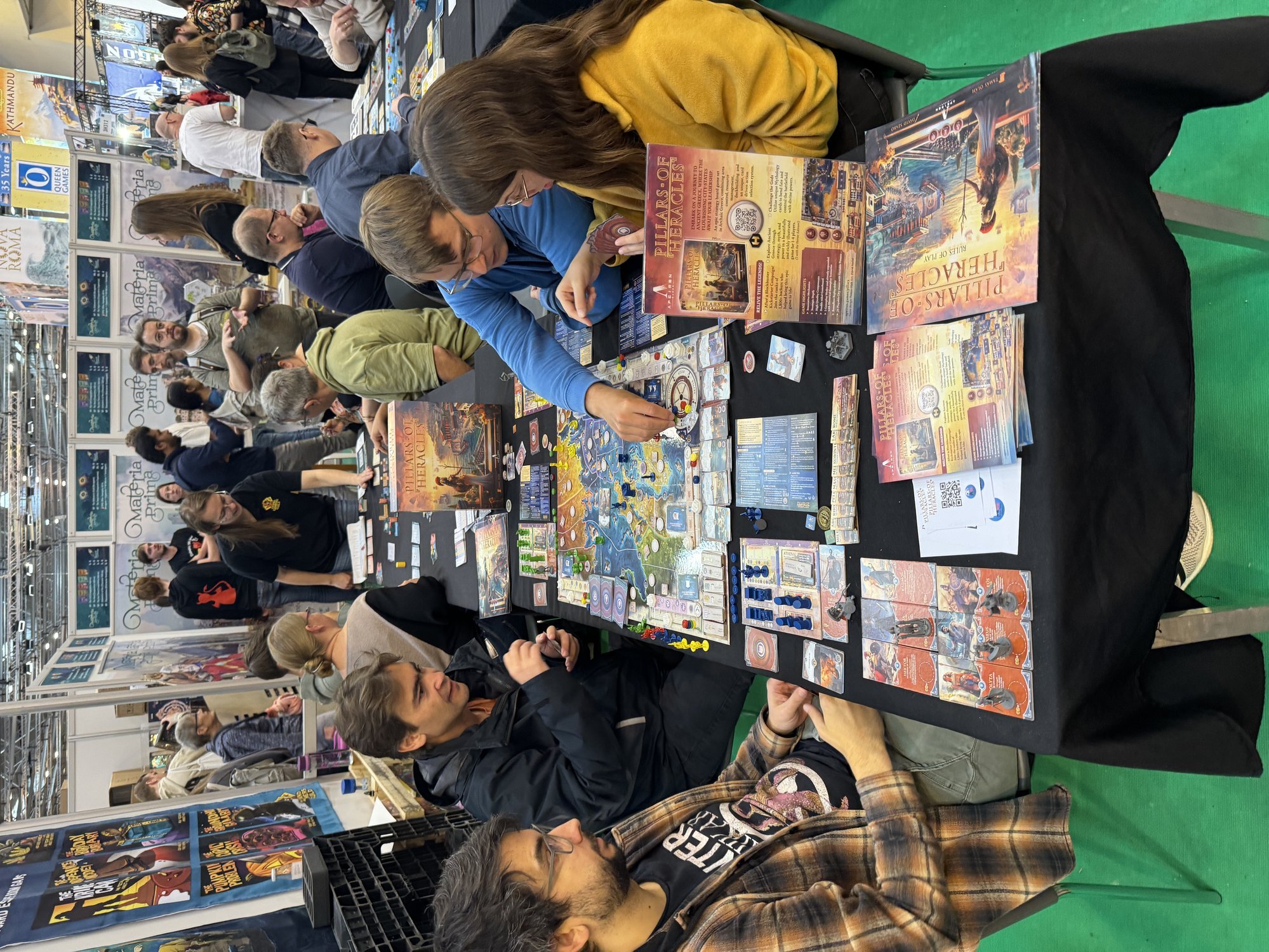
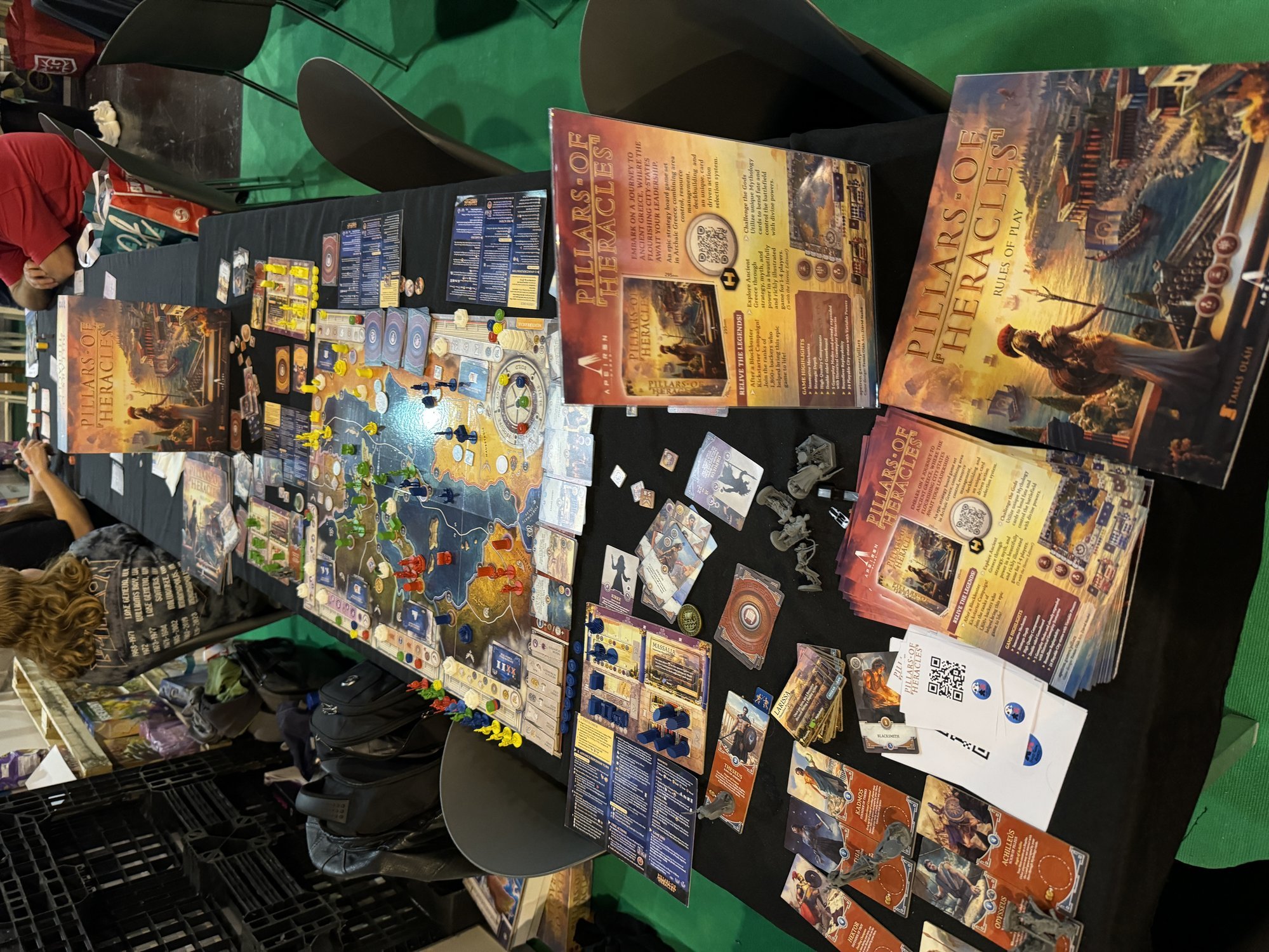
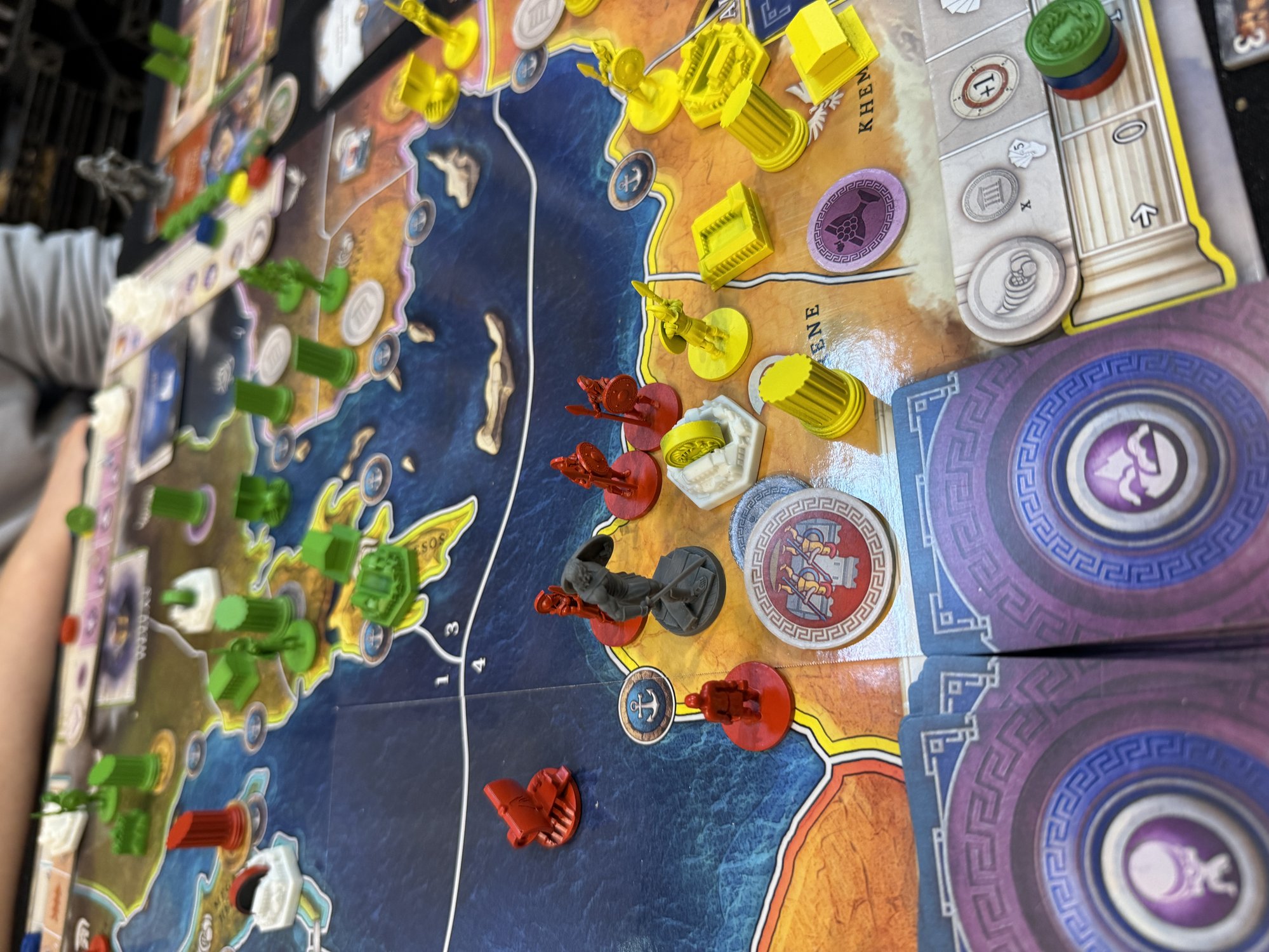
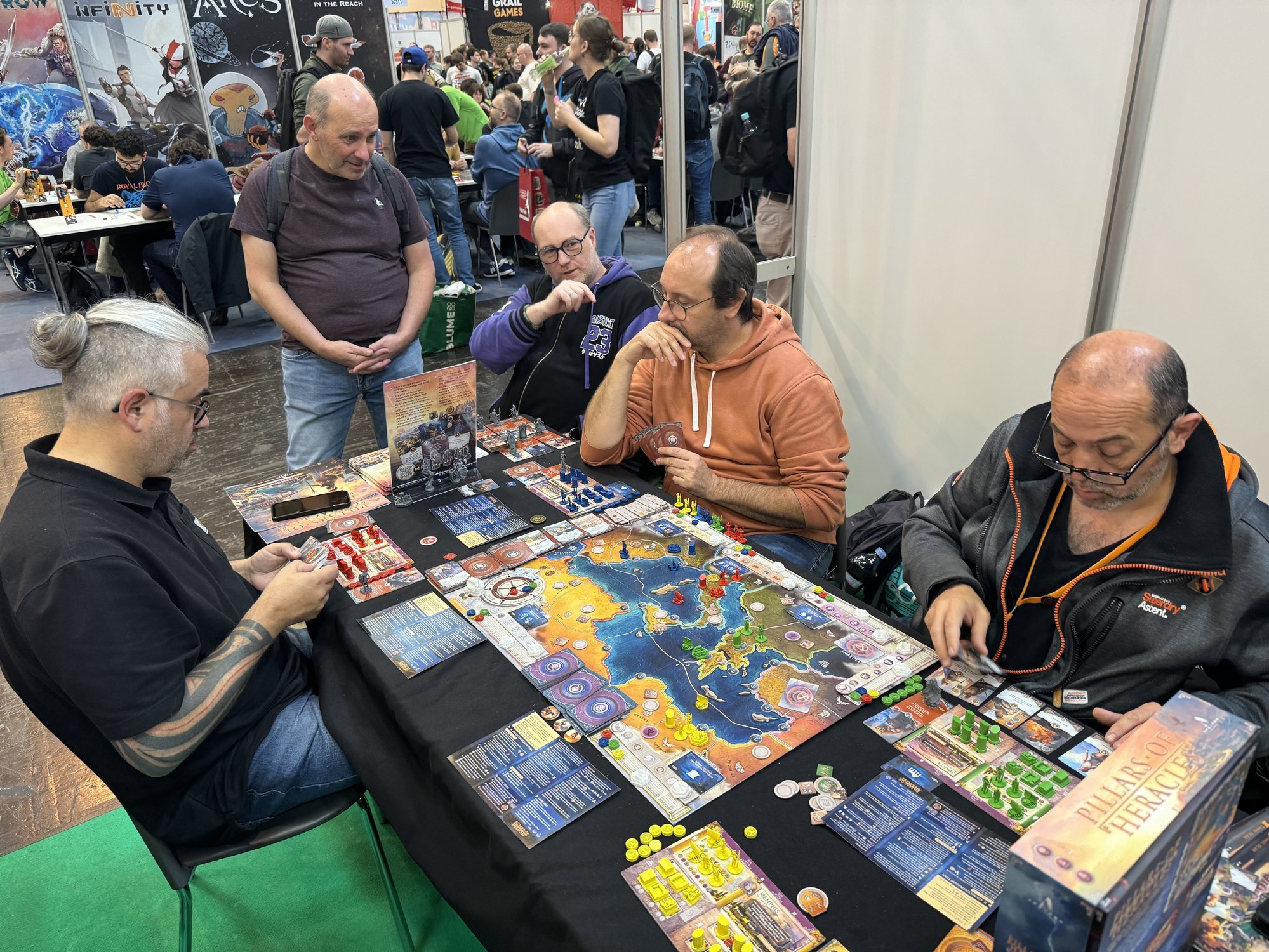
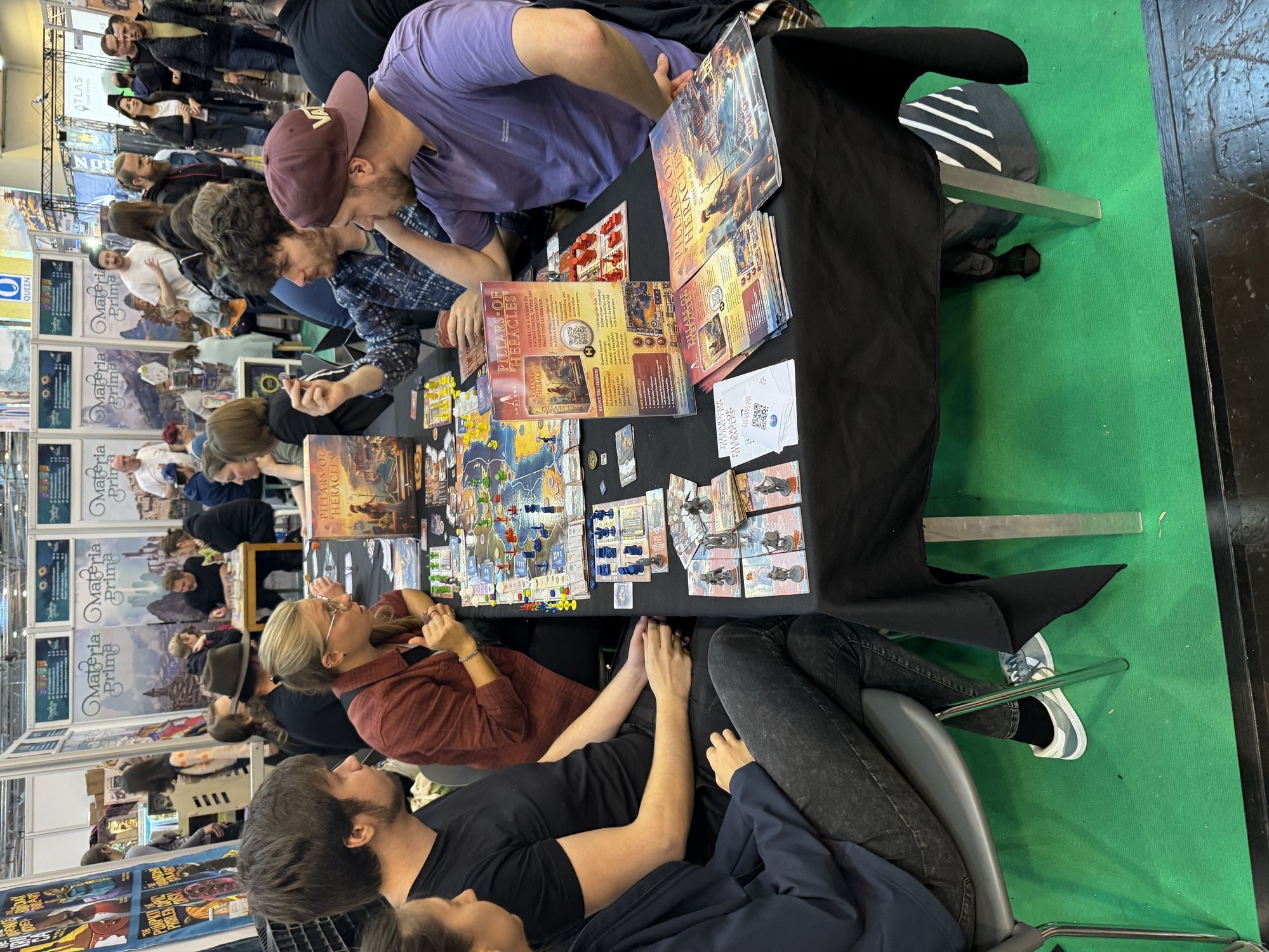
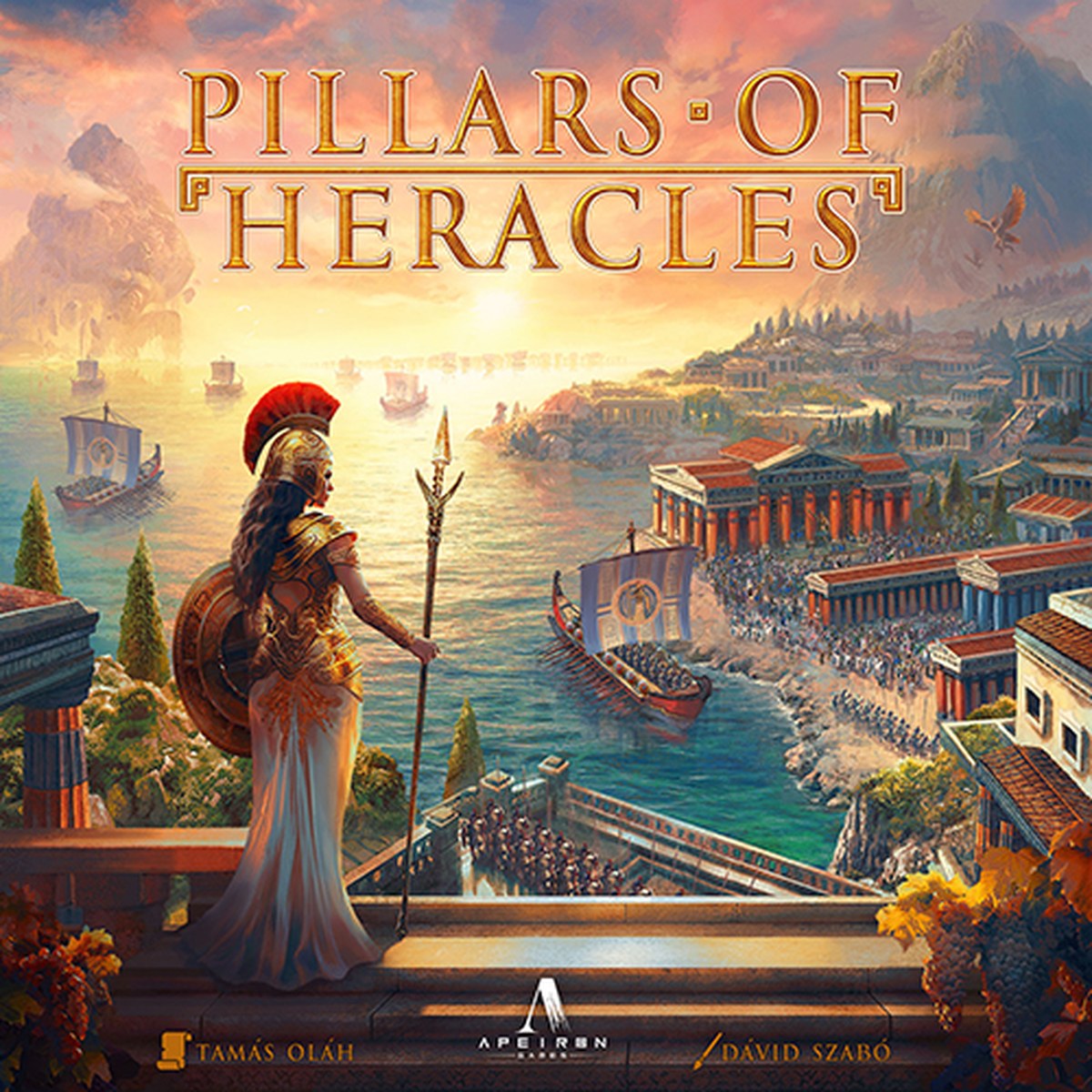
Pillars of Heracles is an epic strategy board game where you lead a Greek city-state to glory during the Archaic Period of ancient Hellas. Navigate uncharted seas, recruit units and legendary heroes, and call upon the gods and mythical creatures to outwit your rivals and shape the fate of the Greek world.
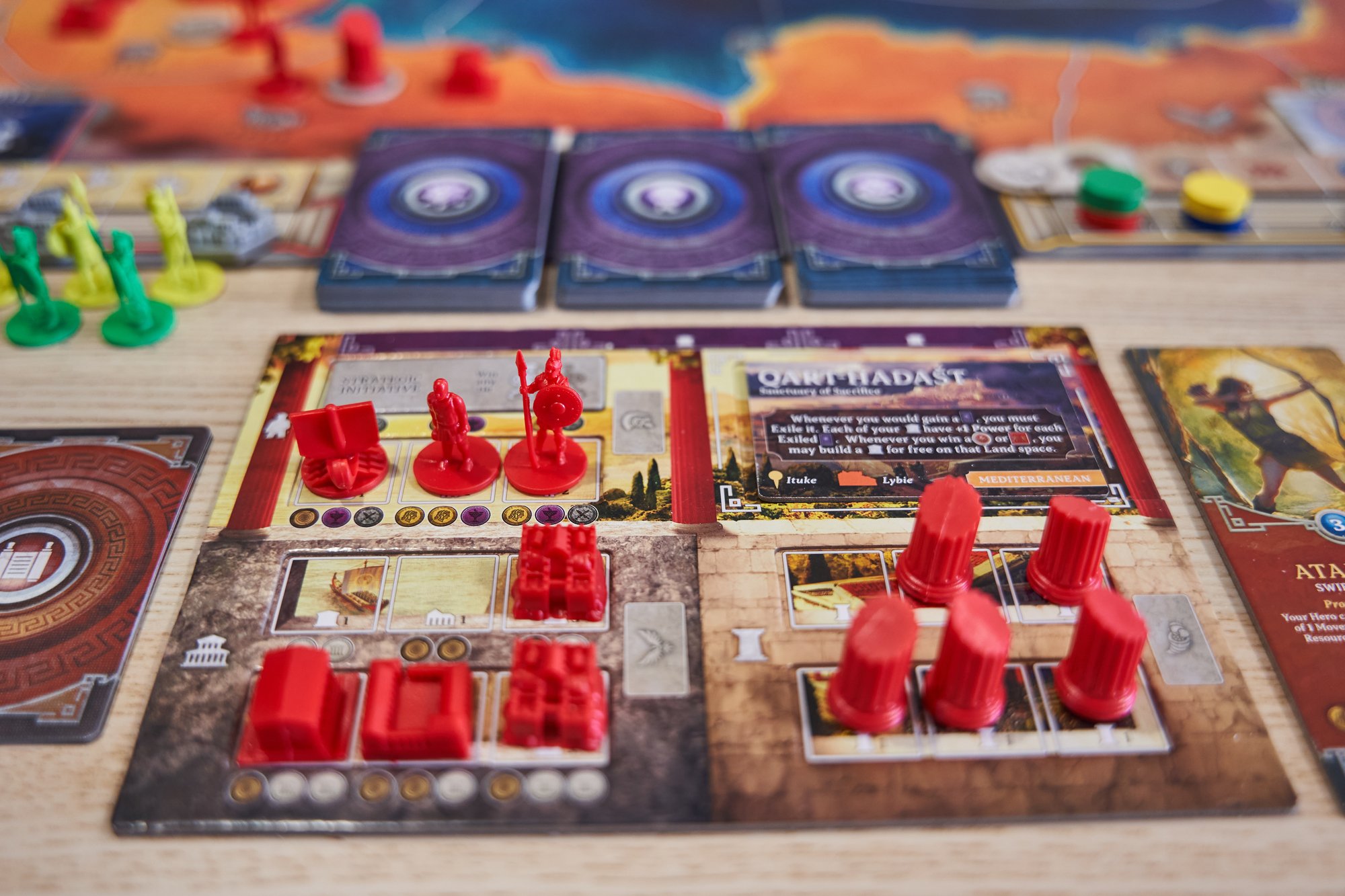
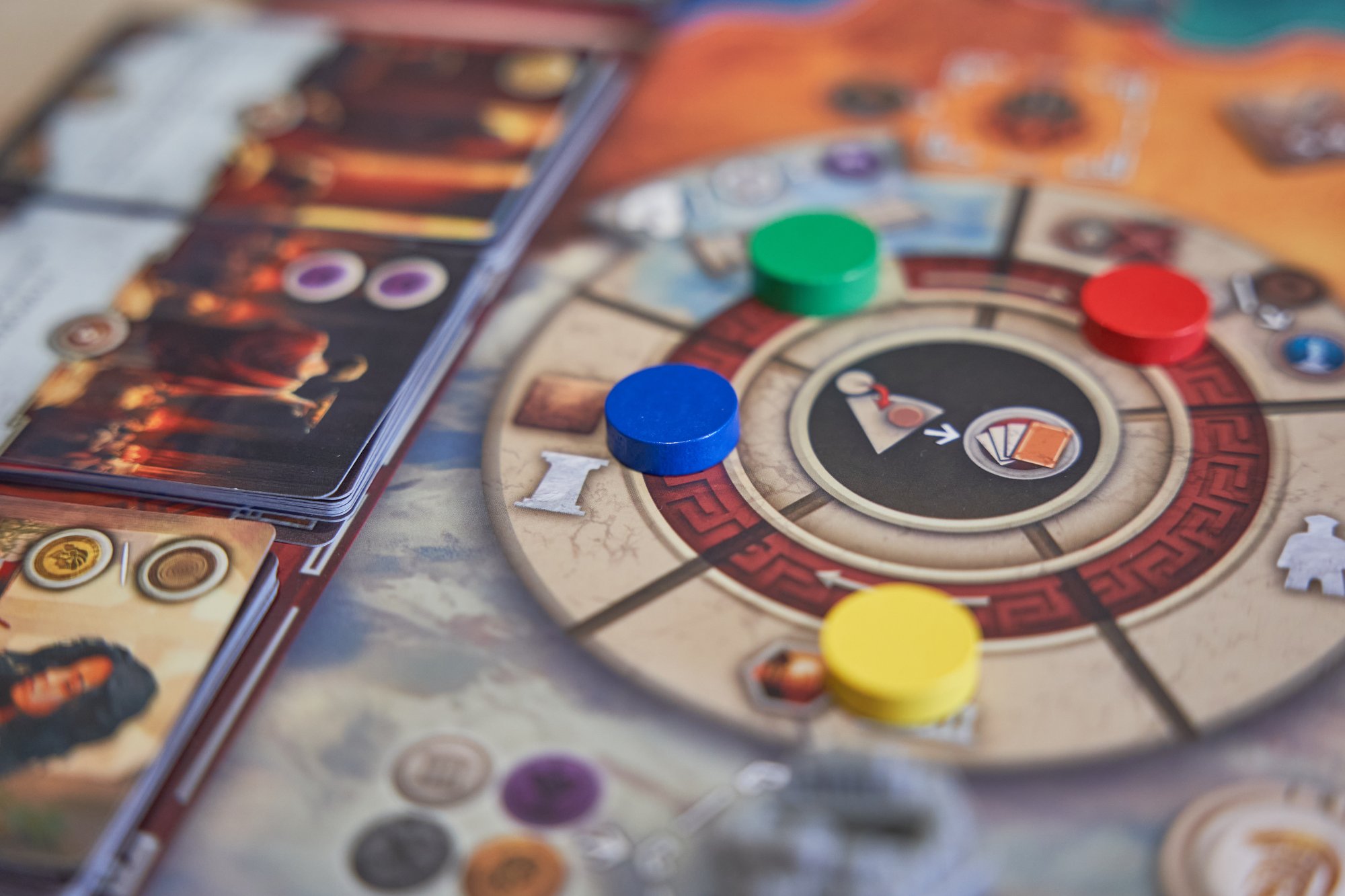
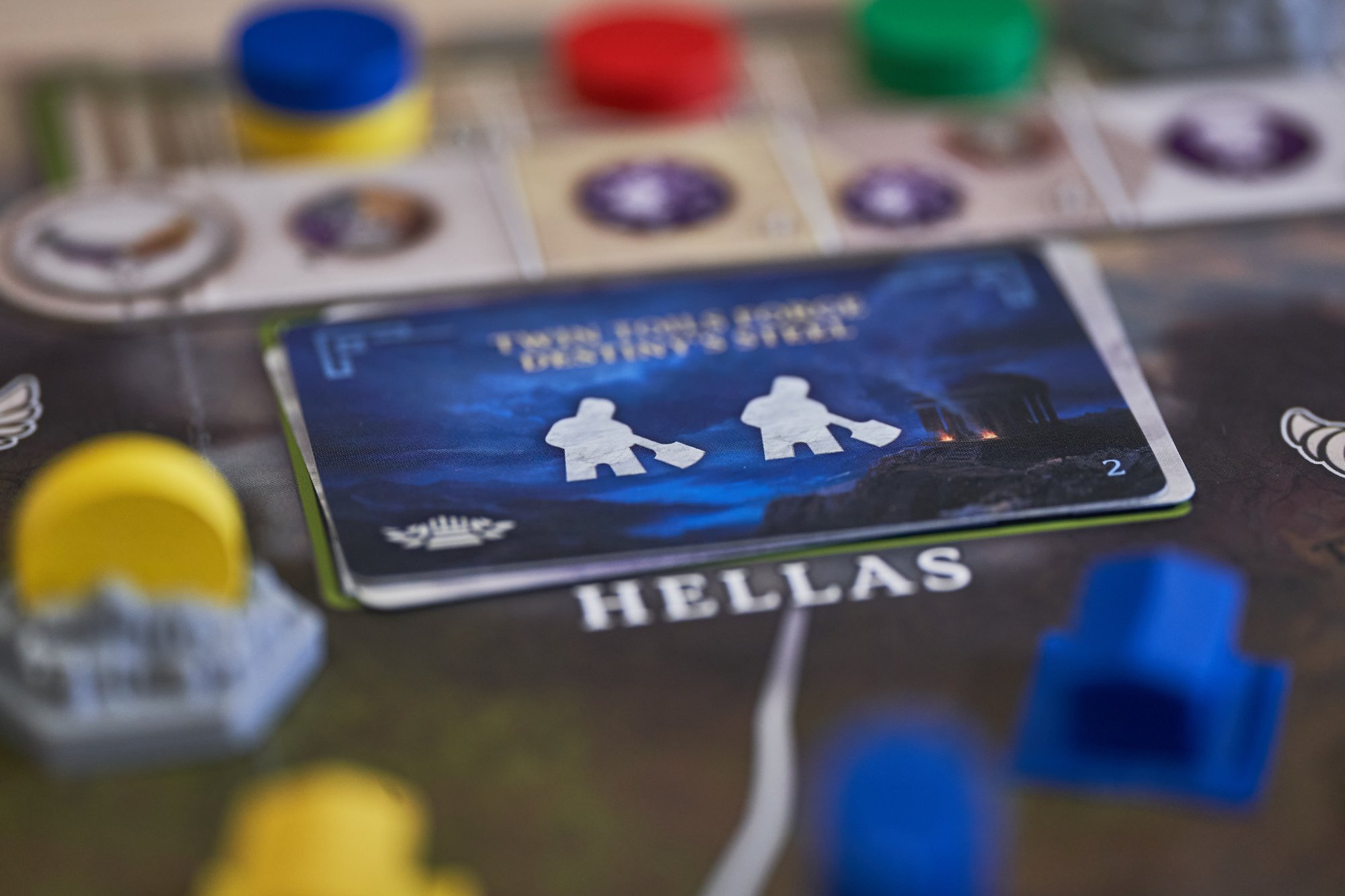
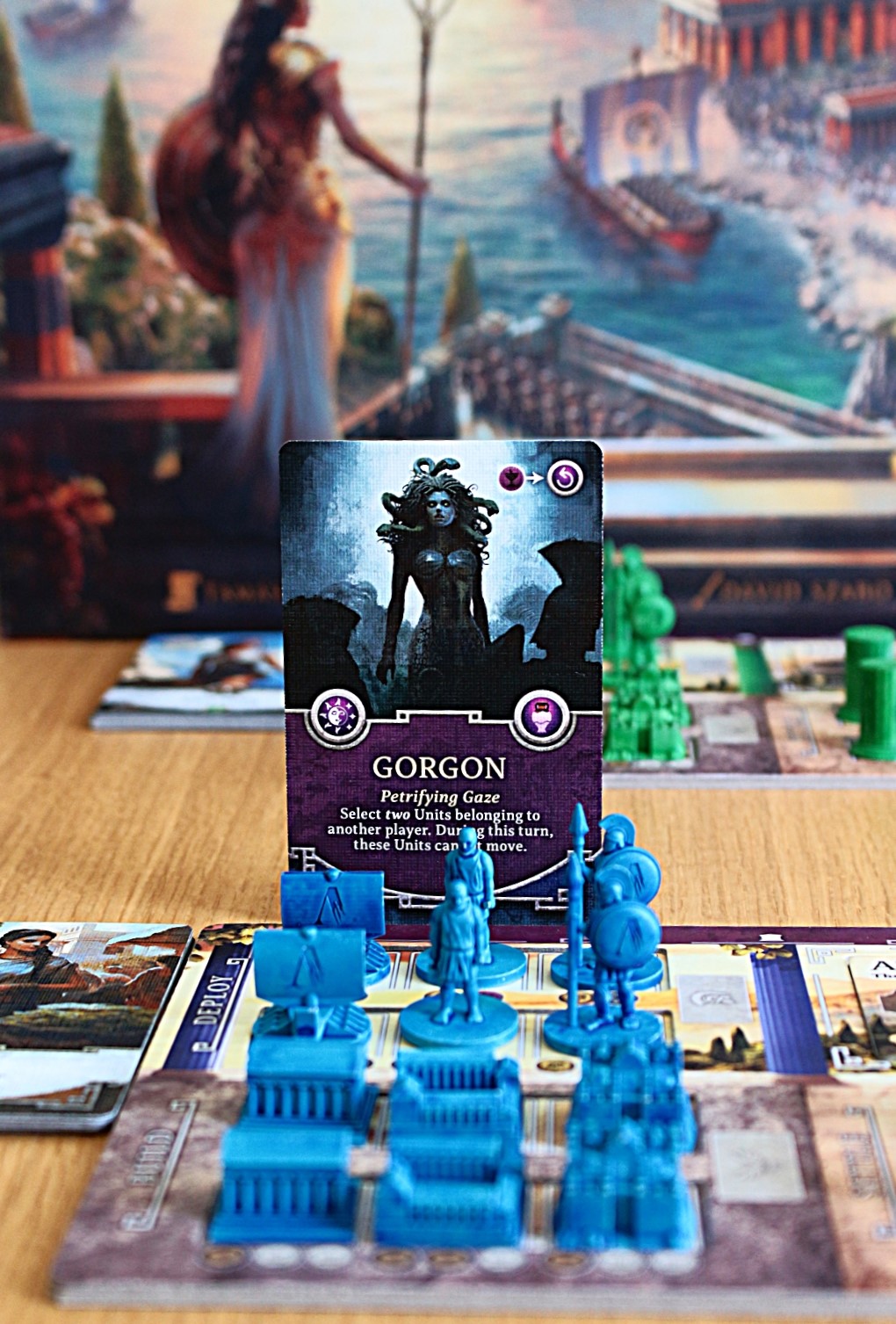
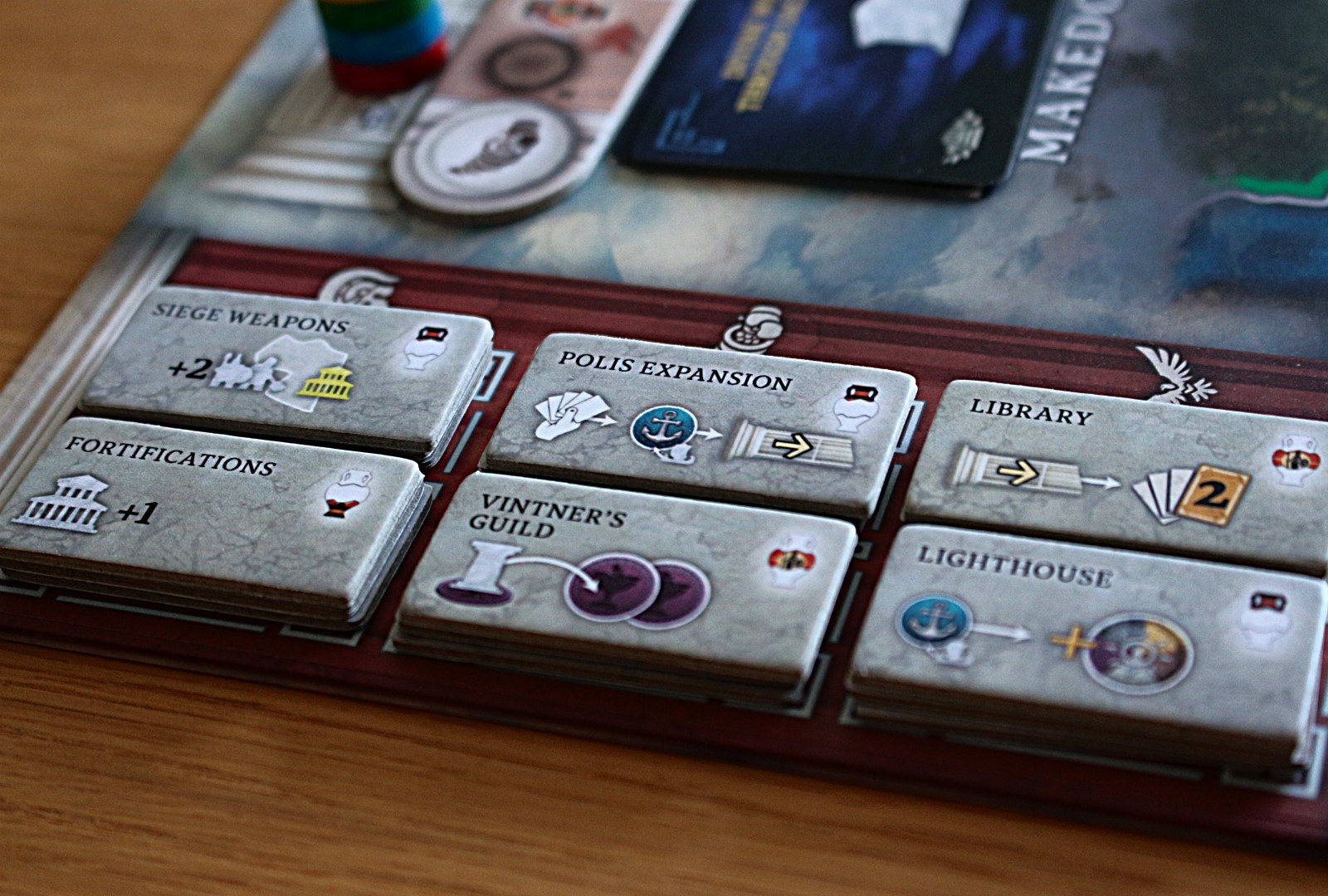
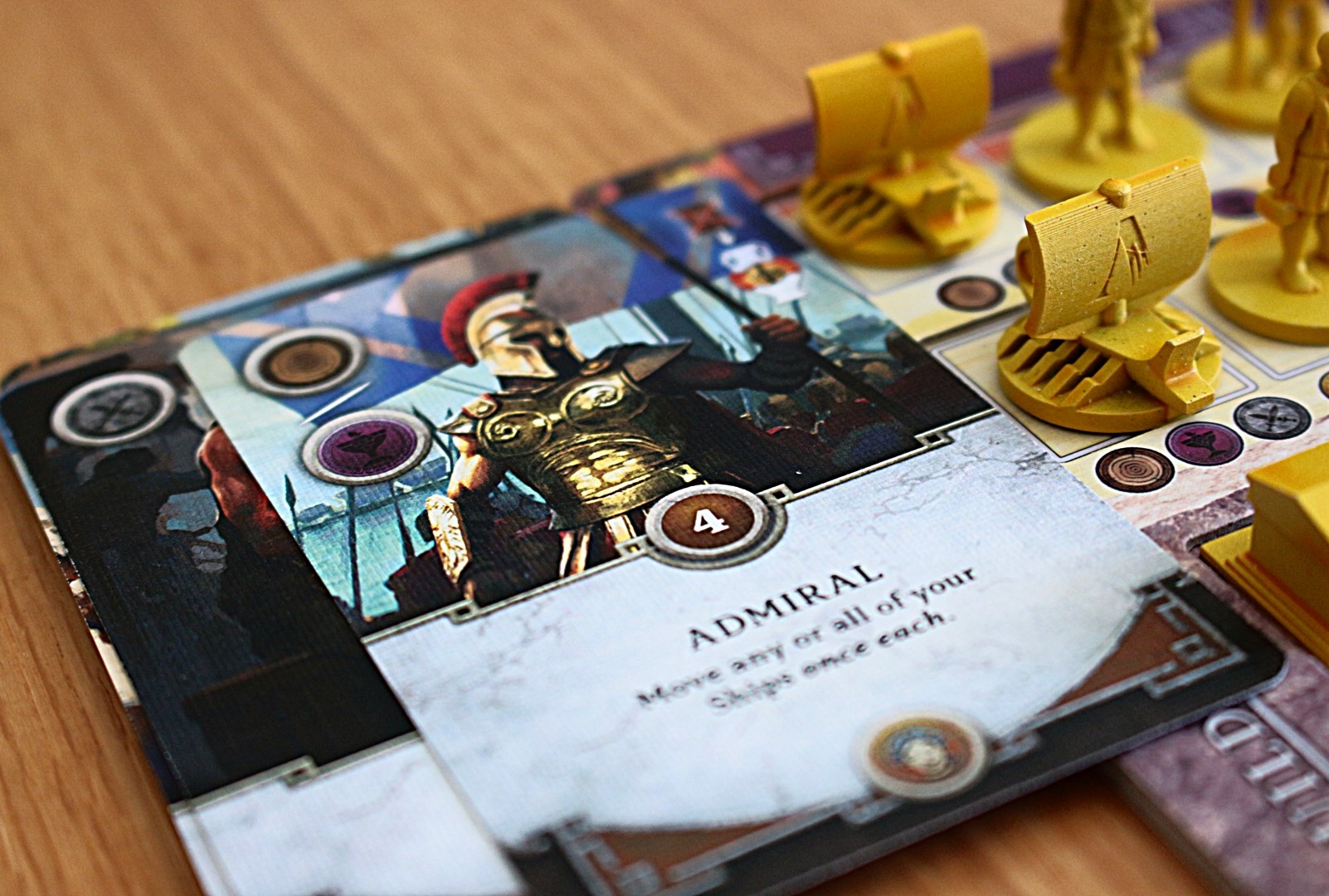
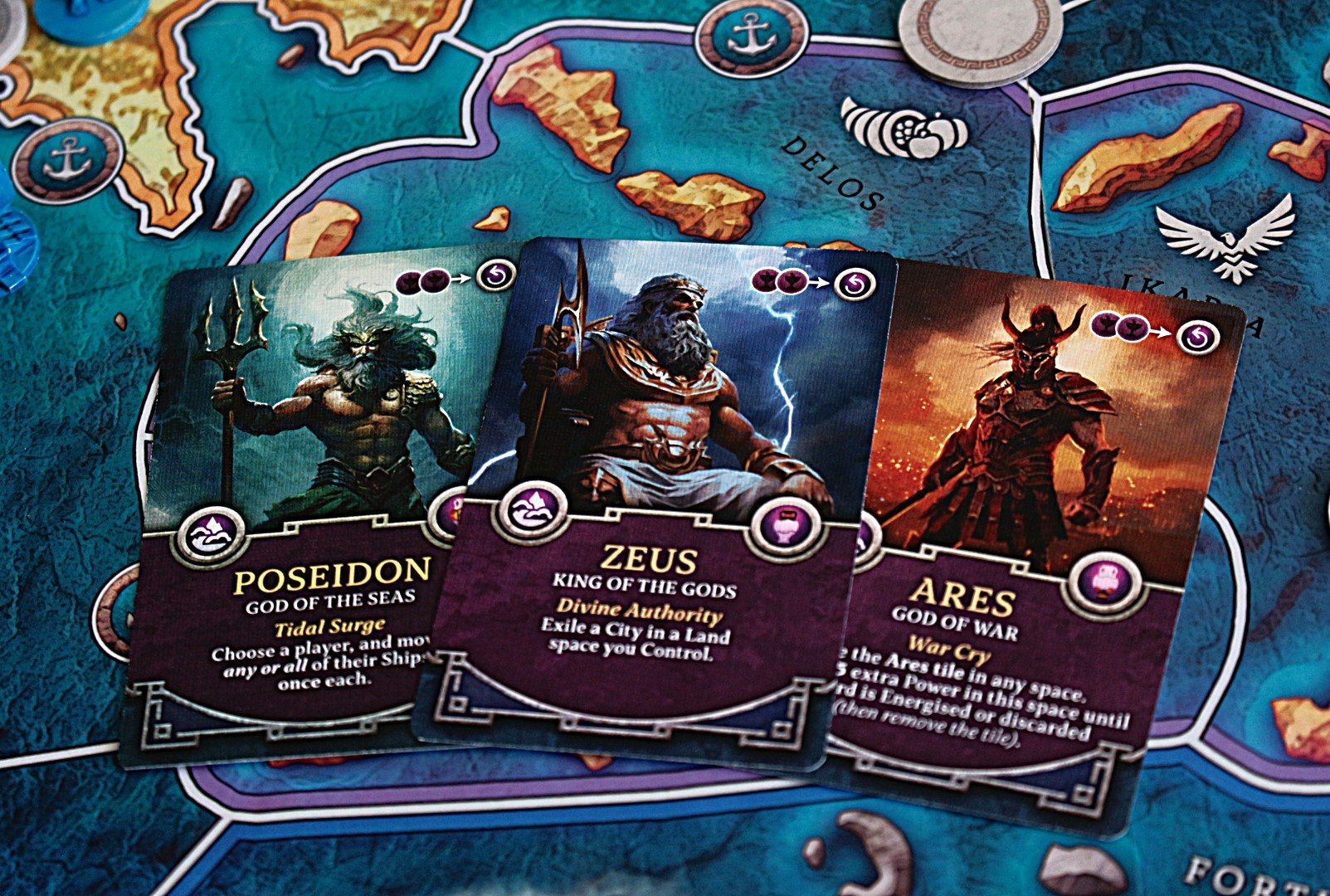
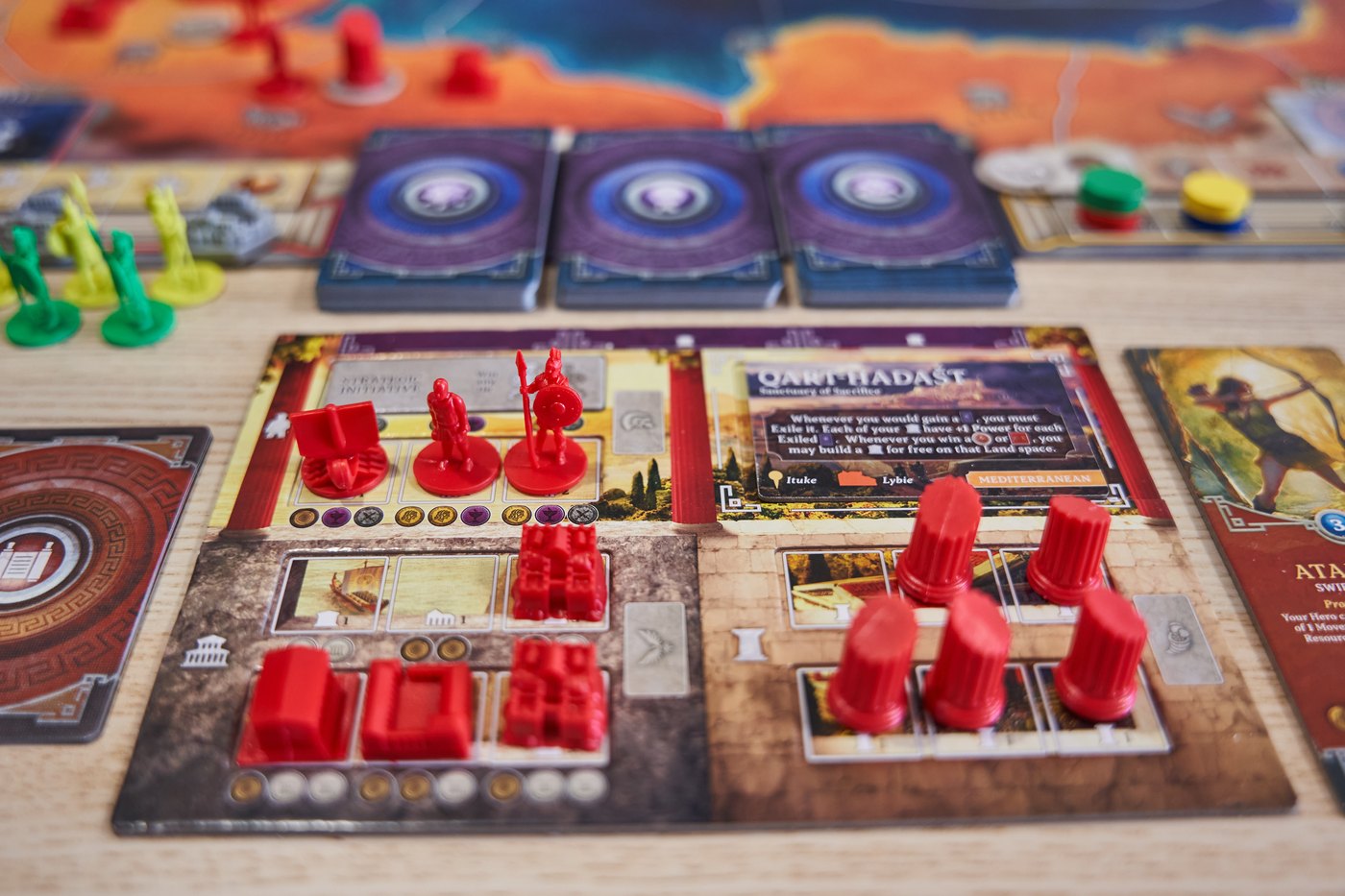
Pillars of Heracles is the only strategy game to combine a tight rondel action system with genuine deckbuilding. Every card you add amplifies your engine — every position on the rondel opens options others can't easily replicate. The interplay is seamless, elegant, and deeply replayable.
02
A Geographically True Mediterranean
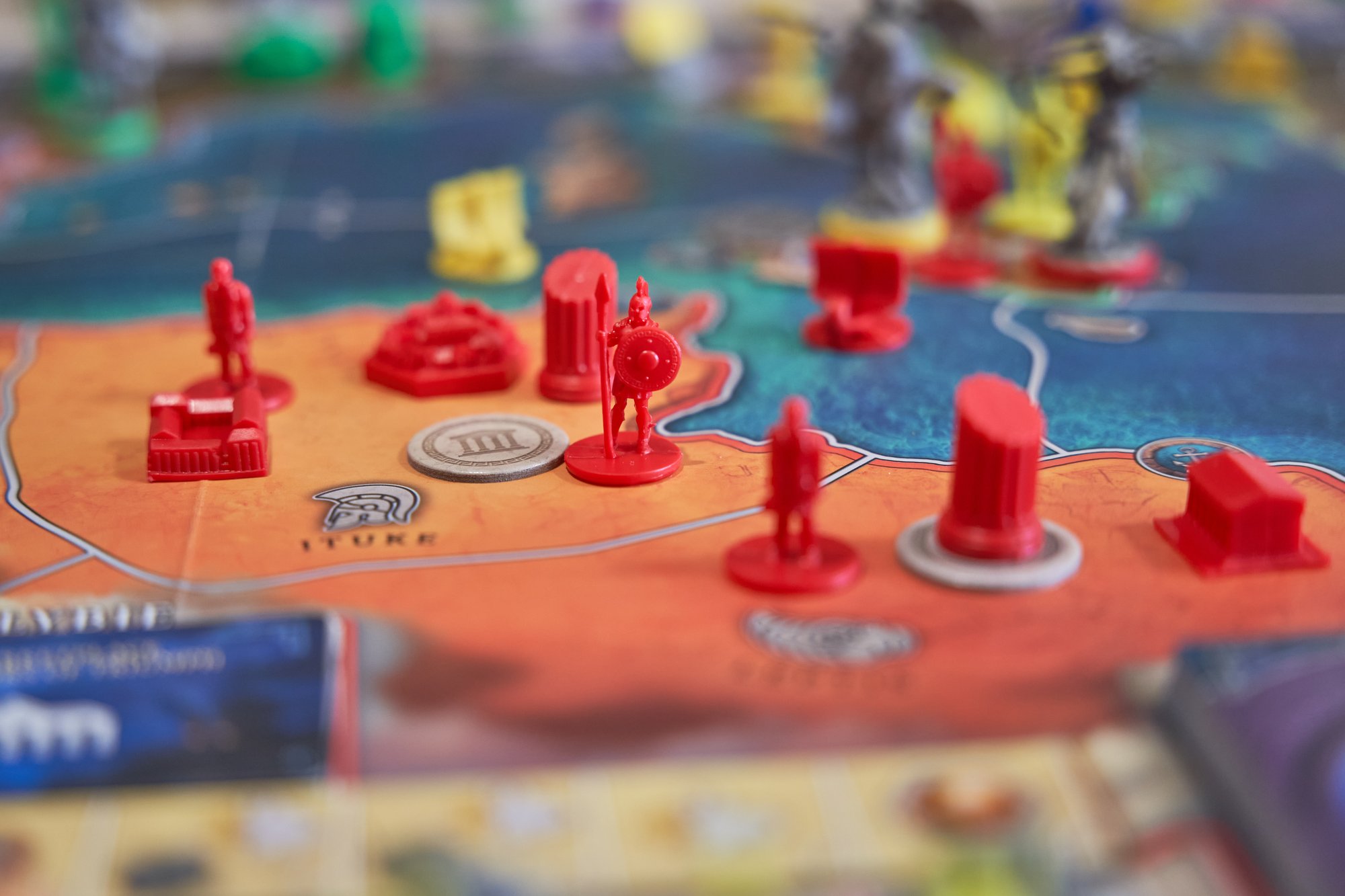
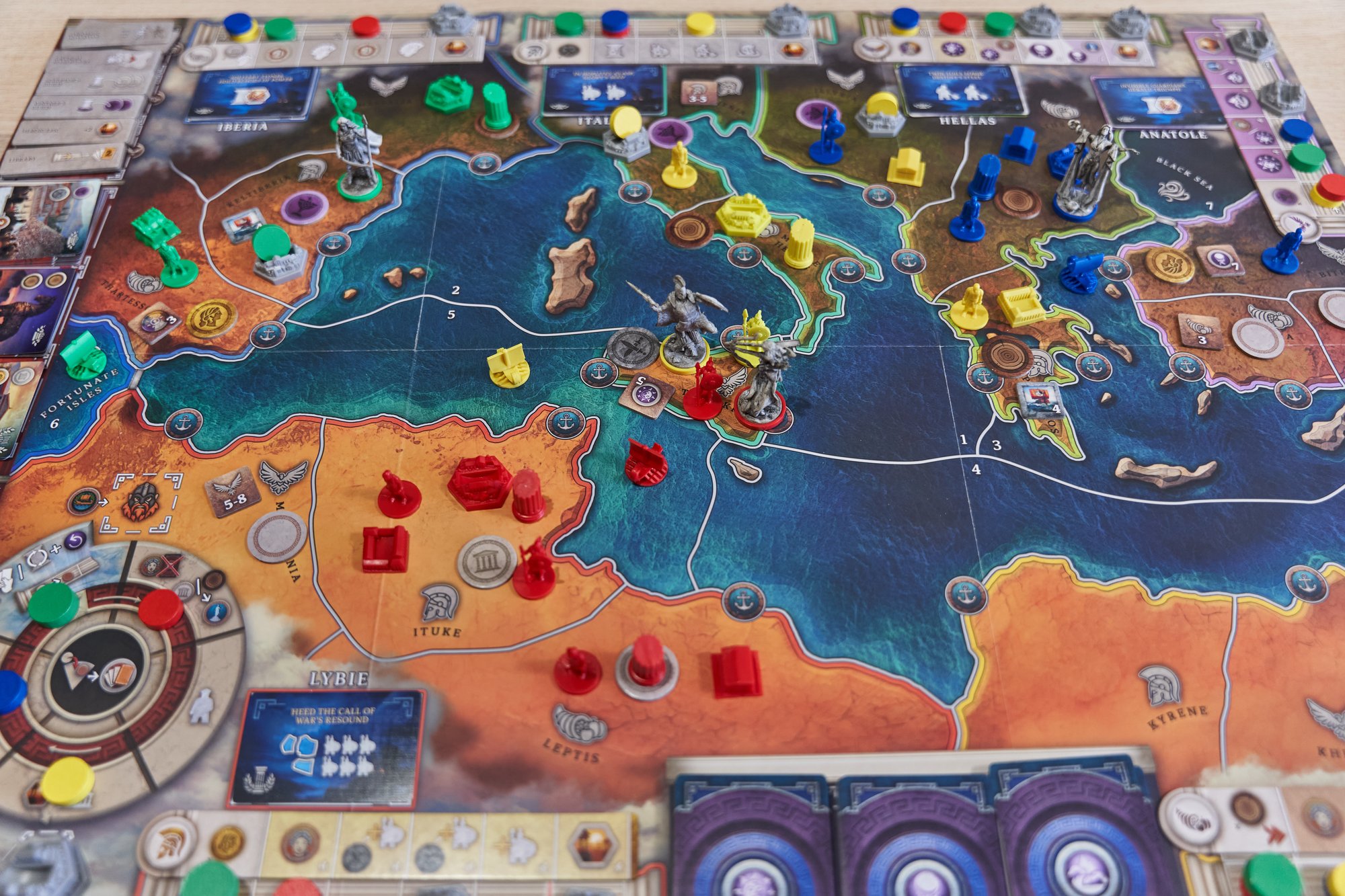
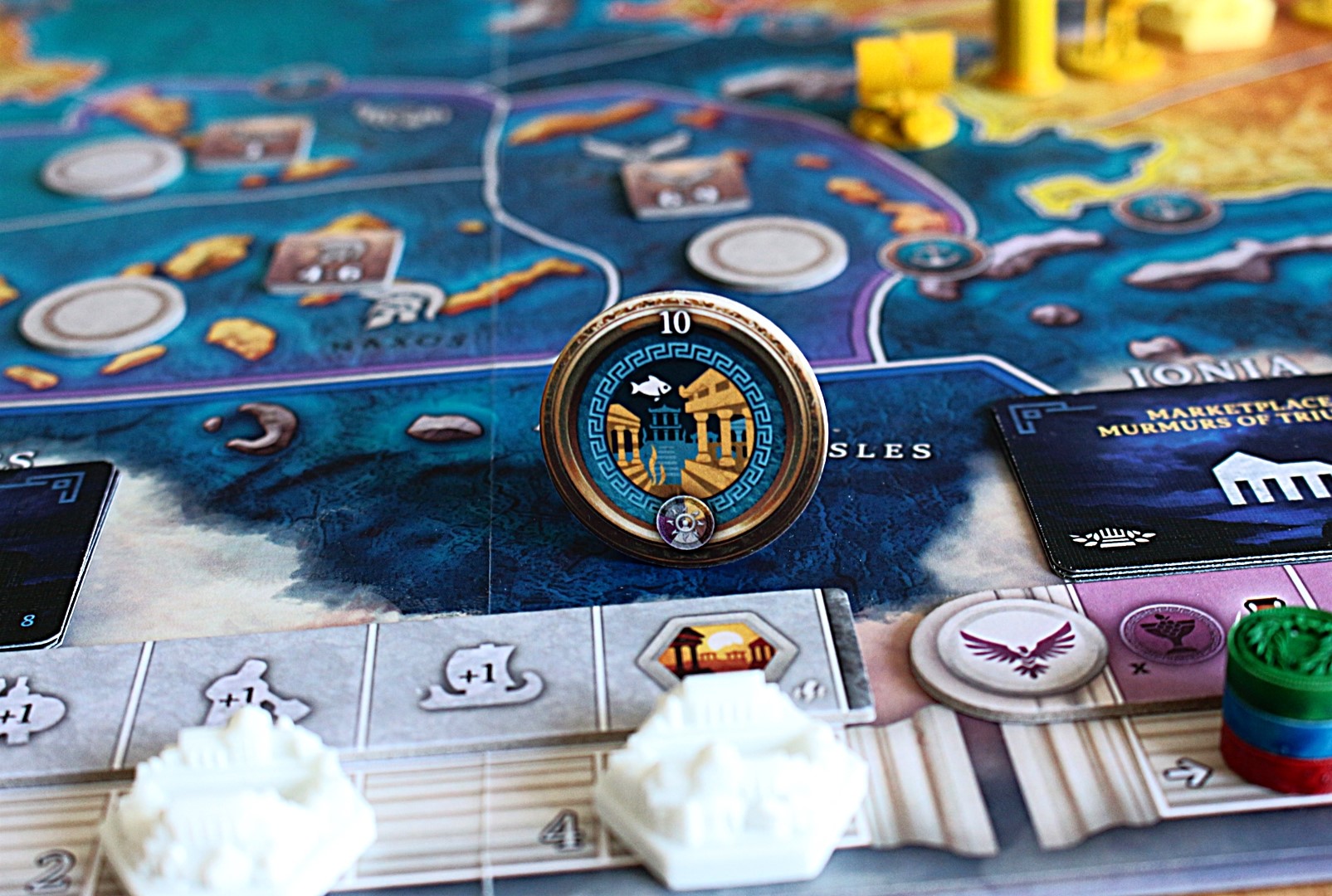
The map traces real Greek expedition routes — Magna Graecia, Iberia, the Black Sea, the Pillars of Heracles themselves. Every region you settle existed. Every sea lane you sail was sailed. Strategy and historical literacy grow together.
03
Winning Feels Different Every Game
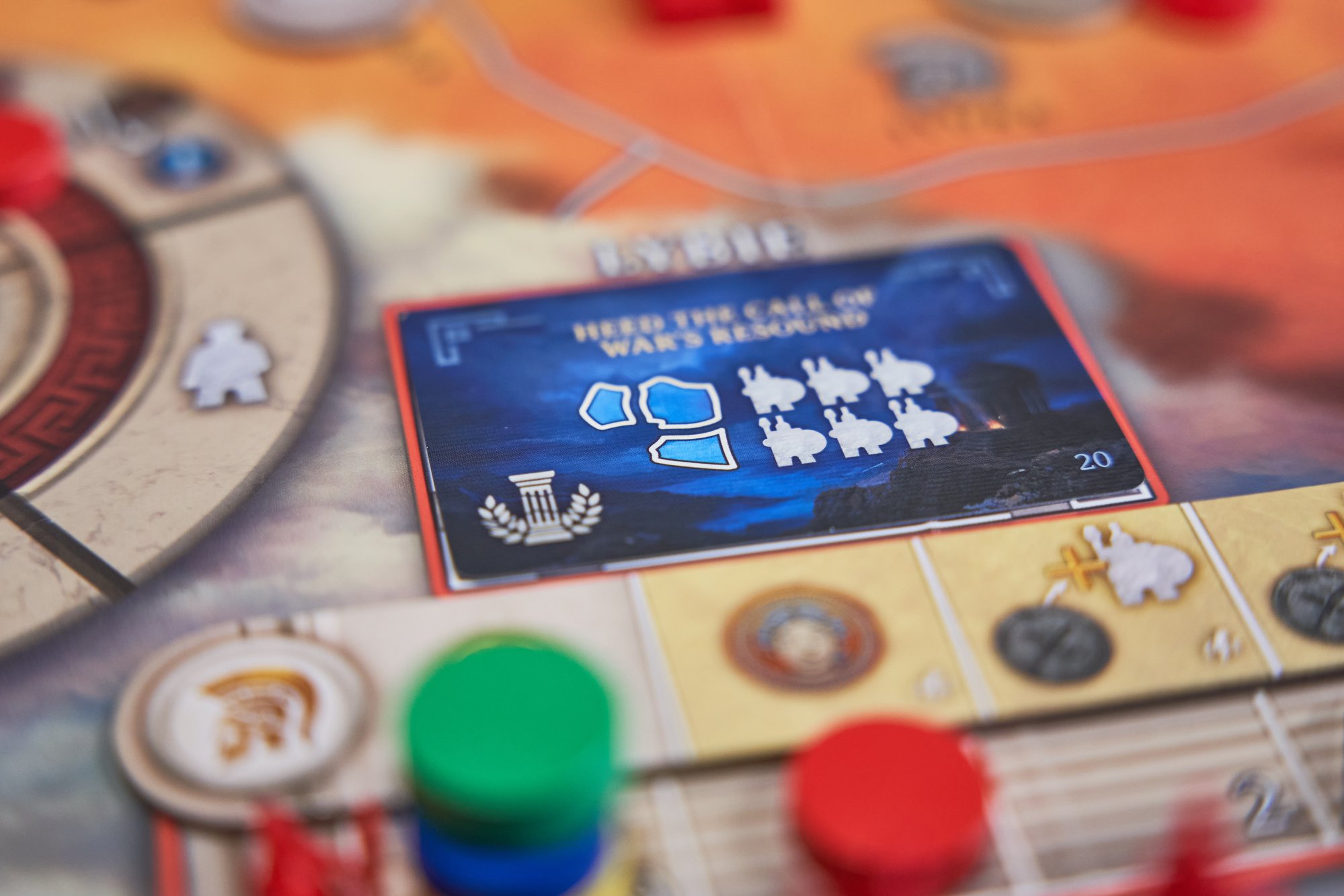
Military dominance, cultural supremacy, divine favour, economic mastery — multiple victory paths mean no two games arc the same way. You can pursue a different Greek ideal each time and find that the game rises to meet it.
04
A Solo Mode That Actually Delivers
The solo mode is a first-class experience built on the full game — same map, same mechanics, same depth — with a dedicated challenge system that scales to your ambition. Not a tutorial. Not a consolation prize. A complete strategic experience for one.
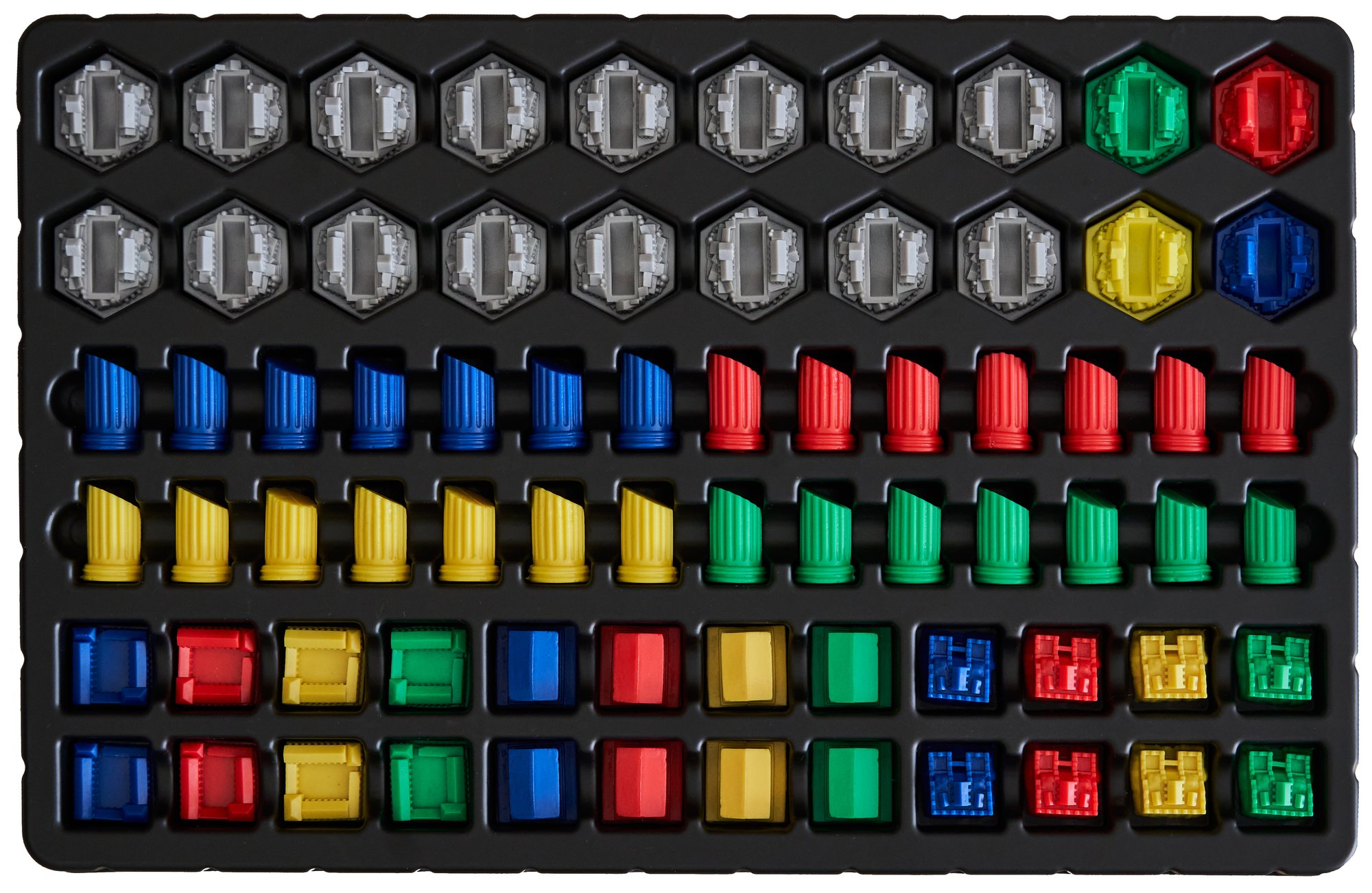
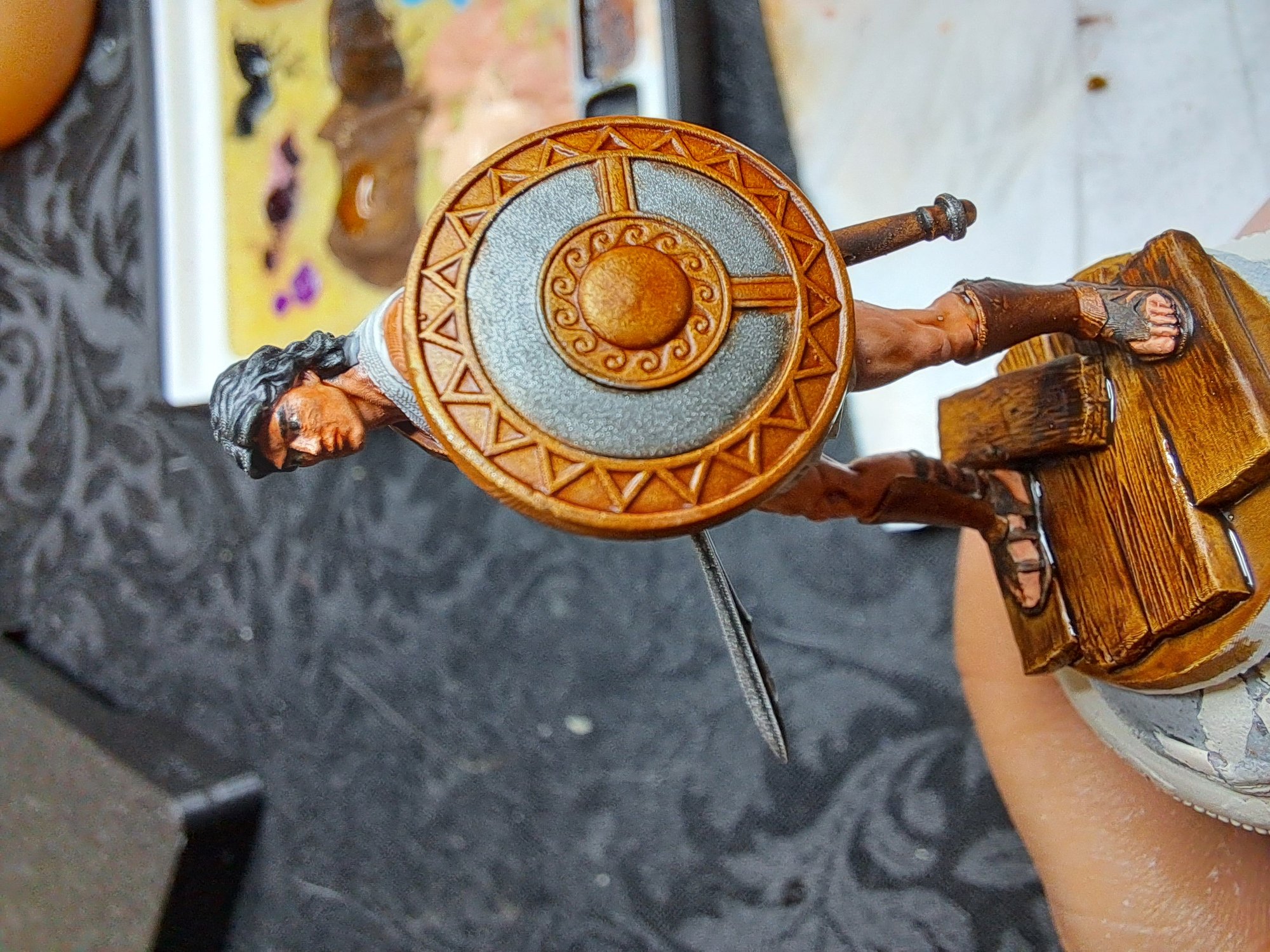
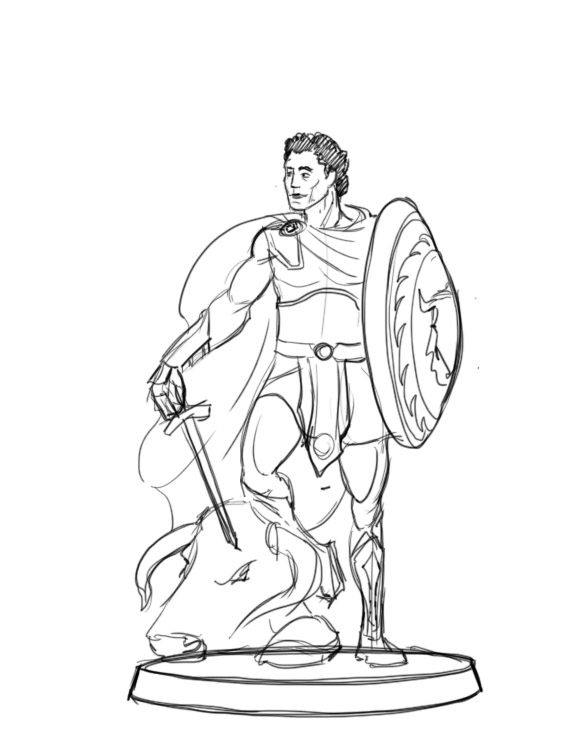
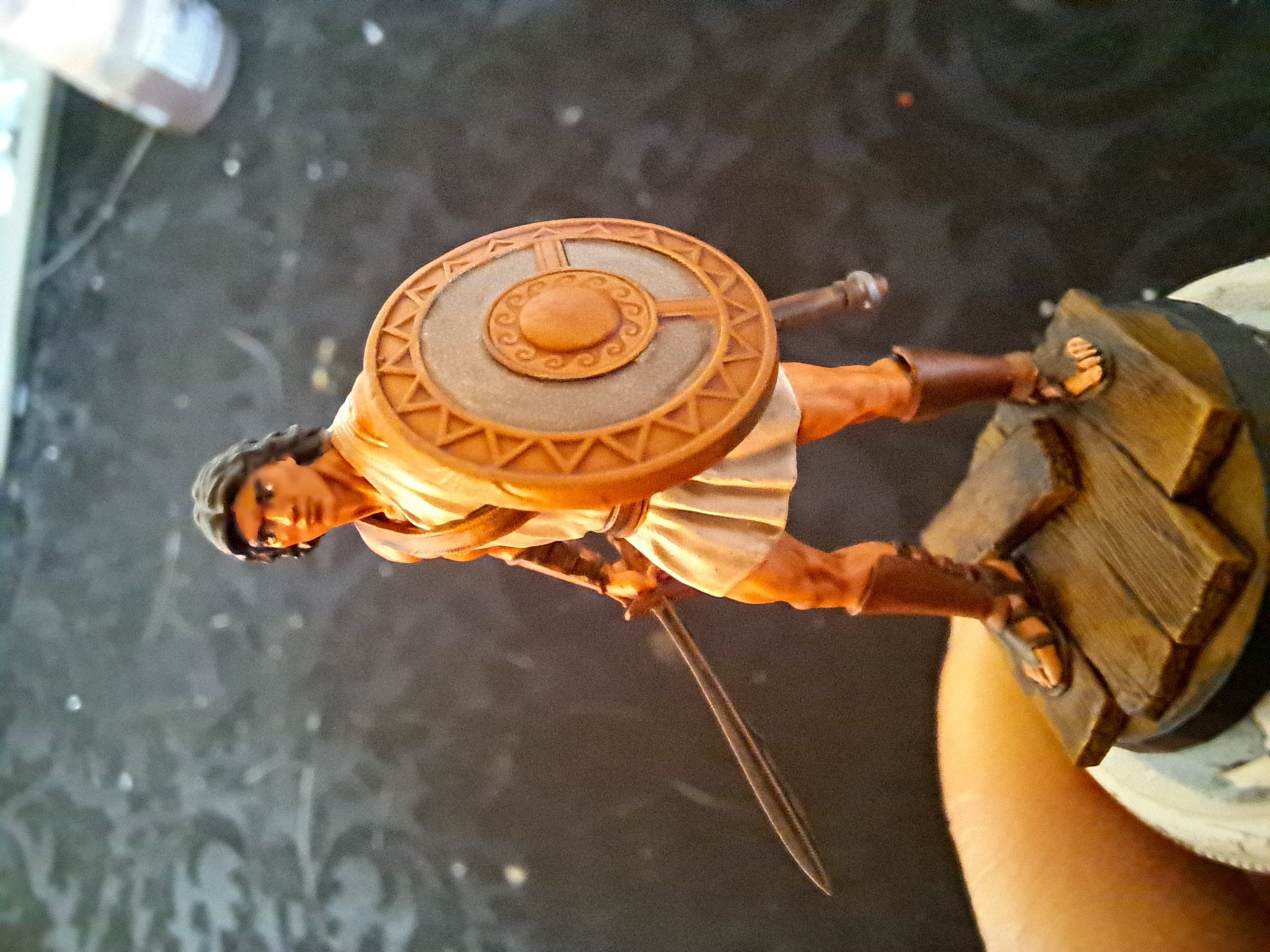
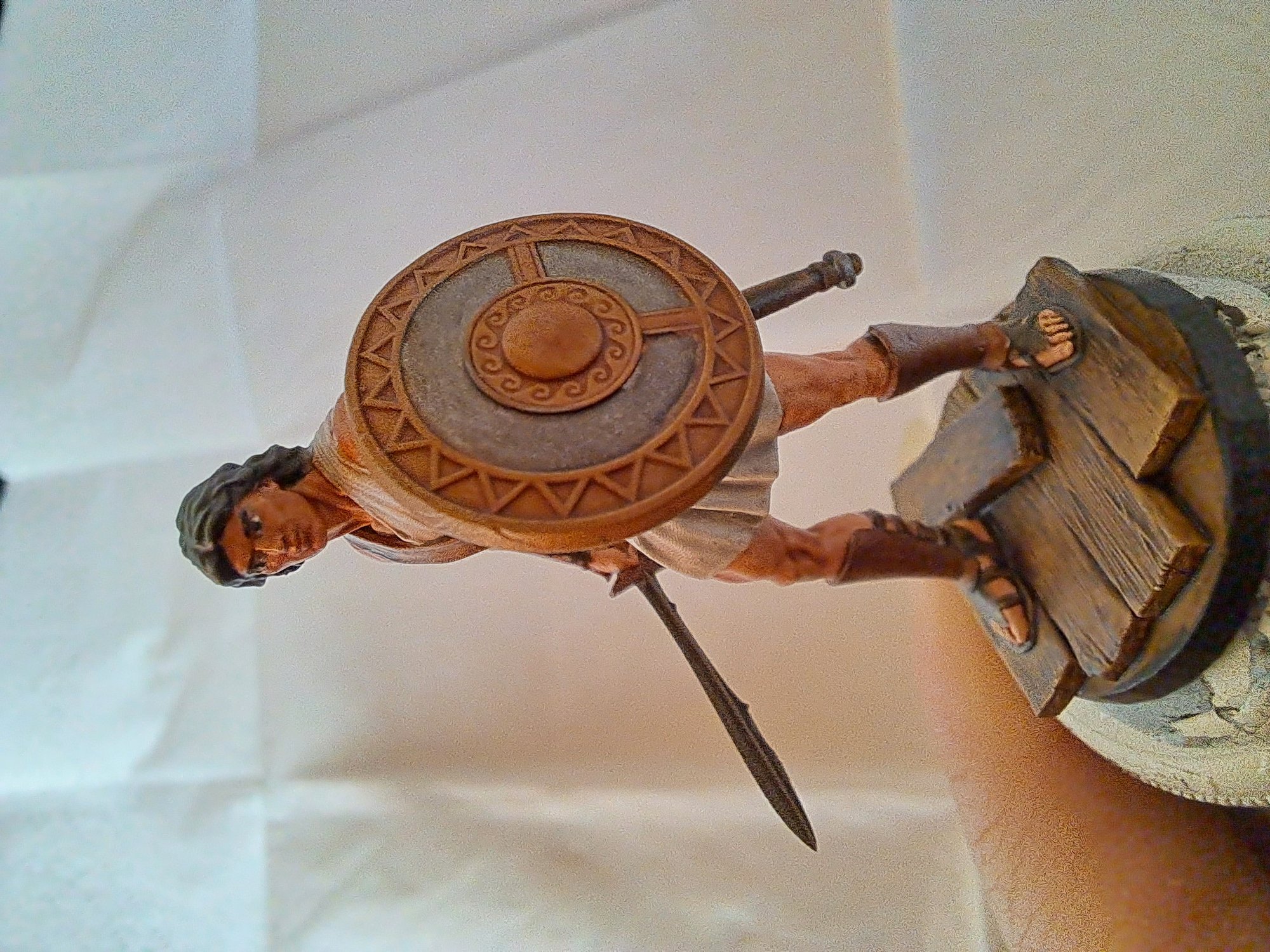
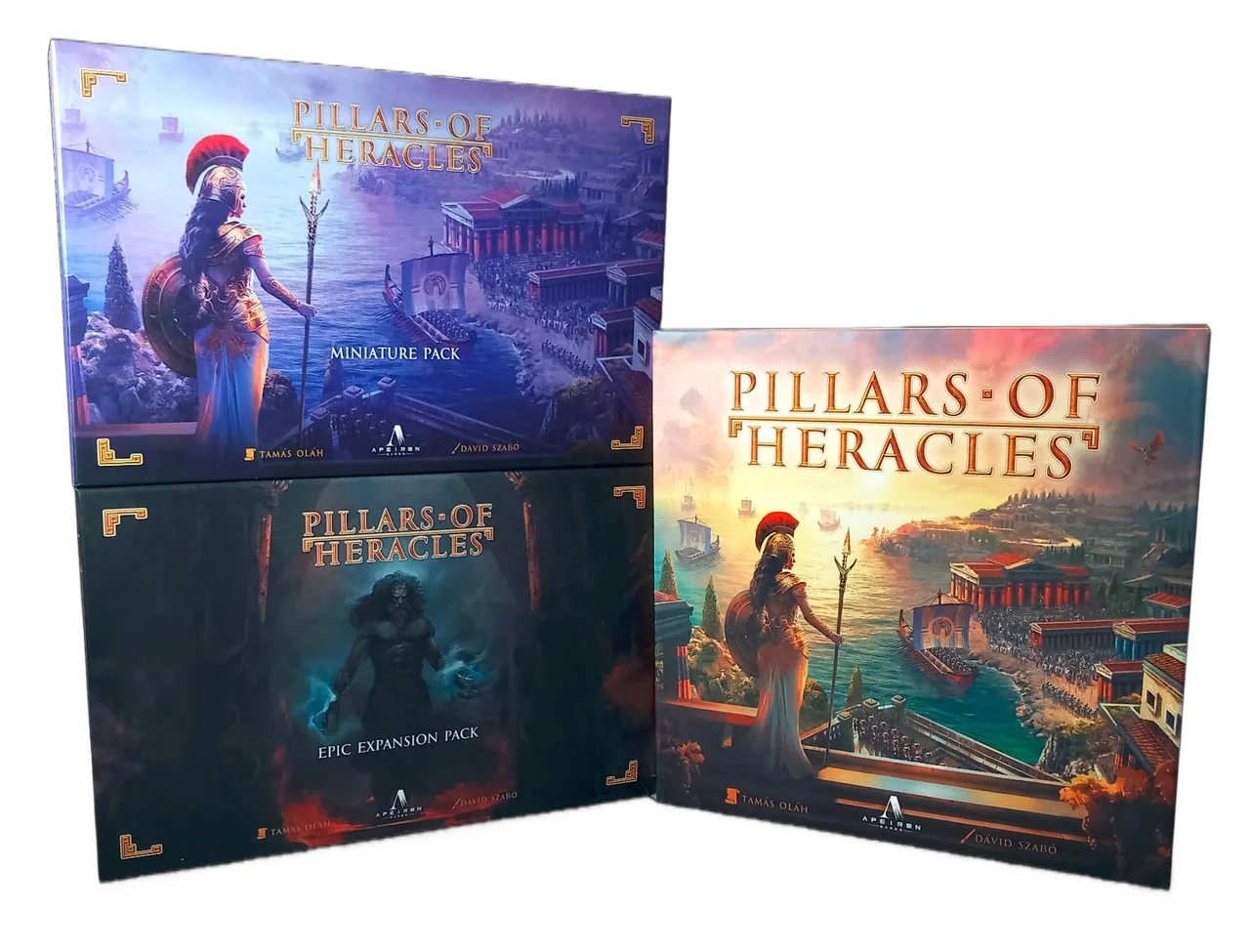
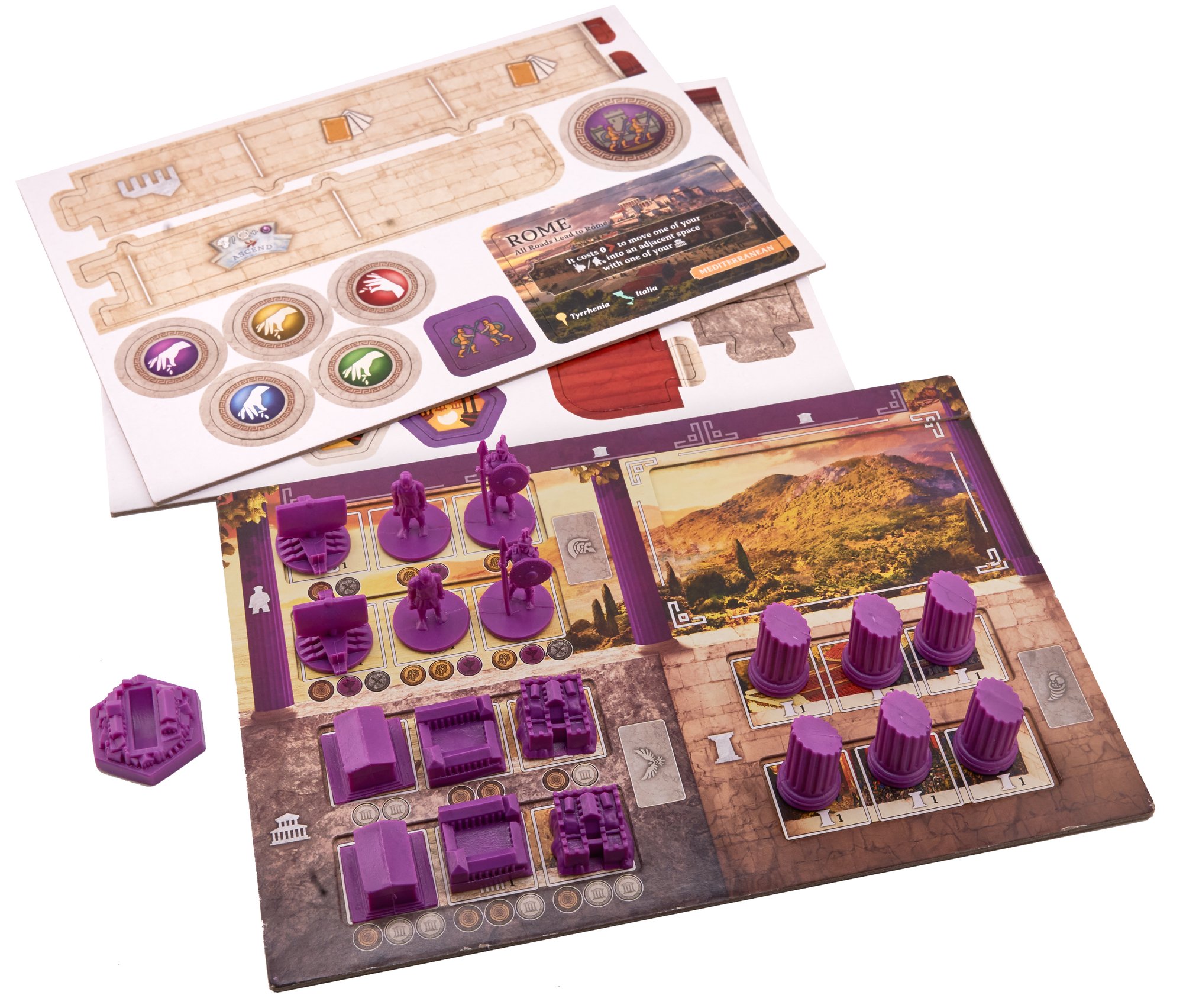
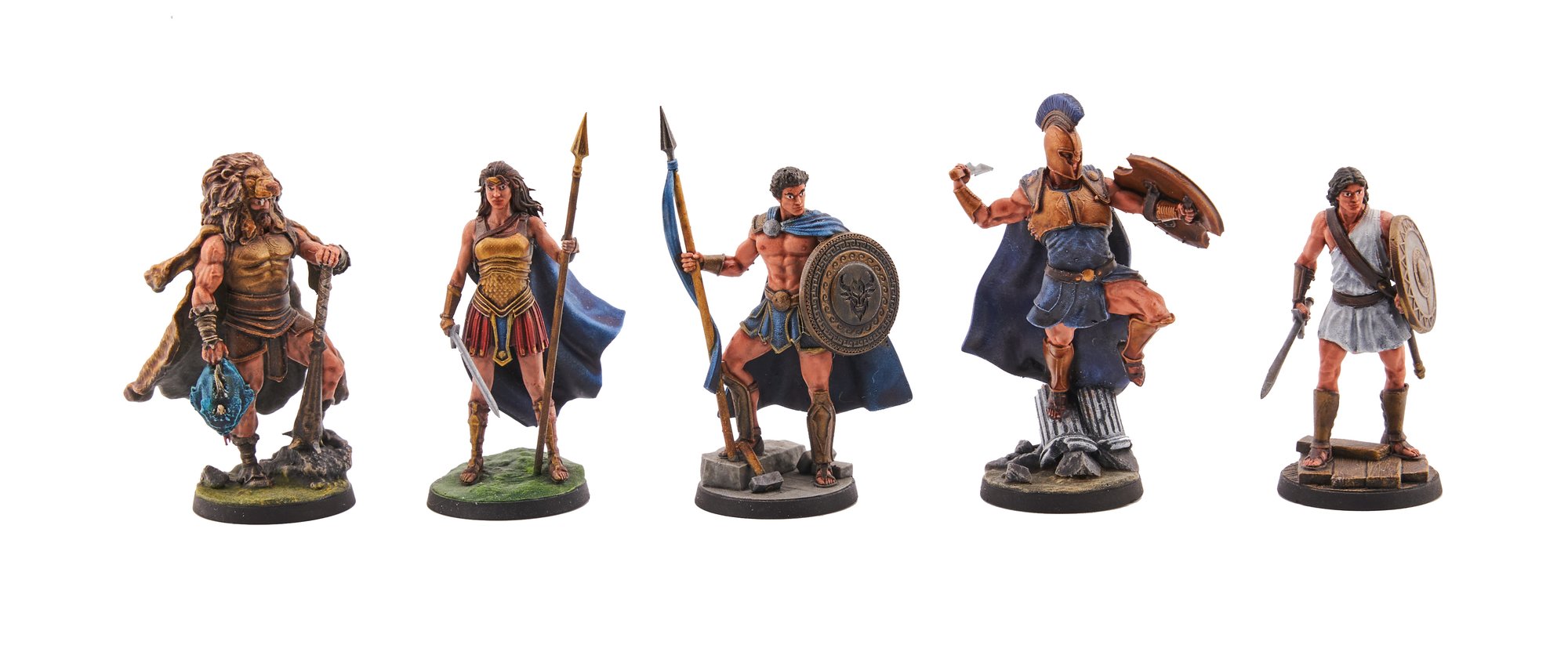
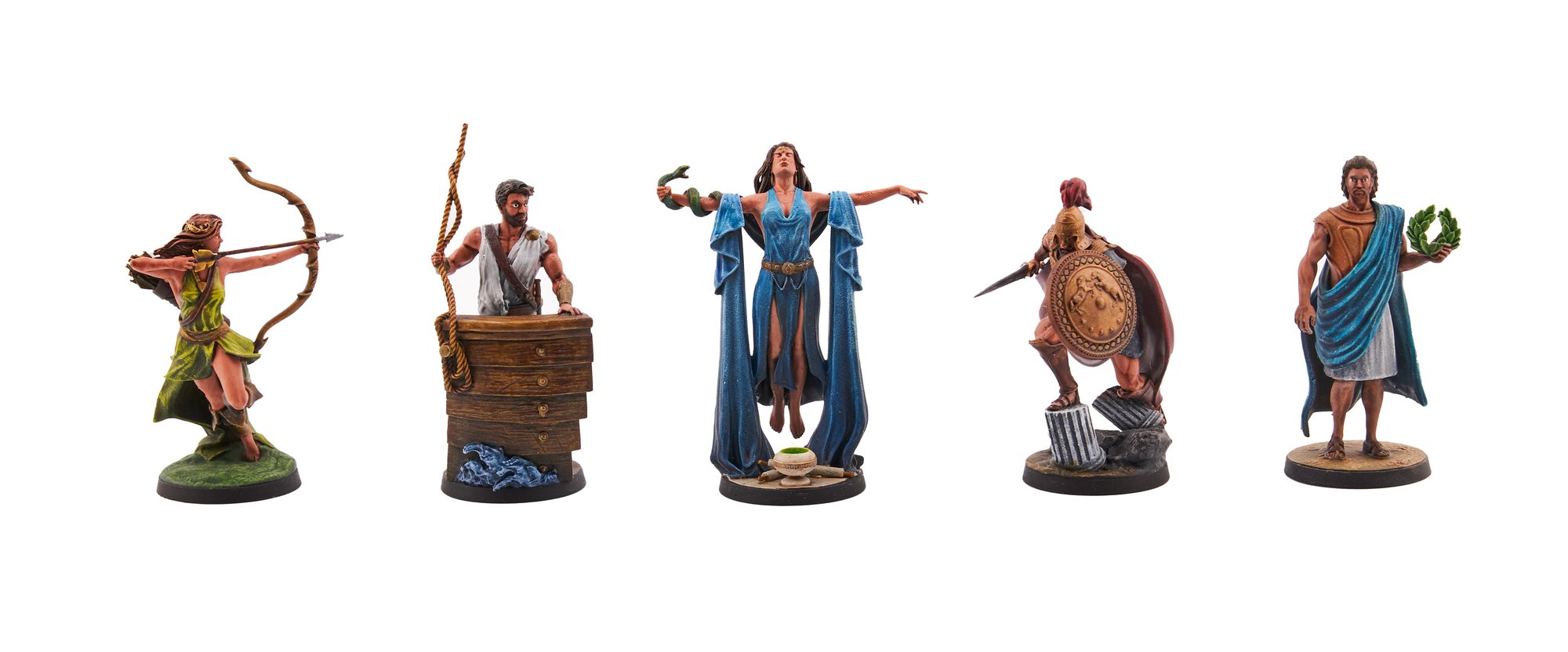
Miniature PackOut of stock
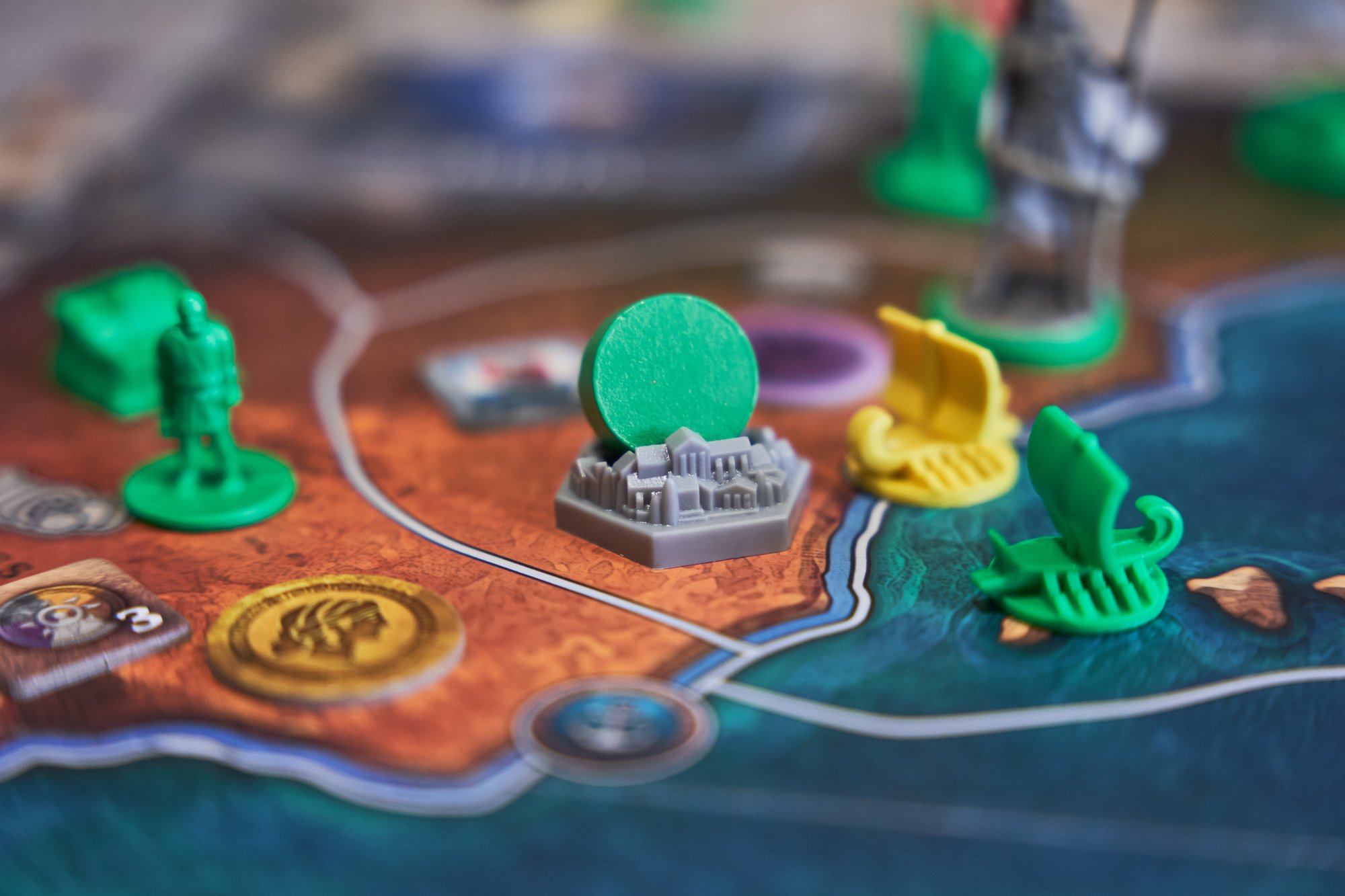
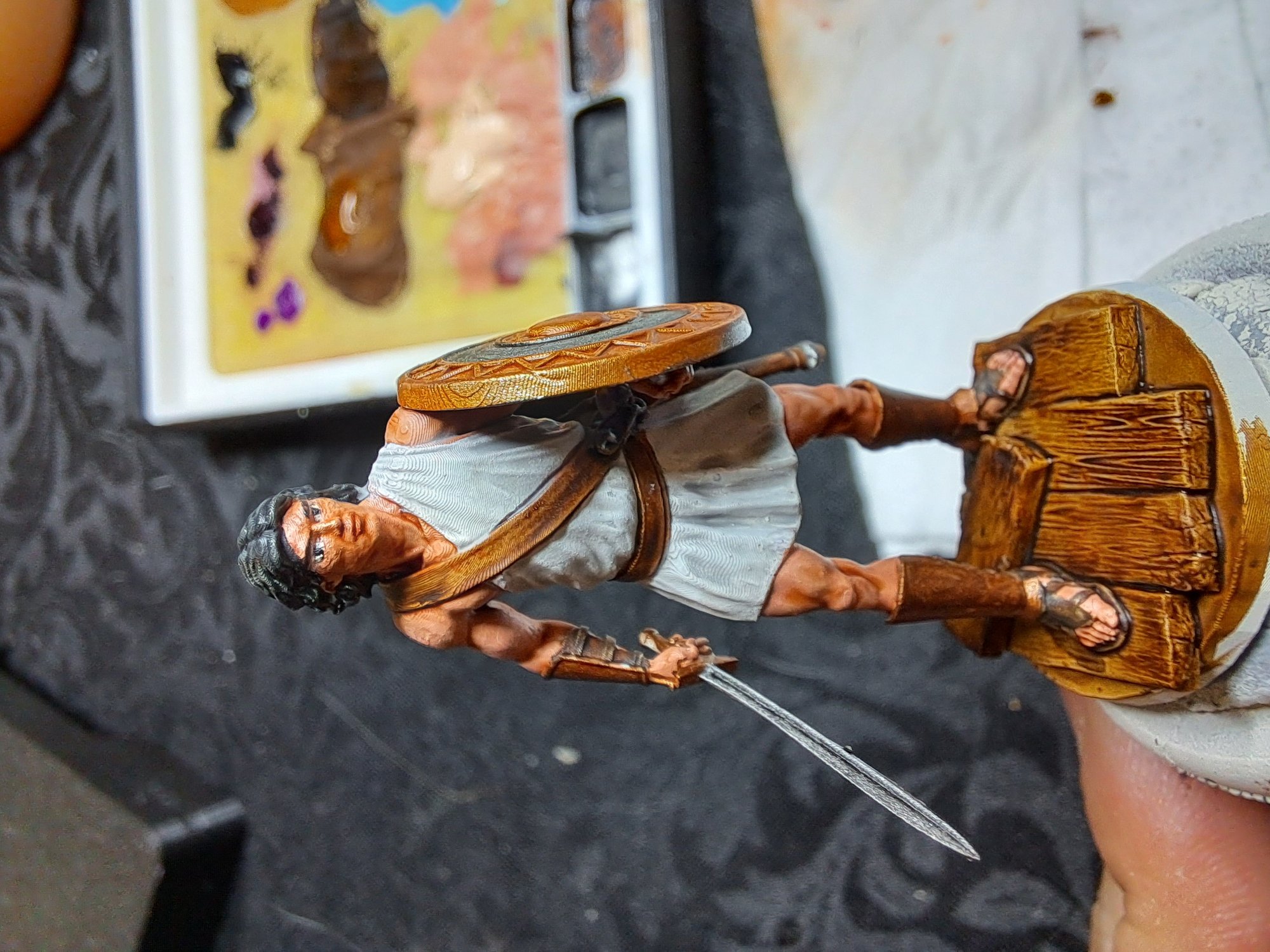
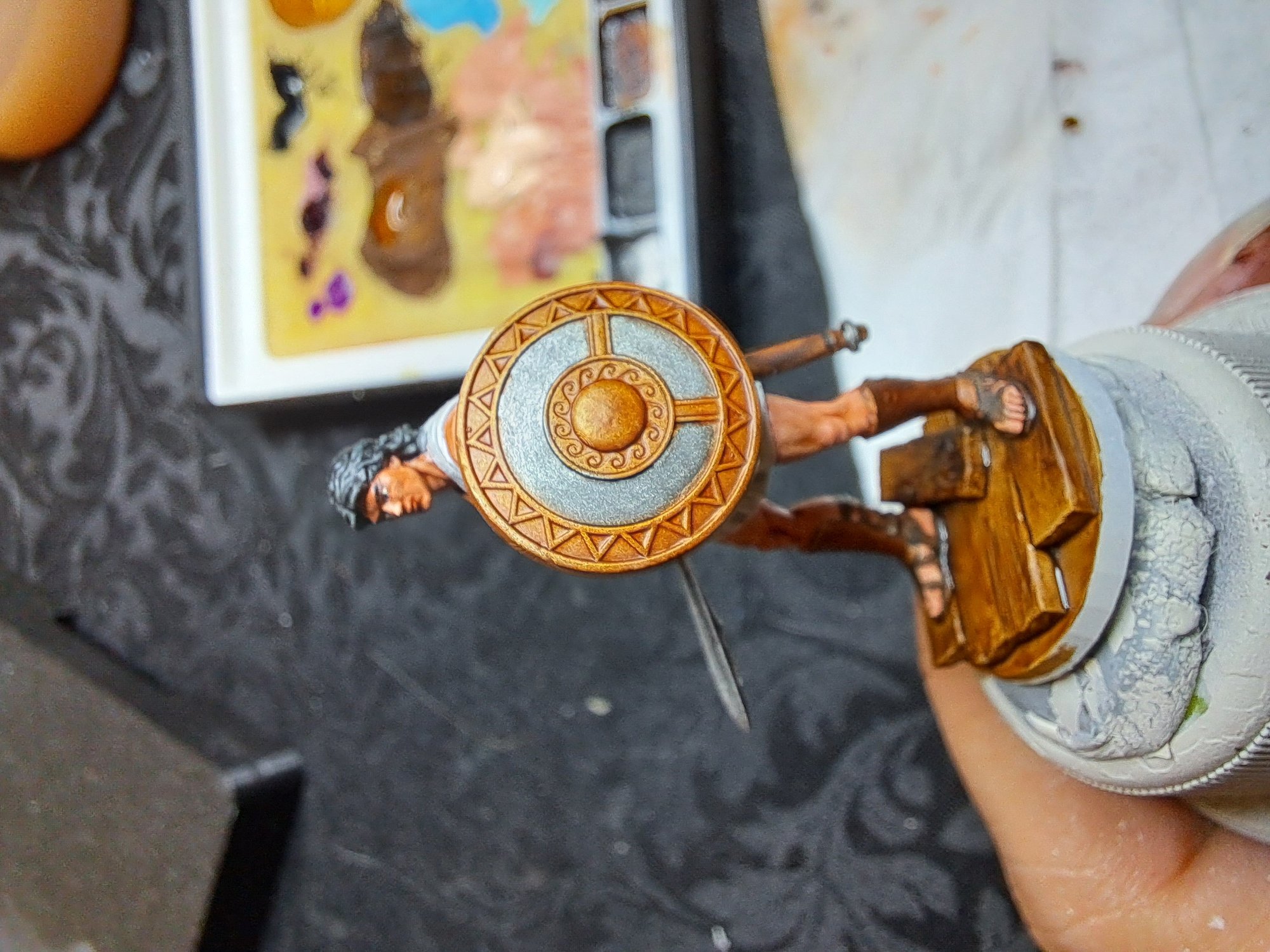
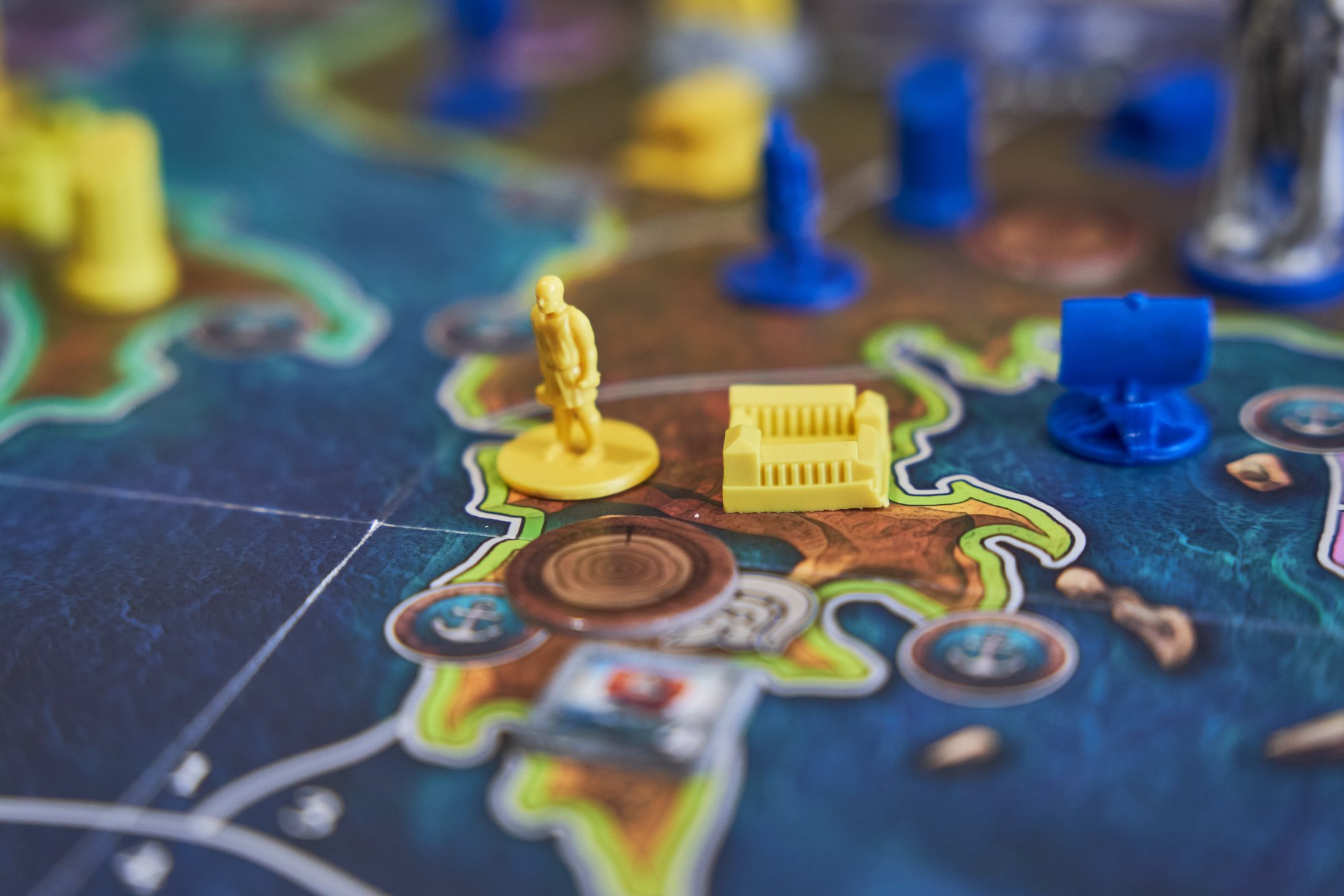
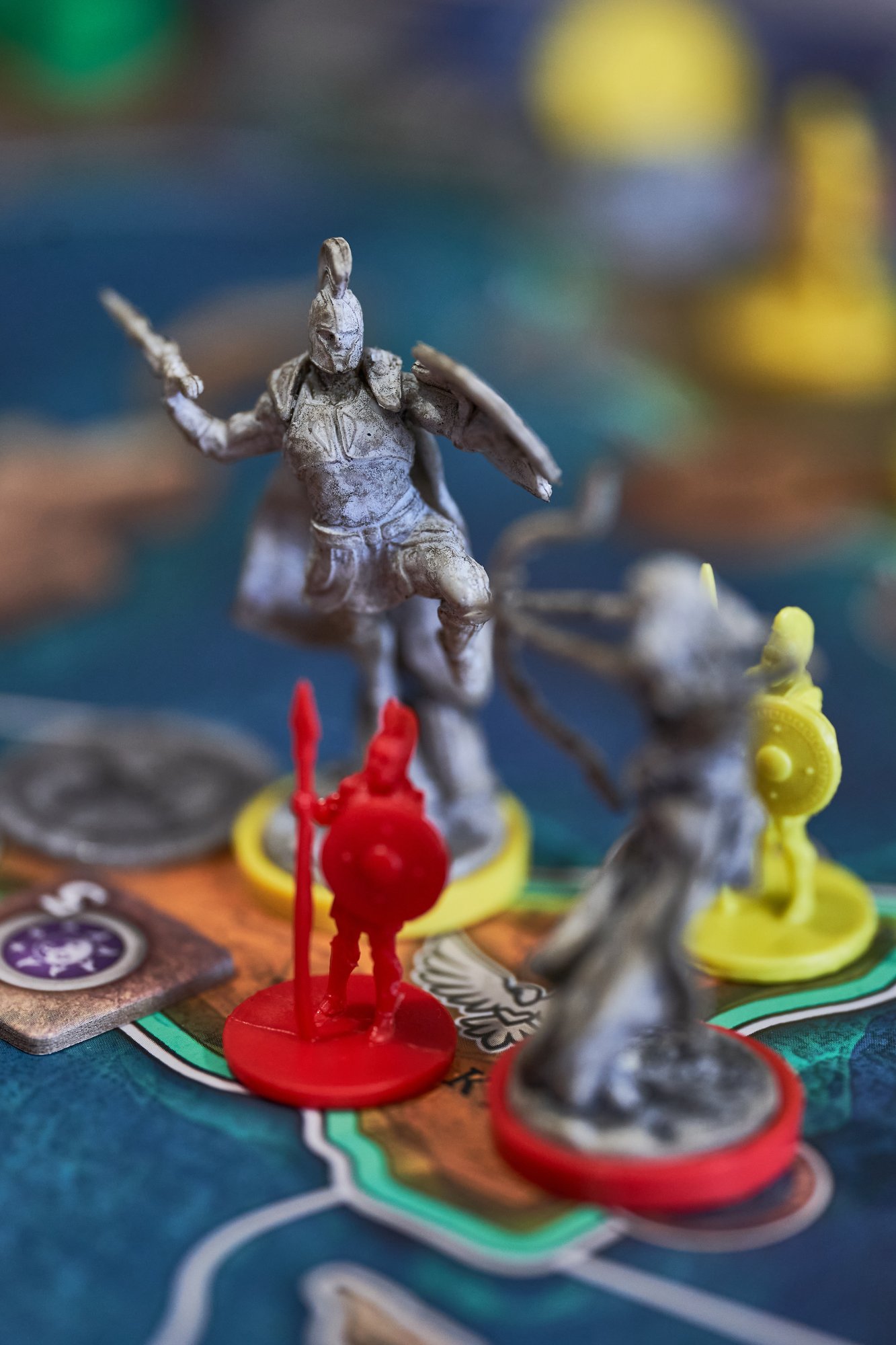
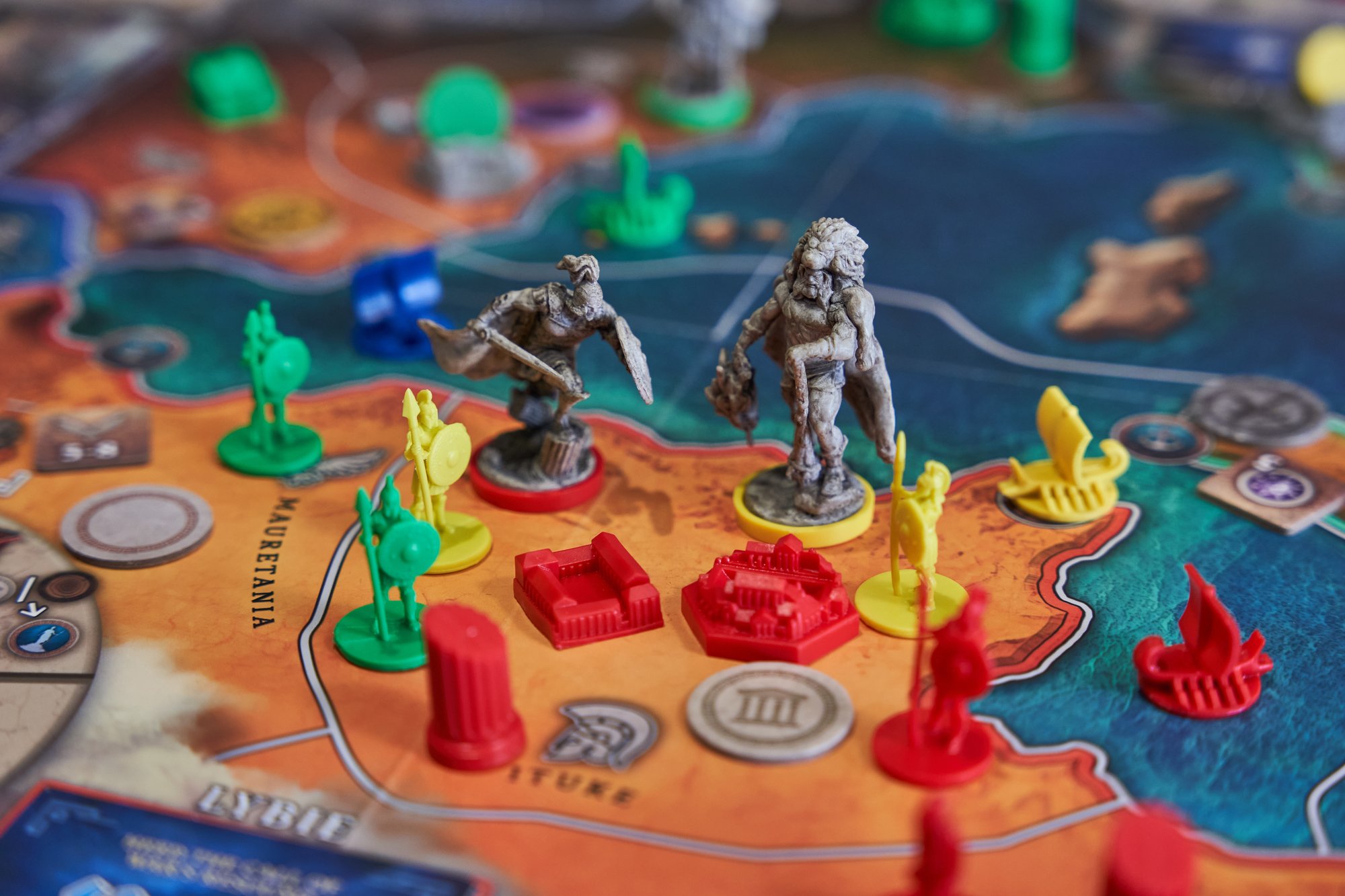
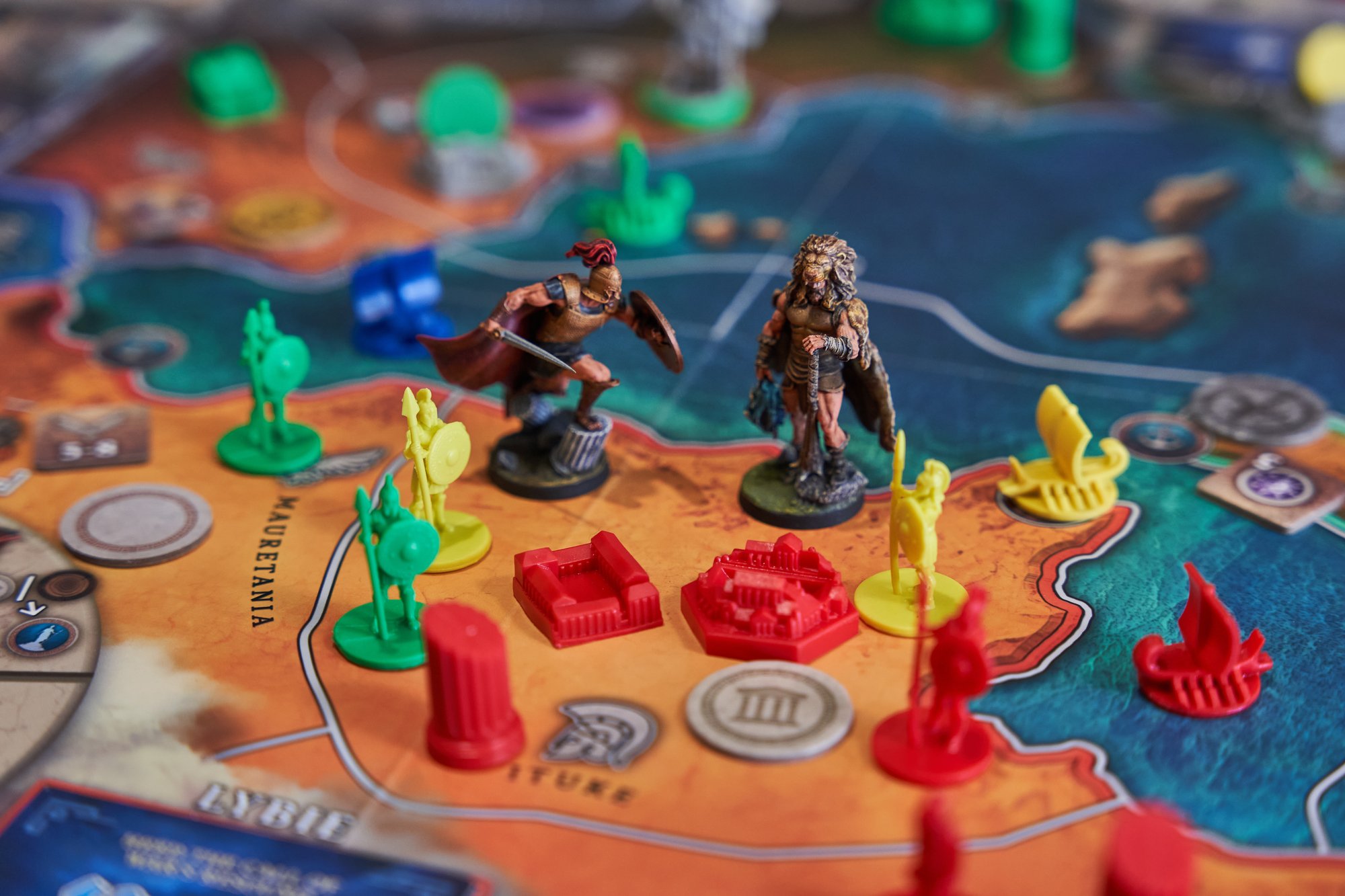
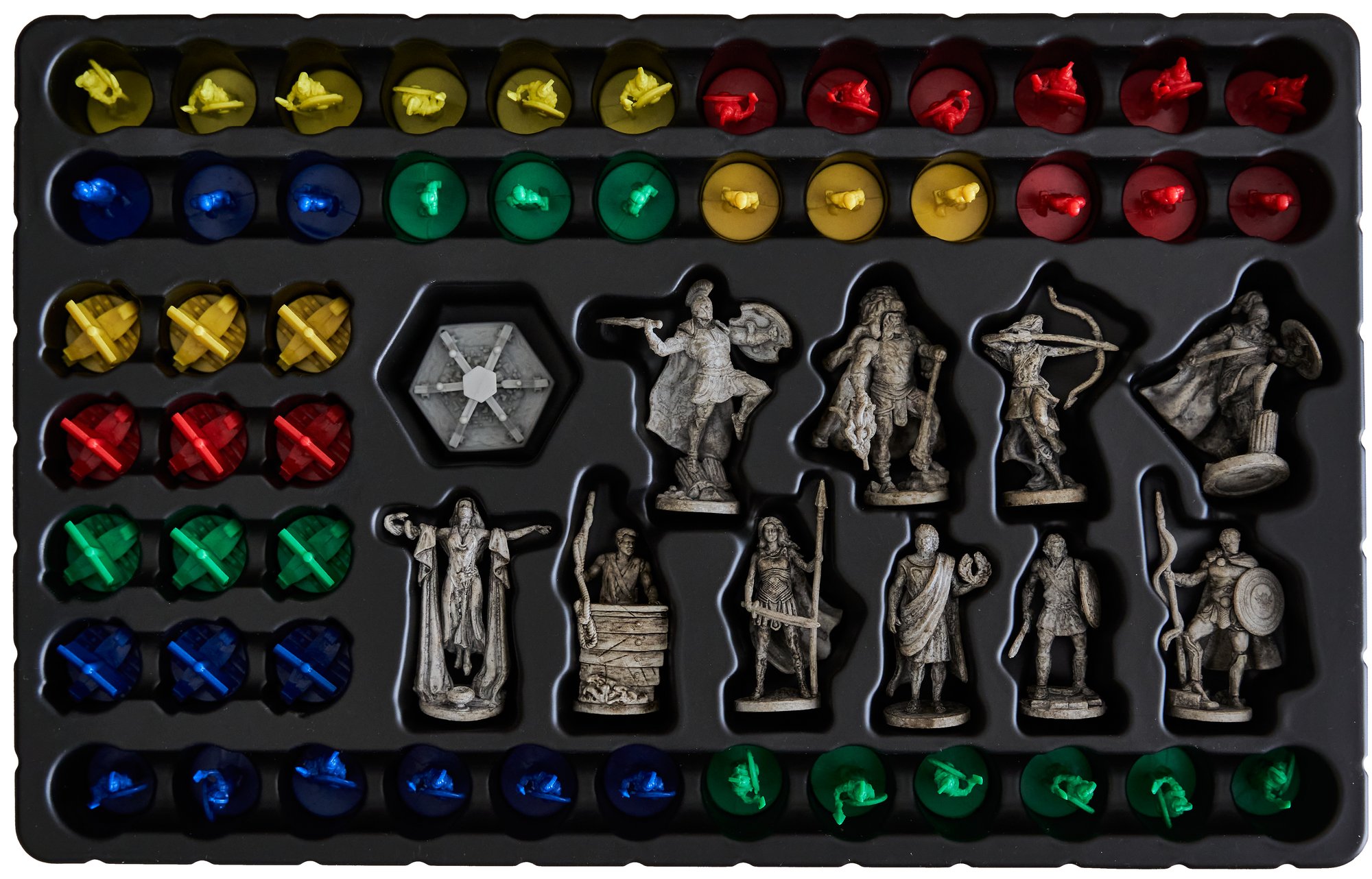
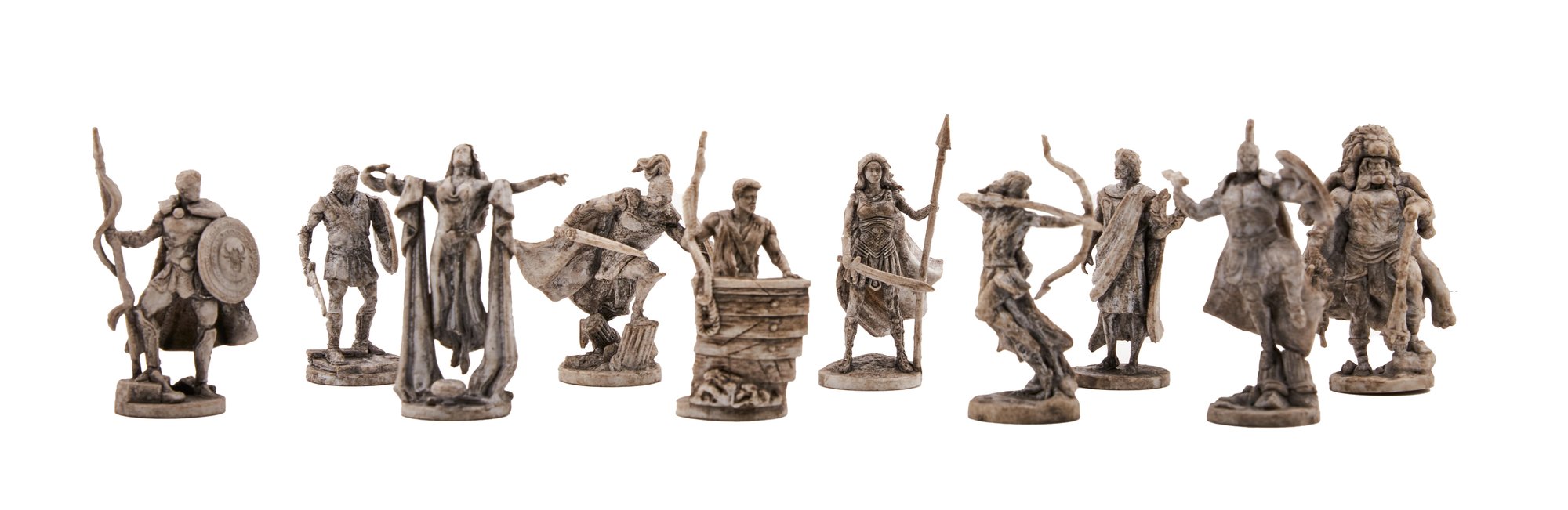
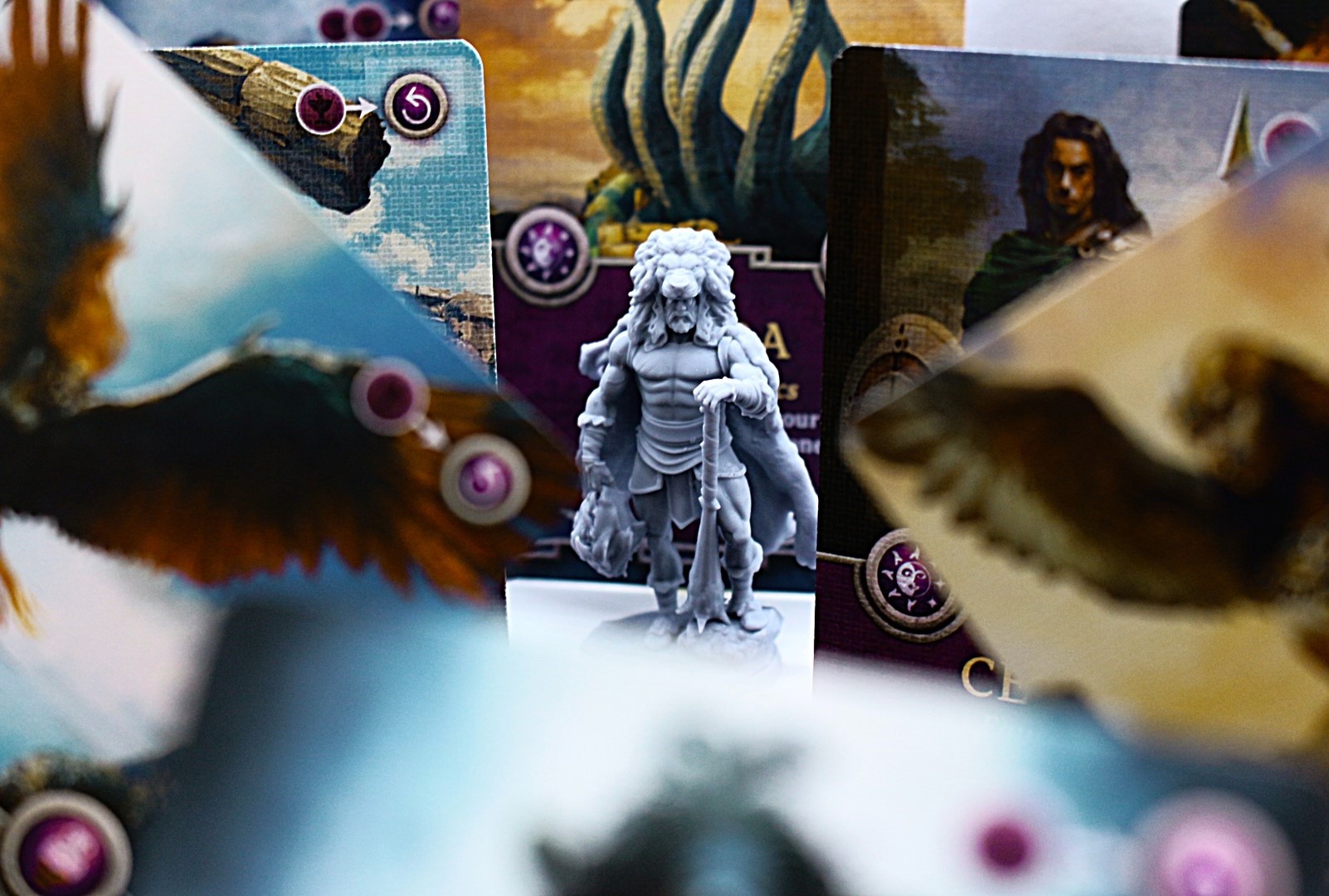
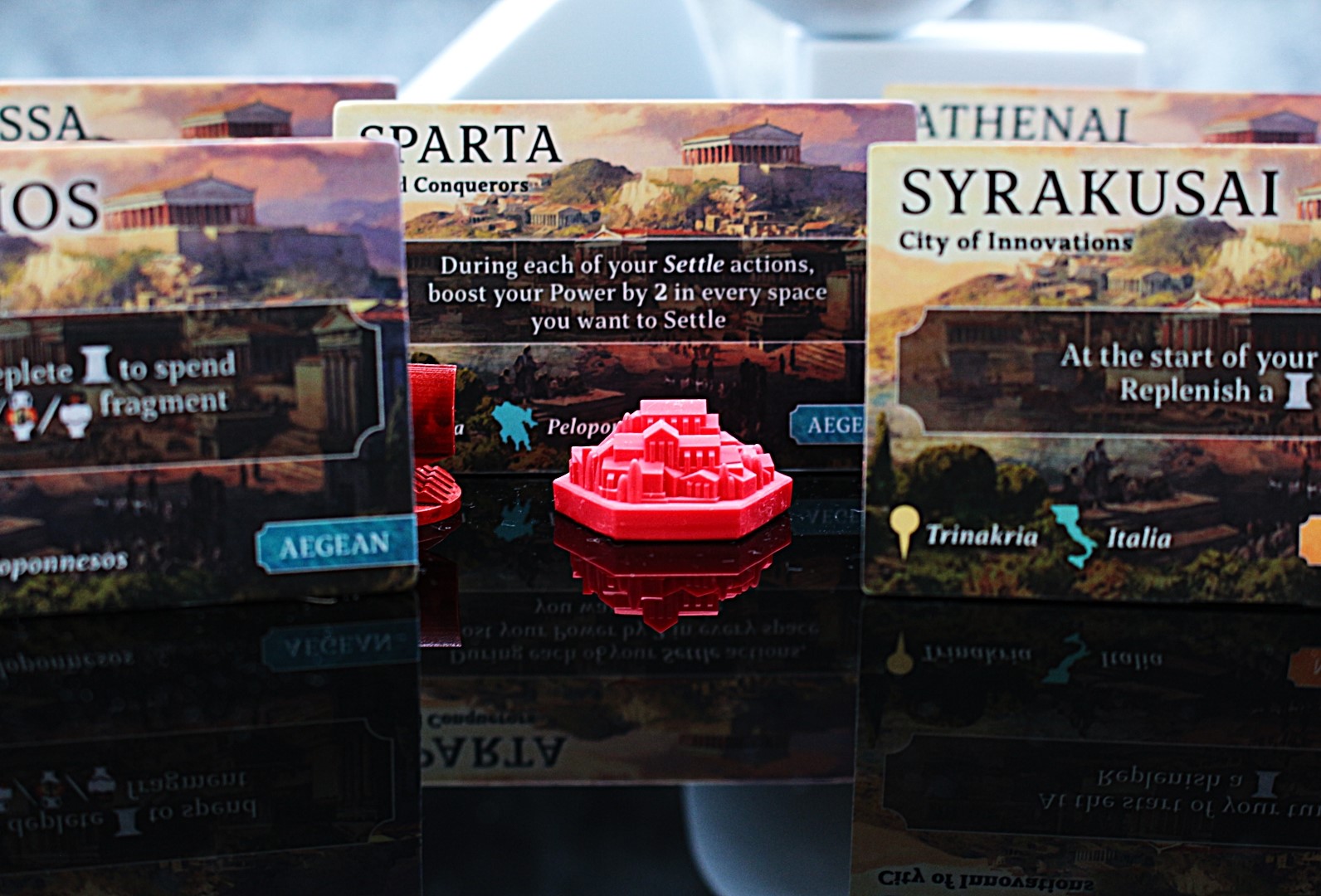
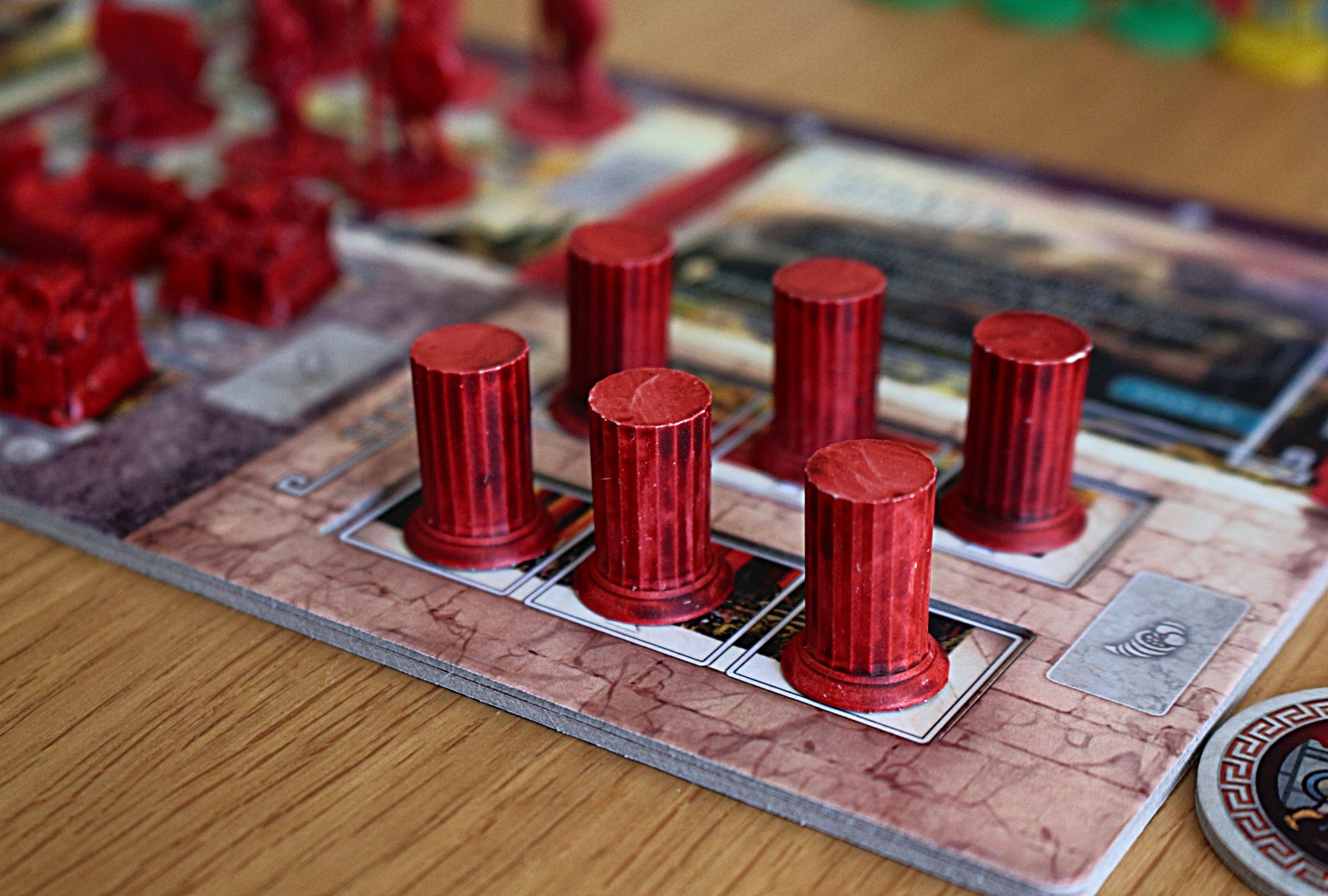
Every Piece, Sculpted
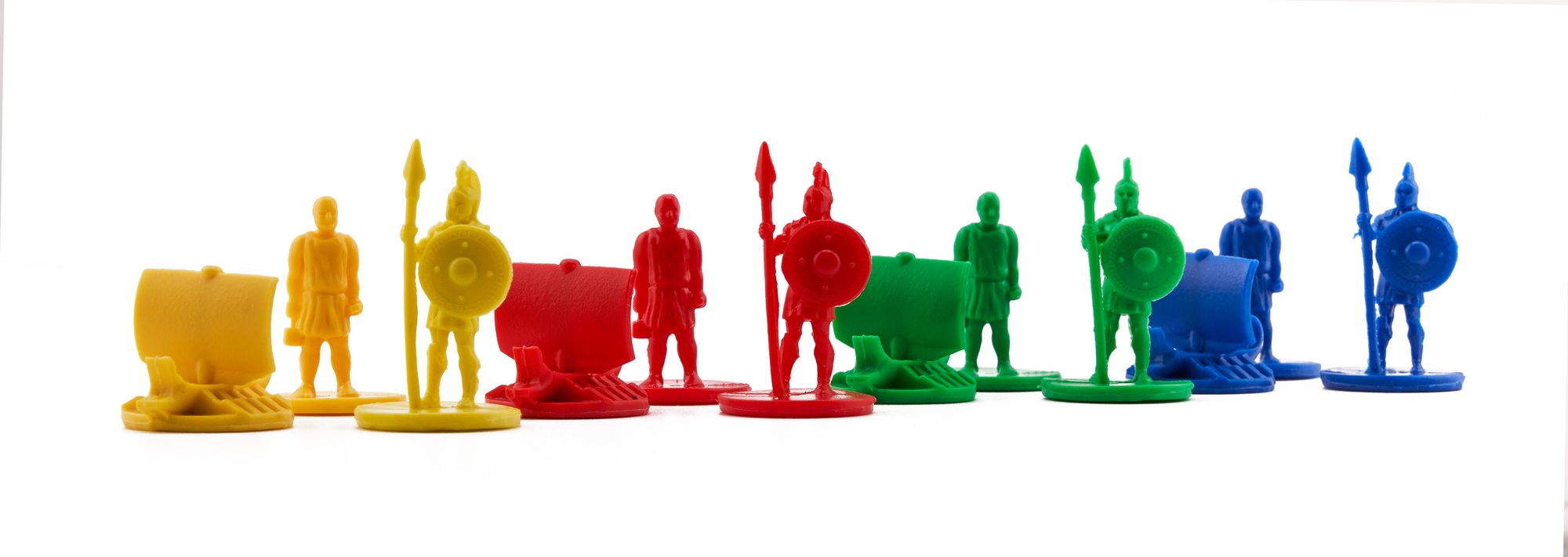
Dive into the ancient world with everything you need to rule your city-state and command its heroes in grand style. The ultimate choice for enthusiasts and collectors seeking a truly immersive and visually stunning gaming experience.
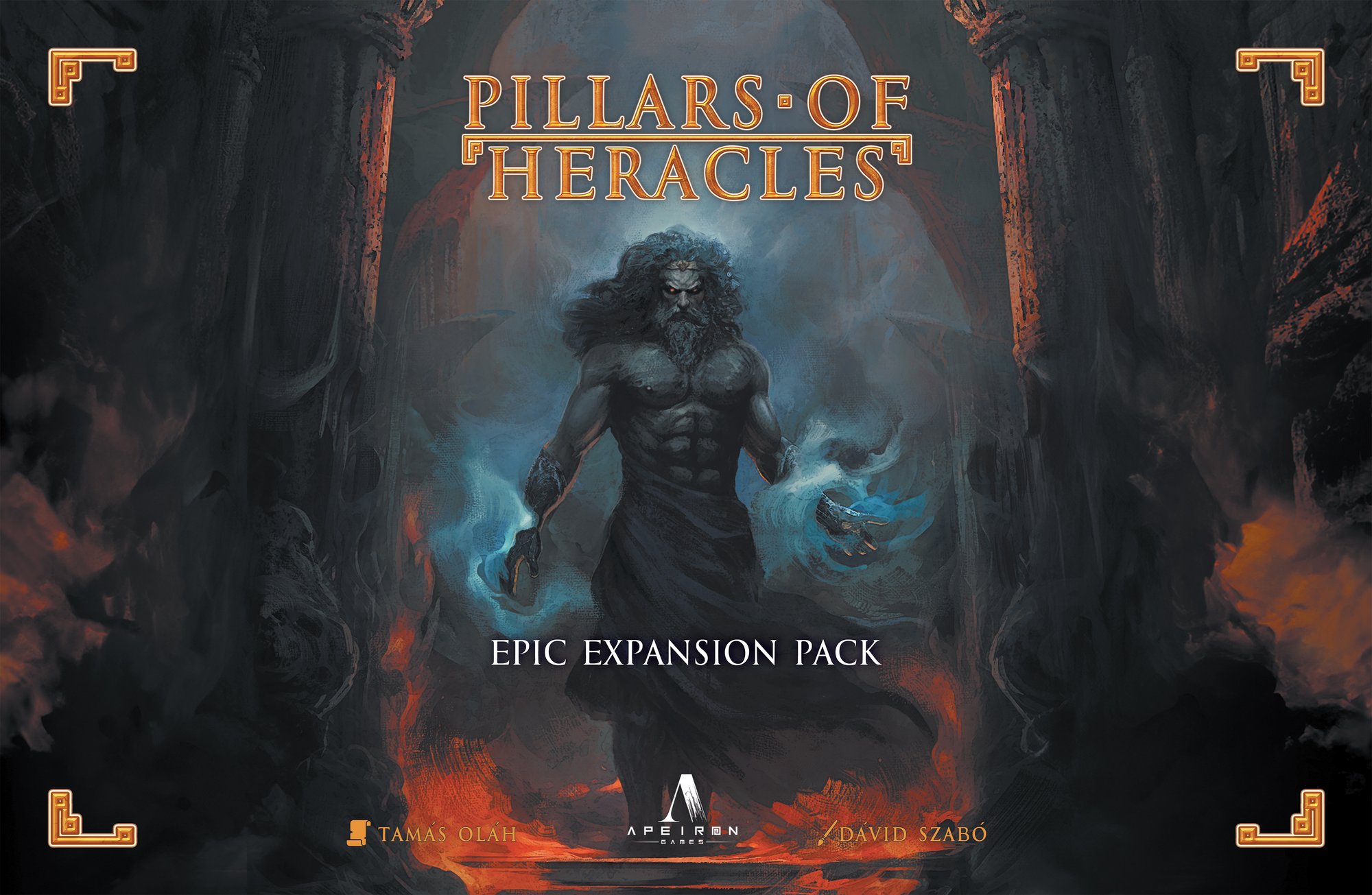
The Epic Expansion opens the Mediterranean to a fifth player and adds a brand-new economic layer: Trading Monopolies. Corner a commodity, control its price, and turn the trade map into a weapon.
Five-player support
A full fifth player set with balancing so the rondel and the Mediterranean both scale cleanly to 5.
Trading Monopolies
Dominant traders lock down commodities, dictating terms for every rival who needs them.
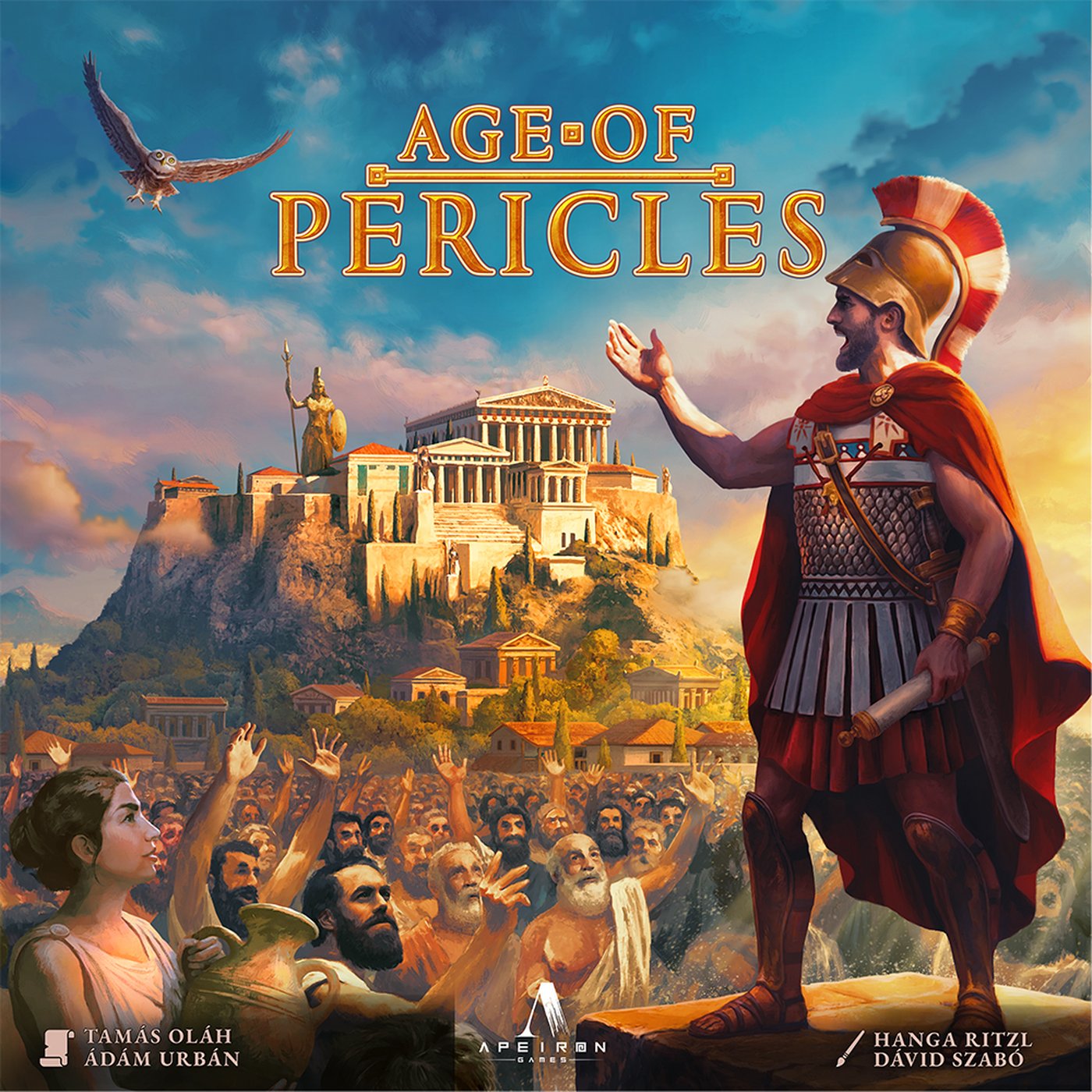
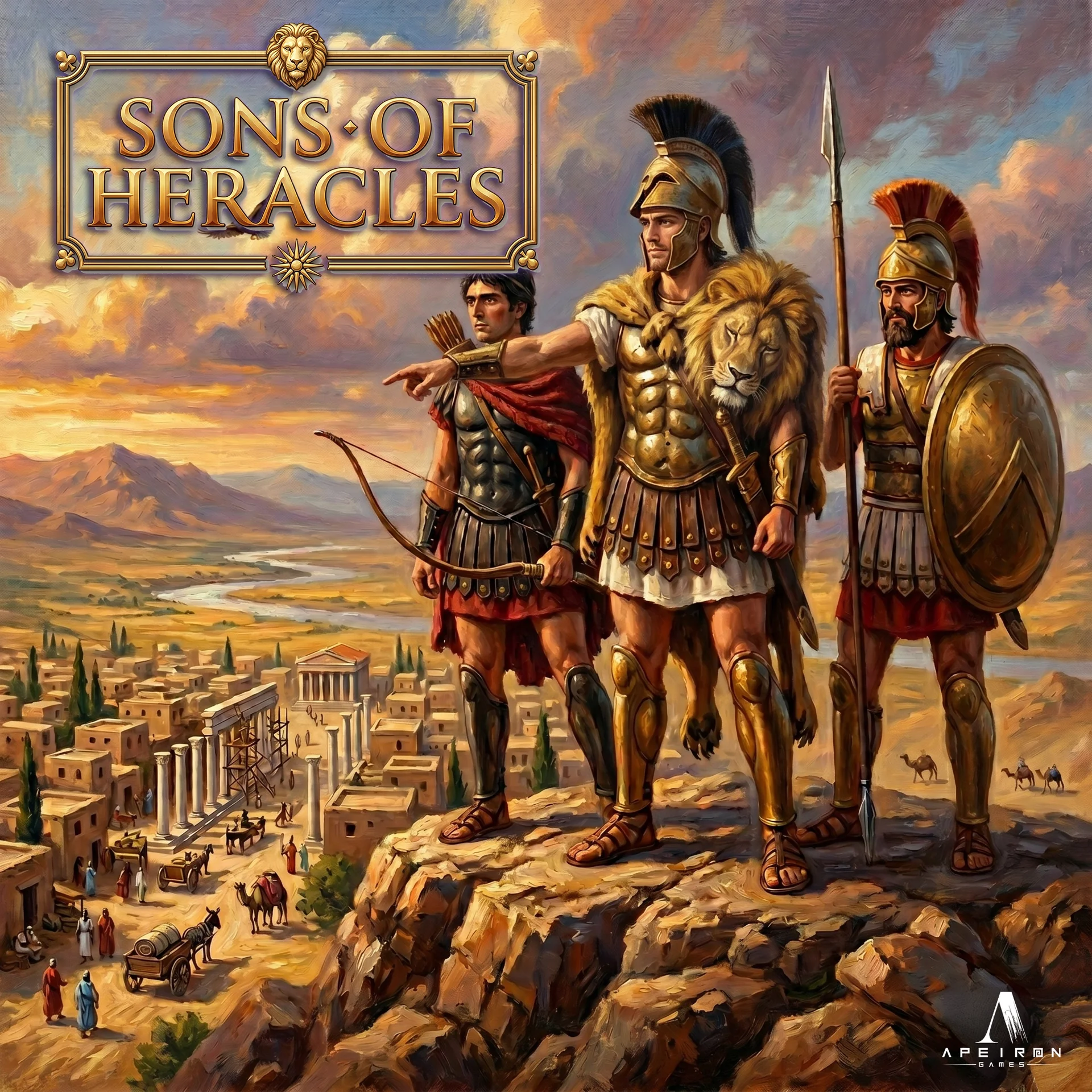
Three eras, three games, one civilisation. Each title stands alone — together, they trace Hellas from her first colonies to the conquests that scattered her language across half a world.
IYou are here
Archaic Greece · 8th–5th c. BCE
Pillars of Heracles
Lead a Greek city-state to glory across the ancient Mediterranean.
Alexander marches east — and Greece becomes the world.
In development
Historical Consultation
A Historian's Prelude
Every era, region, name and artefact in Pillars of Heracles was checked against the historical record before it reached the table — vetted by an independent historian specialising in the Archaic period.
The Archaic period from the 8th century BCE to 480 BCE was formative for the ancient history of the Mediterranean. After the Late Bronze Age Collapse and the ensuing "Dark Ages", ancient Greece underwent a profound social, cultural, and political transformation. From scattered settlements and farms to poleis* and flourishing agriculture, from wooden temples to iconic stone buildings, from gift-based followership of distinguished families of basileis** to forms of more democratic or at least representative government, from local cults to a more concise canon of deities and myths. An underlying Hellenic identity began to develop.
The Archaic poleis — settlements becoming city-states
Even though ancient seafaring was mostly daytime, shore-bound activity, the Mediterranean became not a limit, but a space of mobility, connection, and trade. With growing and more concentrated populations, social and political conflict led to an age of organised settlement-founding all along the shores of the Mediterranean and Black Sea.
The Mediterranean as a corridor of trade and settlement
The warring poleis of mainland Greece, as well as those overseas, partially joined forces to fight the invading juggernaut during the Persian Wars, which created a network of alliances led by Sparta and Athens — who would ultimately clash in the Peloponnesian Wars during the Classical period.
From Persian Wars to Peloponnesian rivalry
* Poleis is the plural of polis, the Greek term for city-state. ** Basileis is the plural for basileus, the Greek term for various types of monarchs and leaders of Greek tribes.
— Jan Heinemann, M.A. · Historical Prelude, Pillars of Heracles Rulebook
Jan Heinemann, M.A.
Independent historian and editor · specialist in the Archaic Mediterranean · consultant to Pillars of Heracles
What Reviewers Say
Praised by Critics & Creators
“I am blown away by how incredibly powerful we are in the game. If you are willing to burn through your hand of cards, every action you can do is so huge, and so titanic, and so monumental.”
Richard HamRahdo Runs Through
“This is the friendliest 4x game you have ever seen. … A 4x game where you start already half-way through the game.”
Richard HamRahdo Runs Through
“I would be down to play at any time, it is absolutely brilliant. The deckbuilding in the game is so satisfying, the powers you can get are so cool, and it just escalates and accelerates throughout. Very impressive design.”
Richard HamRahdo Runs Through
“A perfect blend of mechanisms … and an epic civilization game. The thing is, it works very well and brings together both worlds for an exciting experience!”
Tabletop 4worldBGG Review
“It blends deck building and rondel perfectly. … It blends dude-on-a-map with euro-like mechanisms. Superb.”
Board Game ExperienceInstagram
“This game feels rewarding in the bonuses and combos you can quickly play. Beautiful table presence … I always enjoy multiple win conditions — you can try a different strategy each game.”
Lotte VerheulLOTTE Speelt
“A very-very exciting game! The artwork is great, the symbolism is super, and the material is also convincing.”
Stefan LöwBoard Game Burger
“Lots of good stuff — the game is smooth and doesn't require going back to the rule book, runs nice and fast.”
JB LécaillonMeeple Report
“It is the theme that really captivated us — a real exciting era of history, with lots of mythological creatures, characters and real locations. Recommended for everyone who likes area control, historical and thematic games.”
NikiBoard Game Addicts
Begin Your Voyage
The Mediterranean Awaits
Found colonies across the wine-dark sea and guide your polis from scattered settlements to a power worthy of the gods.